
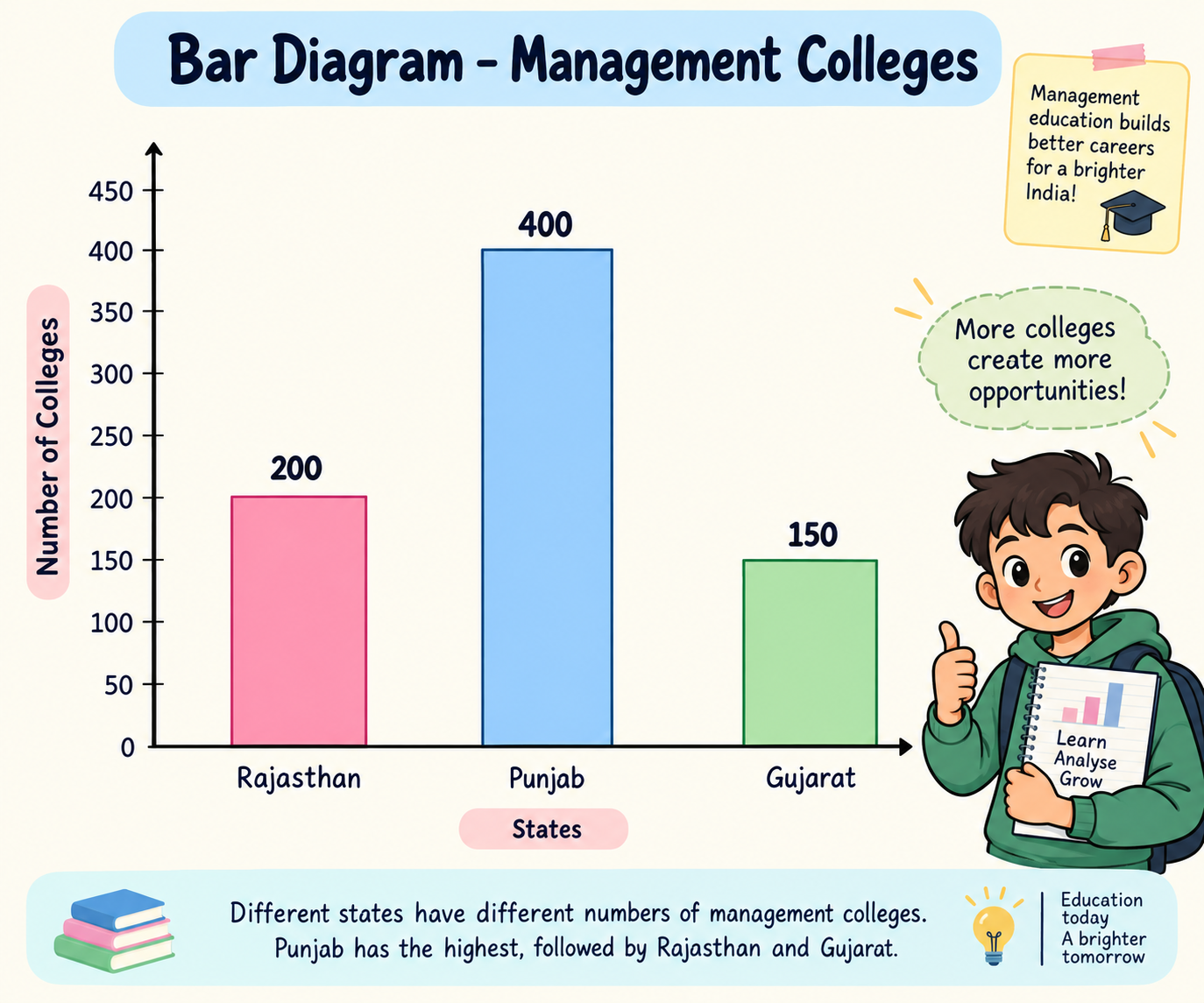
Given Data: State Number of Management Colleges Rajasthan 200 Punjab 400 Gujarat 150 Steps to Construct a Bar Diagram Step 1: Draw the X-axis and Y-axis. Step 2: Mark the
Read MoreCategory: Economic
best learning and review of economic
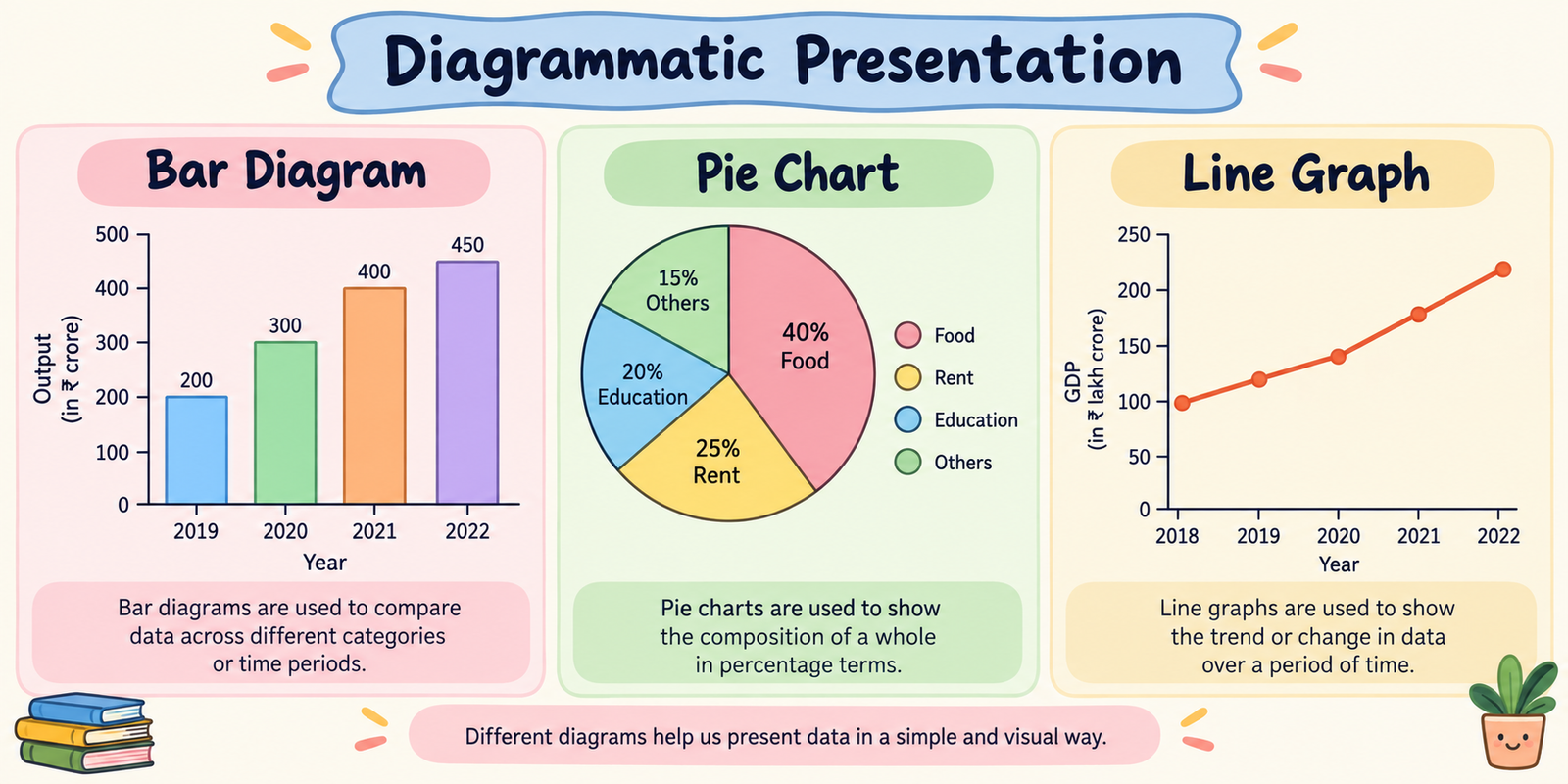
lesson no.17 Q5. Explain the following methods of presentation of data.

There are two important methods: (a) Tabulation Tabulation means arranging classified data in rows and columns to form a table. Purpose of Tabulation: Example: State Management Colleges Rajasthan 200 Punjab
Read More
lesson no.17 Q4. Explain Classification.
Classification: Classification is the process of arranging raw data into different groups or categories based on similar characteristics. It makes information organised and easy to understand. Real-life example: Suppose a
Read More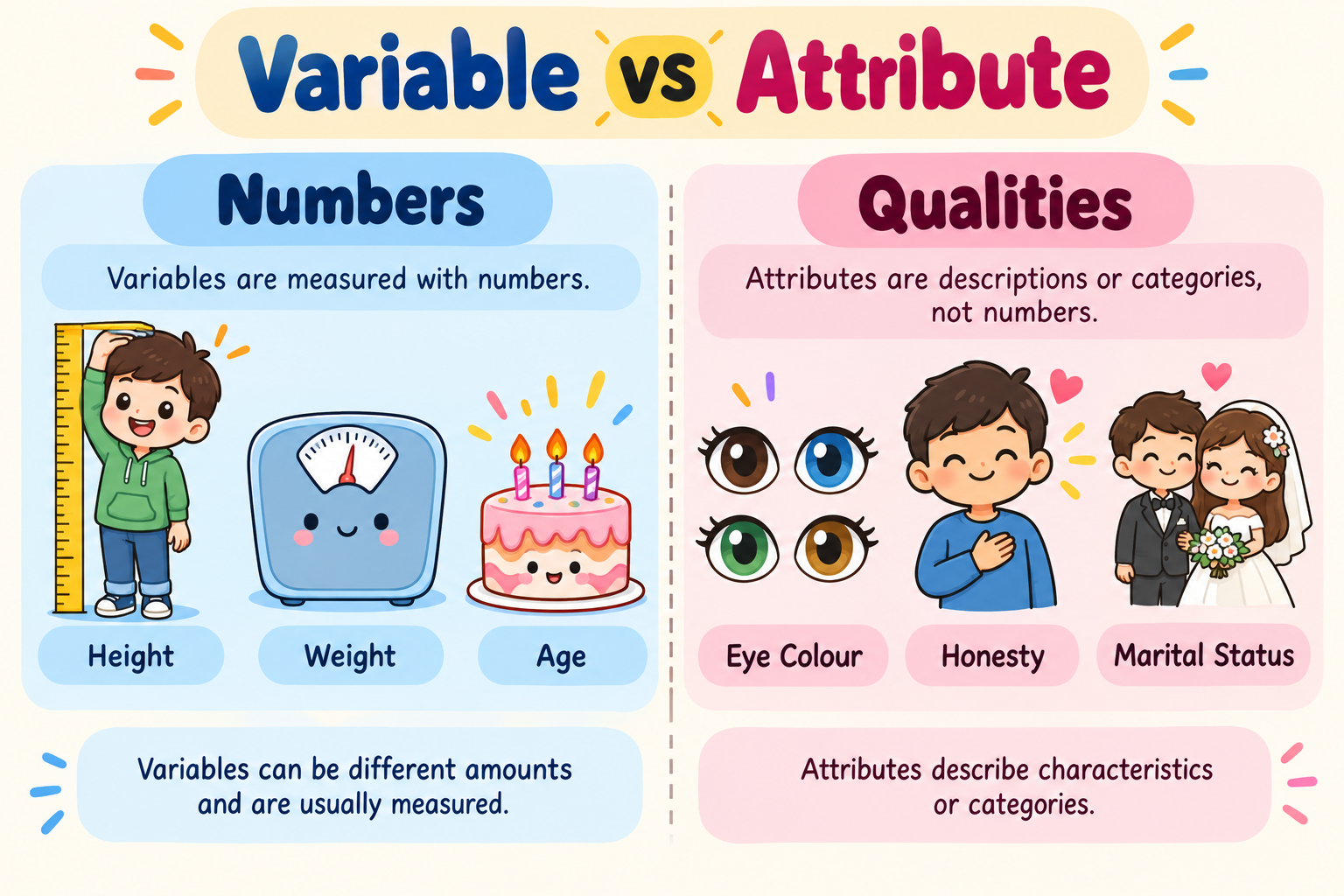
3. Distinguish between a variable and an attribute.
Variable: A variable is a characteristic that can be measured in numbers. It can change from one person or item to another. Examples: Attribute: An attribute is a quality or
Read More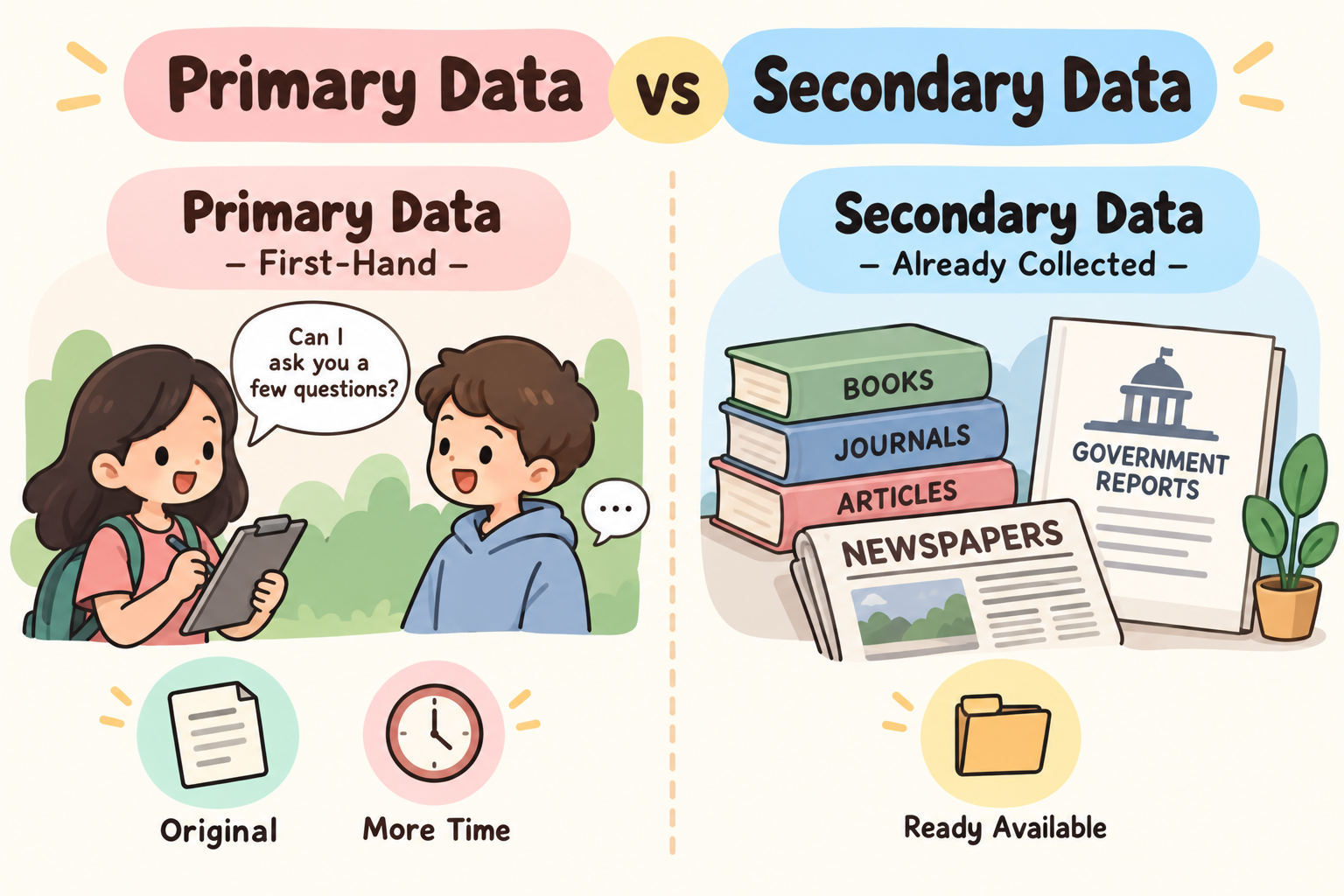
lesson no.16 Q2. What is the difference between primary and secondary data?
Primary Data: Secondary Data: Difference Between Primary and Secondary Data Primary Data Secondary Data Collected first-hand. Already collected by someone else. Original information. Previously available information. Takes more time and
Read More
lesson no.16 Q1. Define data. How are primary data collected?
1. Define data. How are primary data collected? Definition of Data: Data is a collection of facts, numbers, measurements or observations. It is collected for a specific purpose. How are
Read More
lesson no.15 Q4. Write short notes on the following.
(i) RBI (Reserve Bank of India) The Reserve Bank of India (RBI) is the central bank of India. It was established in 1935. Its main functions are: (ii) Cooperative Bank
Read More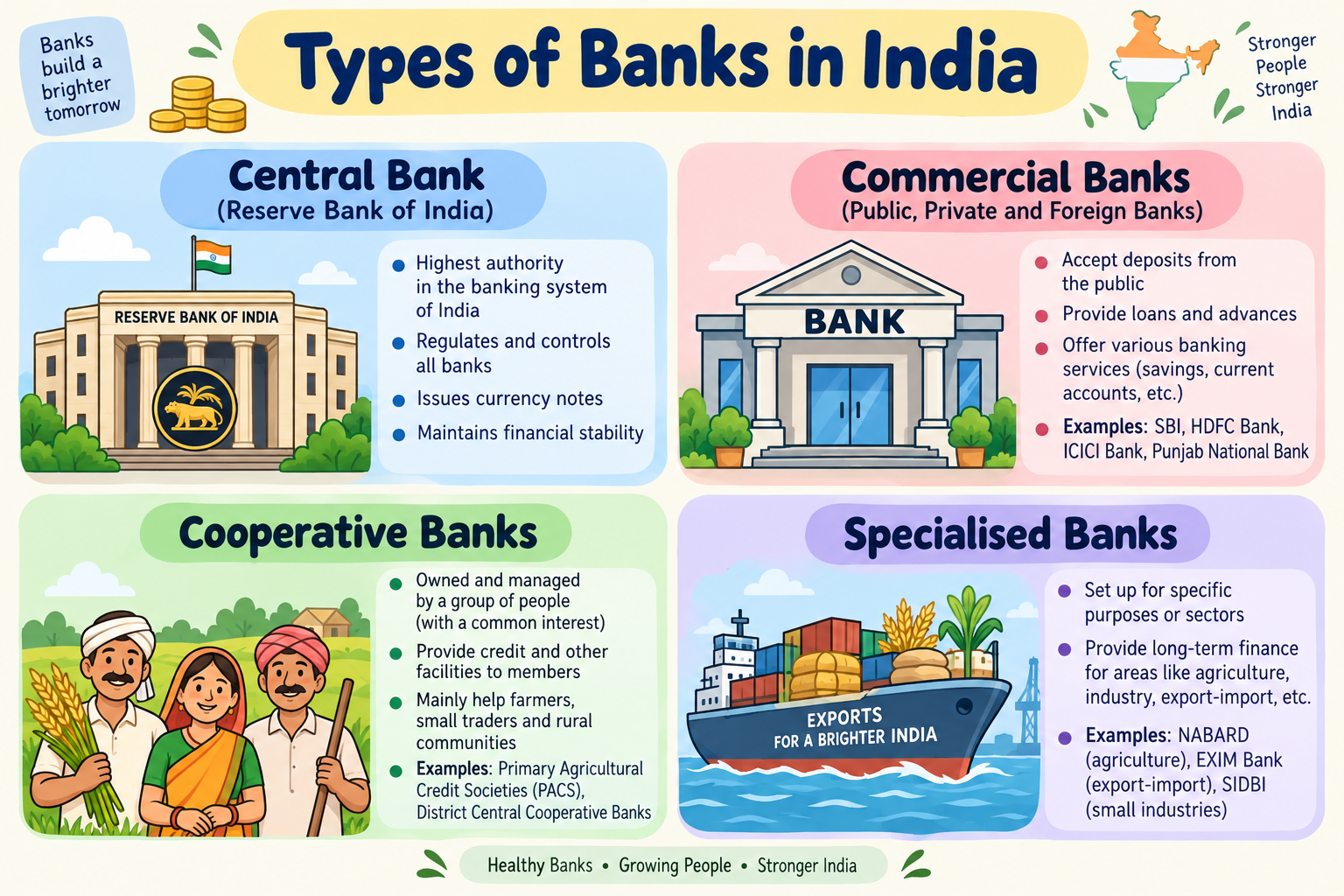
lesson no.15 Q3. What are the different types of banks in India?
The main types of banks in India are: 1. Central Bank: The Reserve Bank of India (RBI) is India’s central bank. It regulates the banking system and manages monetary policy.
Read More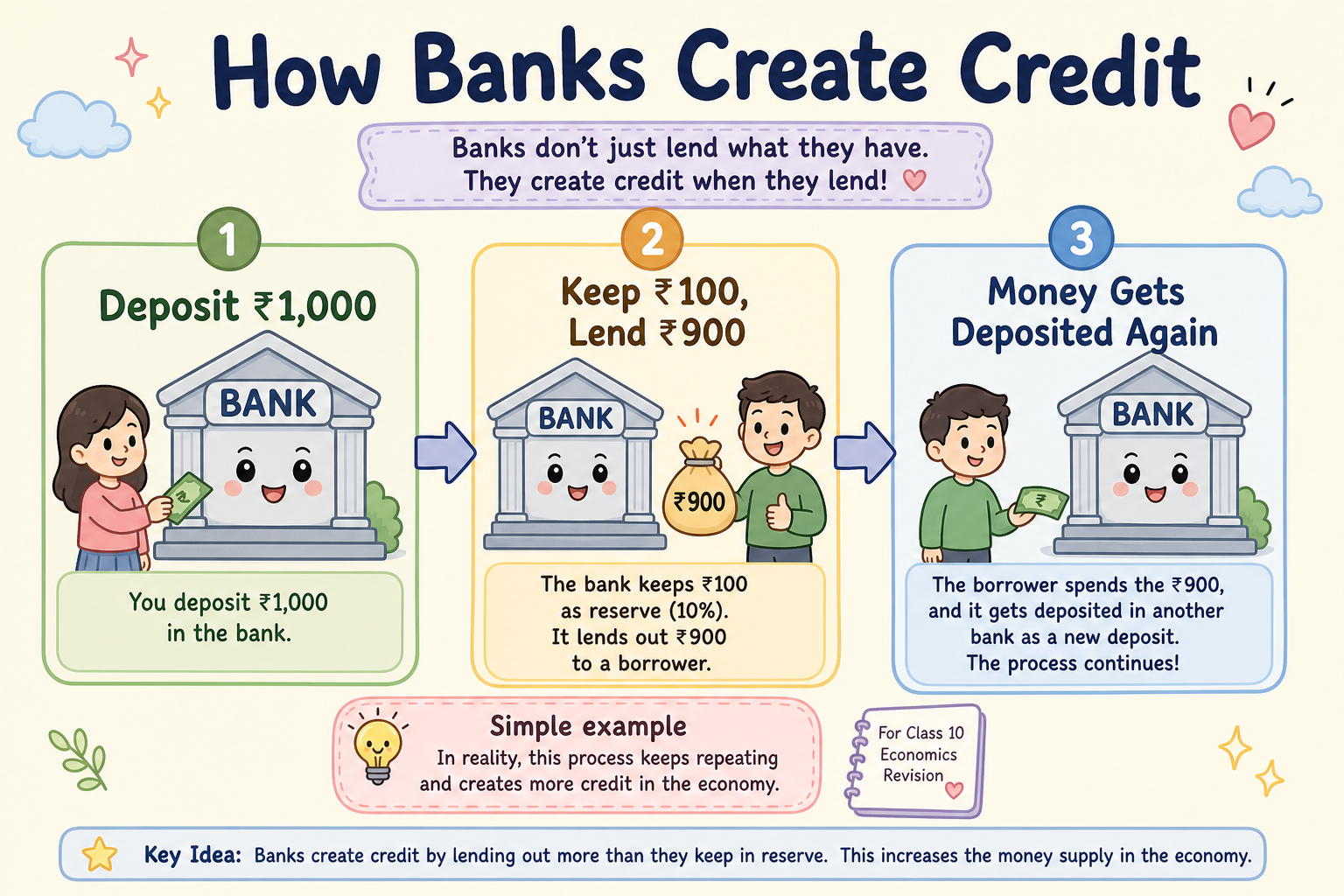
lesson no.15 Q2. What is credit? How does a bank create credit?
2. What is credit? How does a bank create credit? Meaning of Credit: Credit means receiving money, goods or services now and agreeing to pay for them in the future.
Read More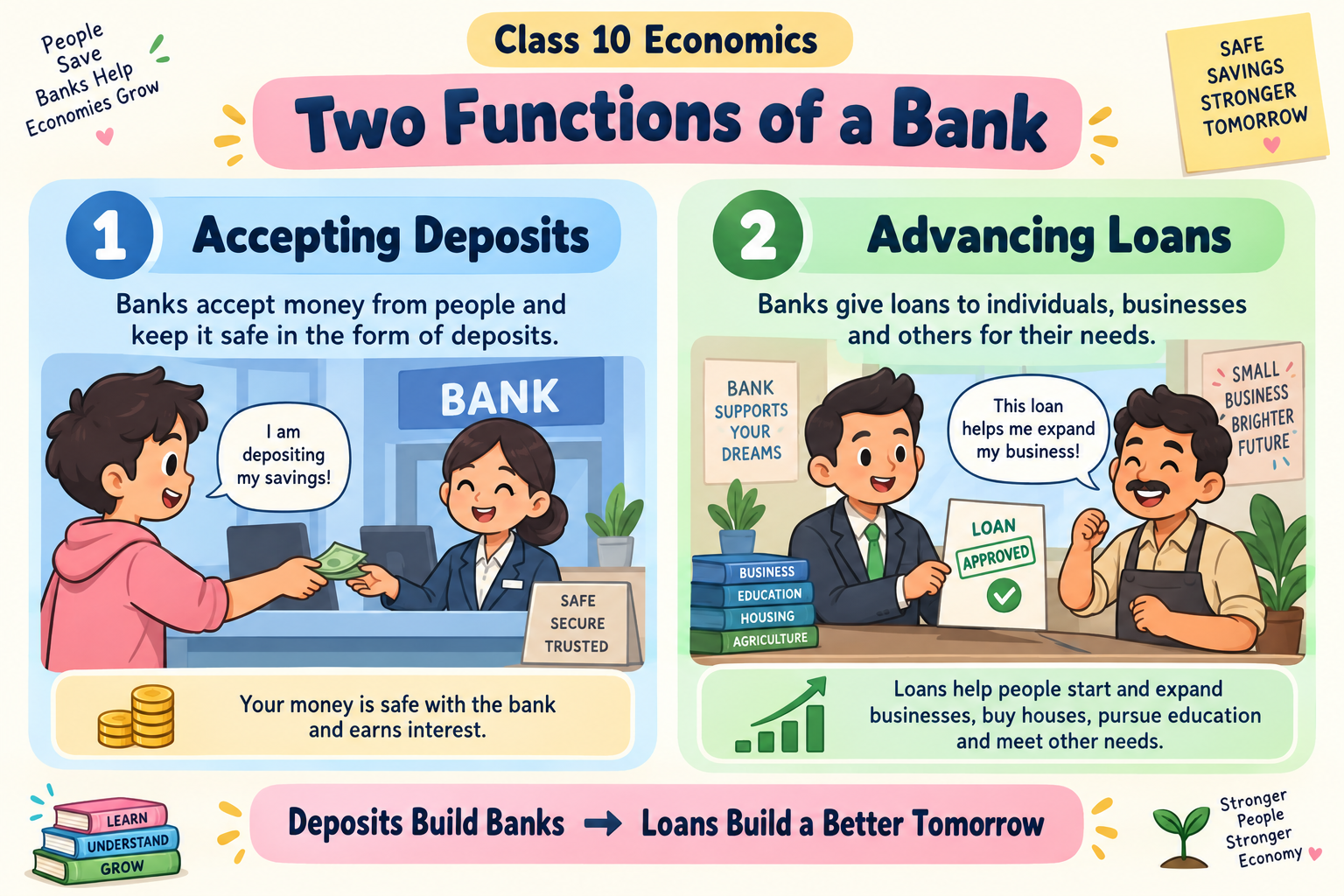
lesson no. 15 Q1. Explain two functions of a bank.
The two main functions of a commercial bank are: 1. Accepting Deposits: Banks keep people’s money safe in savings accounts, current accounts and fixed deposits. They may also pay interest
Read More