Understanding Goods: Consumer Goods vs. Producer Goods
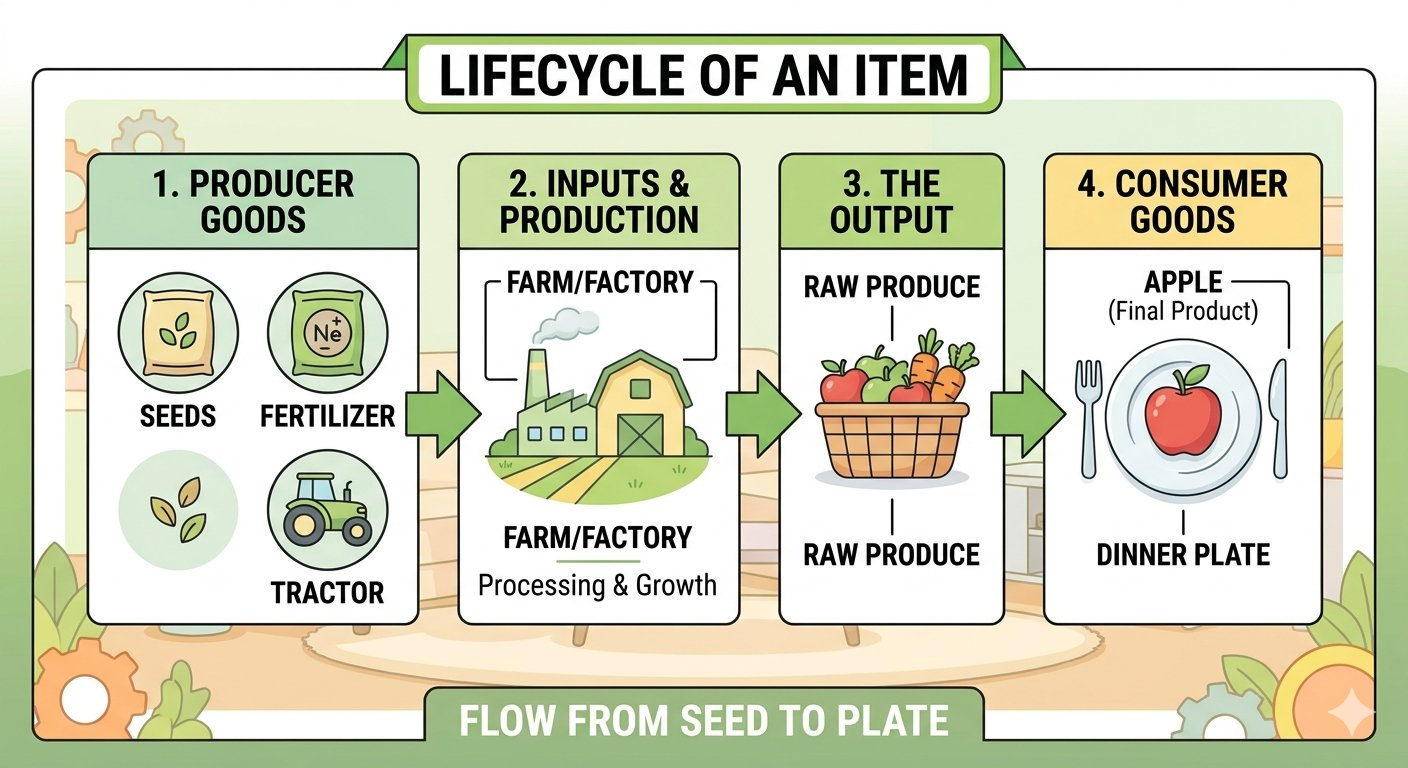
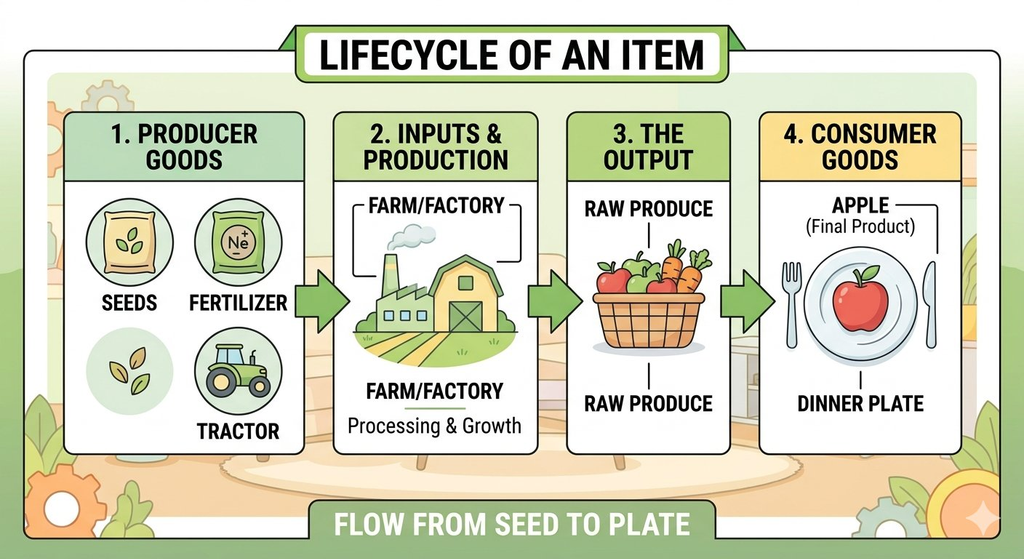
Every day, millions of items are made, bought, and sold around the world. In economics, these items—called goods—are divided into two main categories depending on who buys them and how they are used: Consumer Goods and Producer Goods.
Let’s break down the differences in simple terms.
1. What Are Consumer Goods?
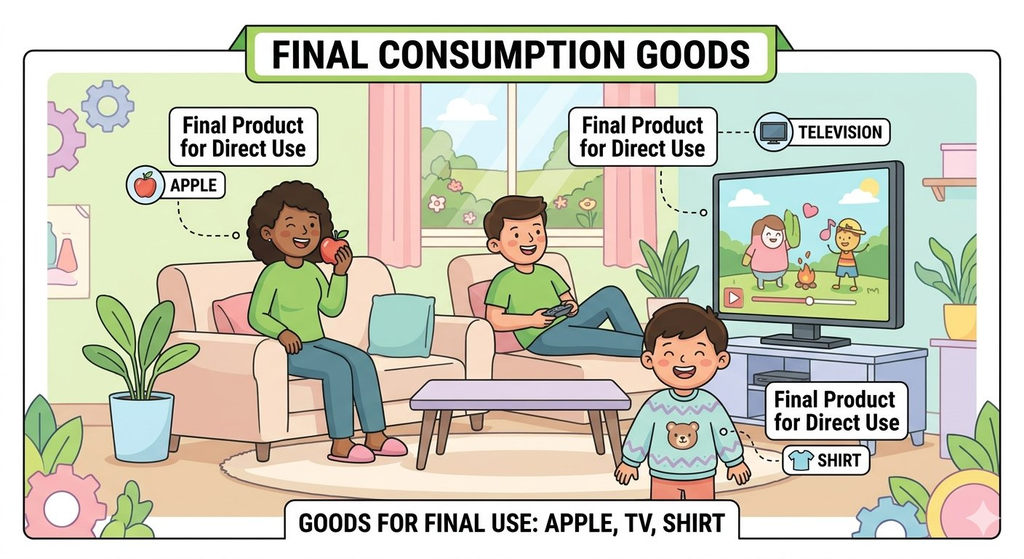
Consumer goods are products that you buy to use or enjoy right away. They directly satisfy your daily needs and wants.
When a family or an individual buys something for personal use at home, that product is a consumer good. It has reached its final destination—you!
Every Day Examples:
Food: An apple, a loaf of bread, or a juice box.
Clothing: A shirt, a jacket, or a pair of shoes.
Home Items: A television, a refrigerator, or a couch.
2. What Are Producer Goods (Capital Goods)?
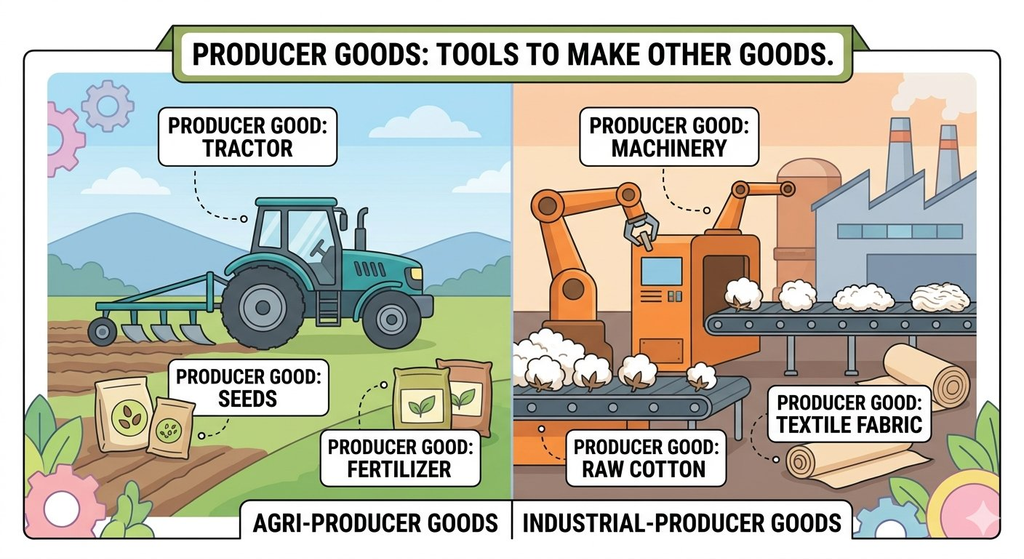
Producer goods (also known as capital goods) are items that businesses buy to make other goods or services.
These products do not satisfy human wants directly. Instead, they work behind the scenes to help farmers, factory workers, and business owners create the final products that consumers eventually buy.
Every Day Examples:
Machinery: Large factory machines that manufacture shoes or assemble cars.
Farm Equipment: A tractor, seeds, and fertilizers used to grow crops.
Raw Materials: Raw cotton used by a mill to weave fabric, or flour bought by a bakery to make bread.
Key Differences at a Glance
To make it even simpler, here is a quick comparison showing how these two types of goods differ:
Feature
Consumer Goods
Producer Goods
Who uses them?
Households and individuals
Businesses and manufacturers
How do they satisfy wants?
Directly (by using or consuming them)
Indirectly (by making other items)
Main Goal
Personal enjoyment or daily living
Production of goods or earning income
Simple Example
Buying an apple to eat
Buying seeds to grow apples
Summary
The easiest way to remember the difference is to ask: “Is this item being used for personal life, or is it being used to create something else?”
If it is for personal enjoyment, it is a consumer good.
If it is a tool, machine, or raw ingredient to build or grow something, it is a producer good.
Bizniz uses cookies to improve your experience, analyze website traffic, and make our Commerce learning resources better. Choose which cookies you allow.
Functional
Always active
The technical storage or access is strictly necessary for the legitimate purpose of enabling the use of a specific service explicitly requested by the subscriber or user, or for the sole purpose of carrying out the transmission of a communication over an electronic communications network.
Preferences
The technical storage or access is necessary for the legitimate purpose of storing preferences that are not requested by the subscriber or user.
Statistics
The technical storage or access that is used exclusively for statistical purposes.The technical storage or access that is used exclusively for anonymous statistical purposes. Without a subpoena, voluntary compliance on the part of your Internet Service Provider, or additional records from a third party, information stored or retrieved for this purpose alone cannot usually be used to identify you.
Marketing
The technical storage or access is required to create user profiles to send advertising, or to track the user on a website or across several websites for similar marketing purposes.