
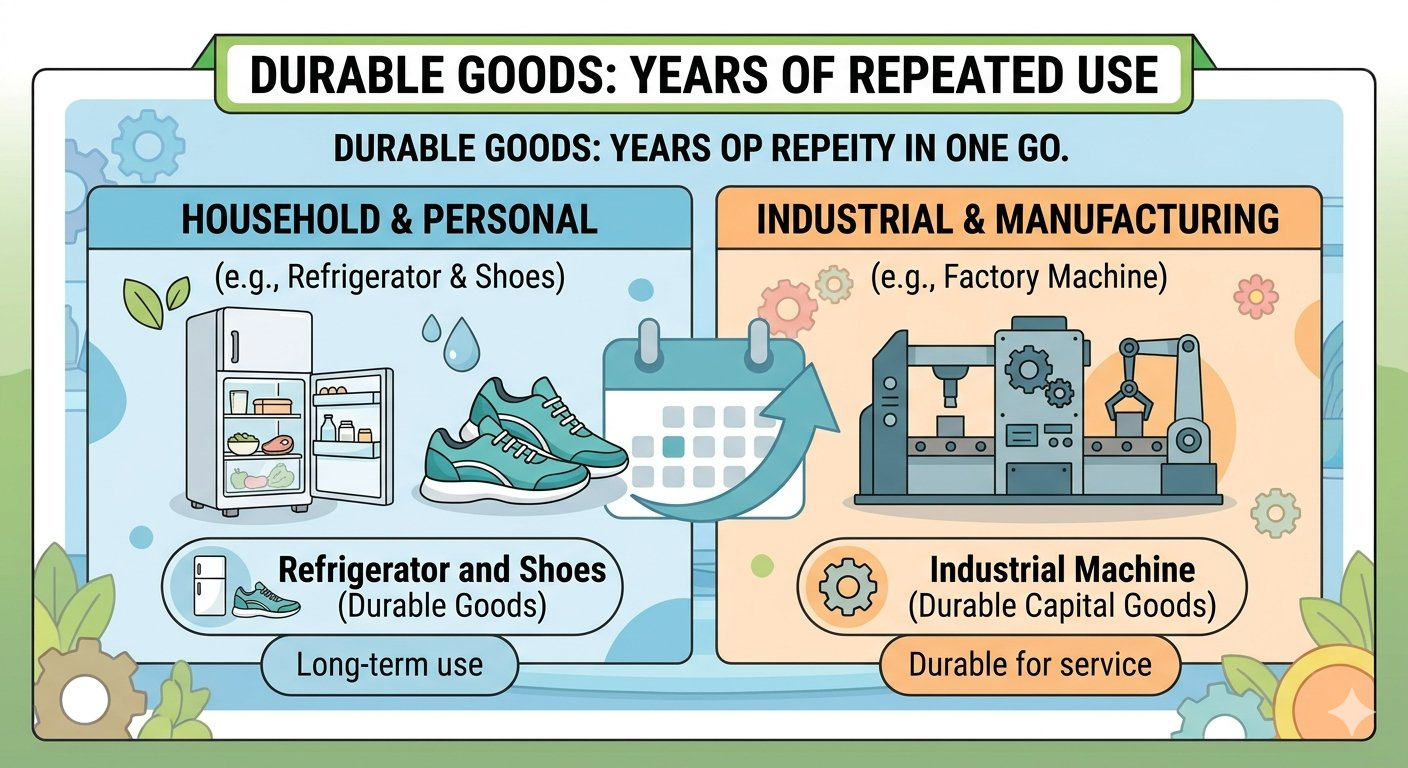
Every day, we use dozens of different items. Some of these items vanish after we use them just once, while others stay with us for years.
In economics, products are divided based on how long they last and how many times you can use them: Single-Use Goods and Durable-Use Goods.
Let’s break down what each means using everyday examples.
1. What Are Single-Use Goods?
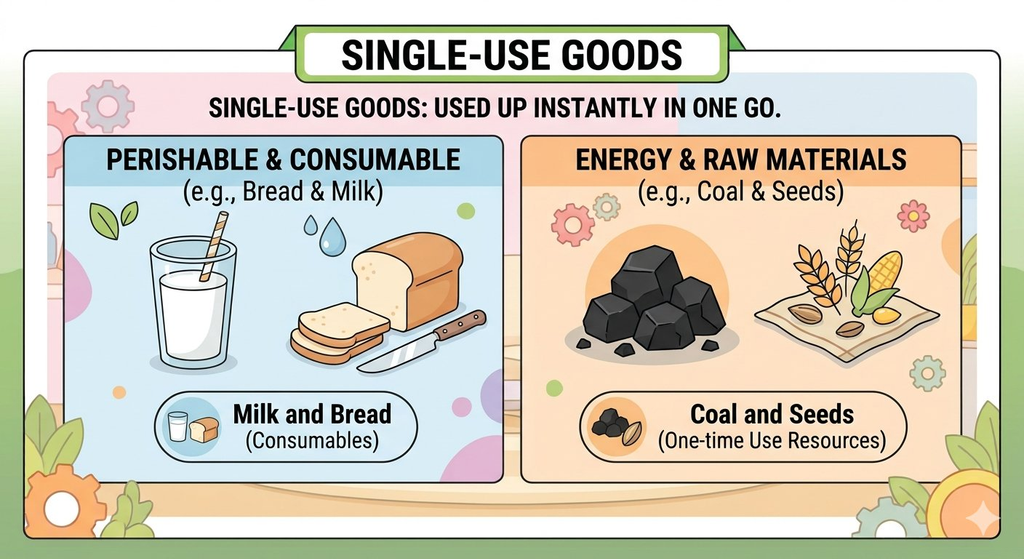
Single-use goods are items that can be used only once. Once you use them, they are completely consumed, used up, or transformed. You cannot reuse them for the same purpose again.
Both everyday consumers and business owners use single-use goods.
Everyday Examples:
- For Households (Consumer): Drinking a glass of milk, eating a piece of bread, or lighting a candle. Once consumed, it is gone!
- For Businesses (Producer): Raw coal burned for electricity, or seeds planted in soil to grow crops.
2. What Are Durable-Use Goods?
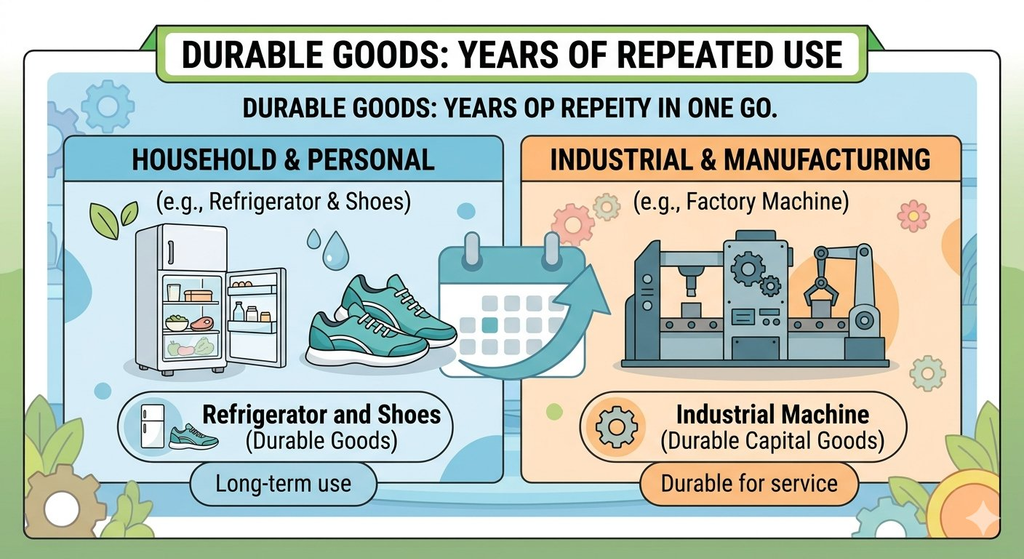
Durable-use goods are long-lasting items that can be used repeatedly over a long period. They do not get destroyed or fully used up after a single use.
Instead, they provide utility or help do work over months, years, or even decades.
Everyday Examples:
- For Households (Consumer): A refrigerator keeping your food cold, a sturdy pair of shoes, or a living room sofa.
- For Businesses (Producer): A factory machine that builds car parts, or a delivery truck used daily.
Key Differences at a Glance
Here is a simple comparison table to show how these two types of goods compare side by side:
| Feature | Single-Use Goods | Durable-Use Goods |
|---|---|---|
| How many times used? | Only once | Repeatedly over a long time |
| What happens after use? | Exhausted, eaten, or transformed | Remains intact for continued use |
| Lifespan | Very short (seconds to minutes) | Long (months to many years) |
| Consumer Example | Eating an apple or drinking milk | Wearing shoes or using a television |
| Producer Example | Coal, seeds, or raw flour | Tractors, tools, or factory machines |
Summary
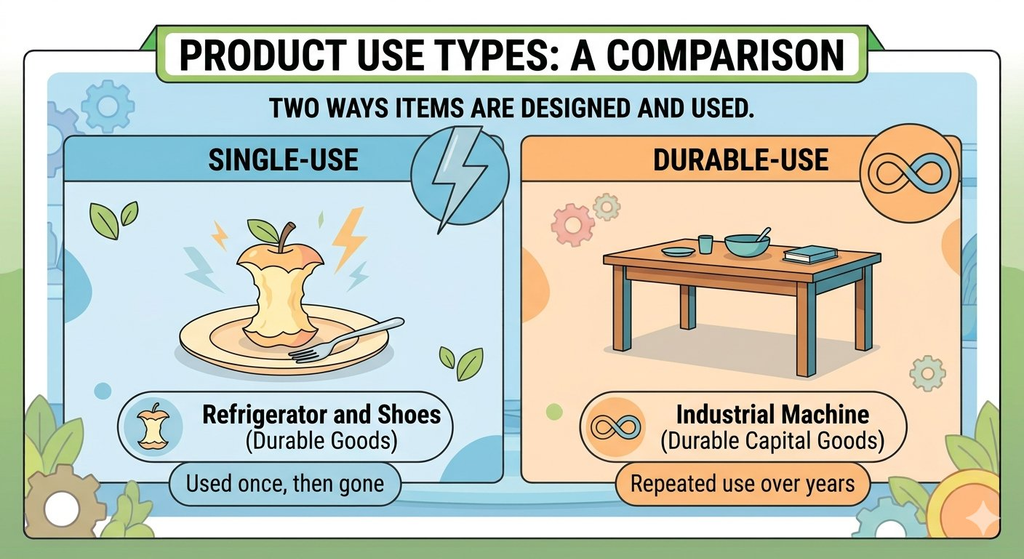
The easiest way to tell the difference is to ask: “Will this item disappear or be ruined after I use it once?”
- If the answer is yes, it is a single-use good (like food or fuel).
- If the answer is no, and you can use it again tomorrow, it is a durable-use good (like furniture or machinery).