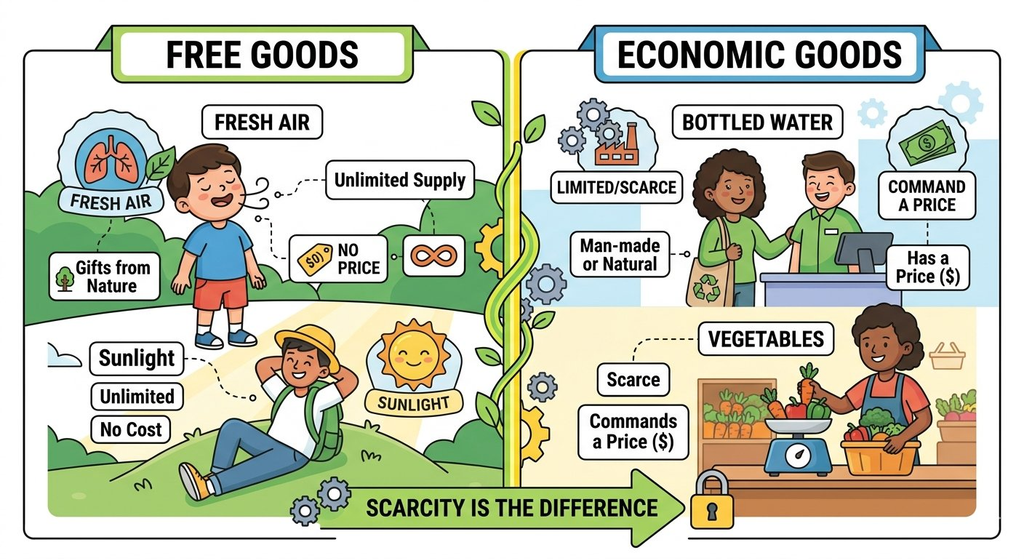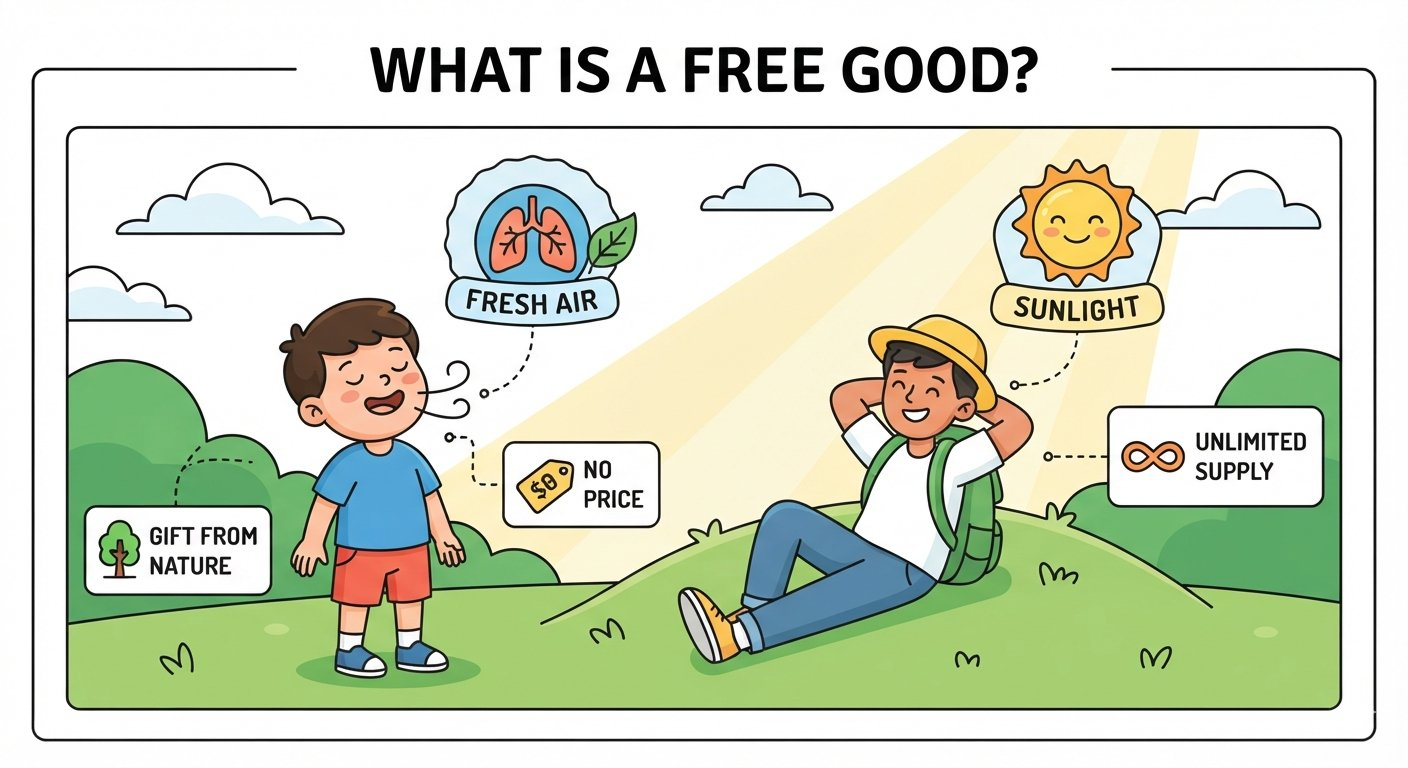
In our daily lives, we use many things. Some are gifts from nature that we use freely. Others are items we buy with money. In economics, these things are separated into two main groups: free goods and economic goods. Let’s look at the simple difference.
What is a Free Good?
A free good is a gift from nature.
- Unlimited Supply: These goods are so abundant that their supply is much greater than our demand for them. Nature provides an endless amount for everyone to use.
- No Price: Because they are everywhere and in unlimited supply, no one can charge a price for them. You do not have to pay money to use them.
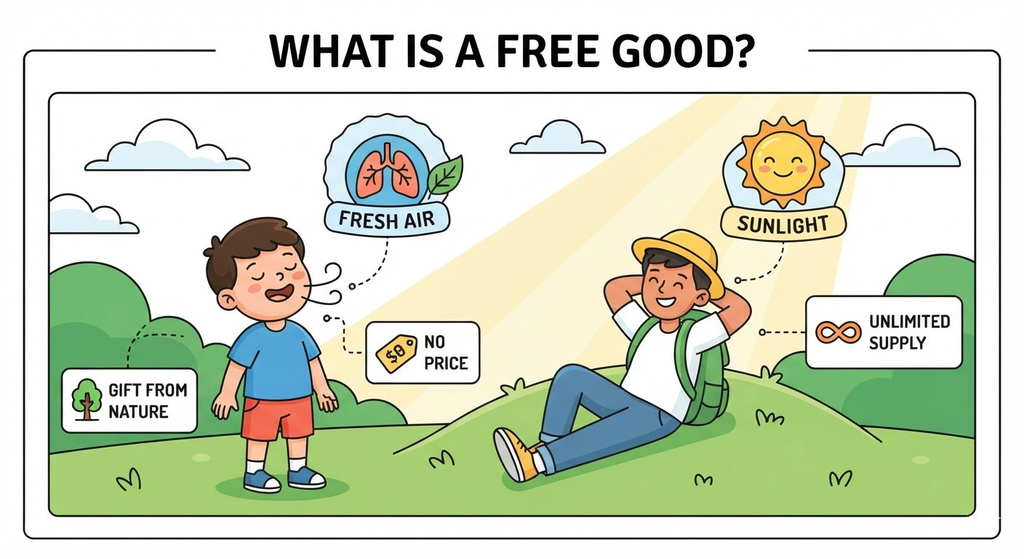
Real-Life Examples:
- Breathing Fresh Air: When you are outside, you can breathe as much fresh air as you need. No one charges you for it.
- Soaking up Sunlight: You can step outside on a sunny day and enjoy the sunlight. It’s a free gift from the sun.
What is an Economic Good?
An economic good is any item that is scarce.
- Limited Supply: There is not enough of this good to go around for everyone to have as much as they want. Demand is greater than supply.
- Command a Price: Because they are limited and have a cost to produce (or gather), you must pay a price to get them in a market. They must be bought.
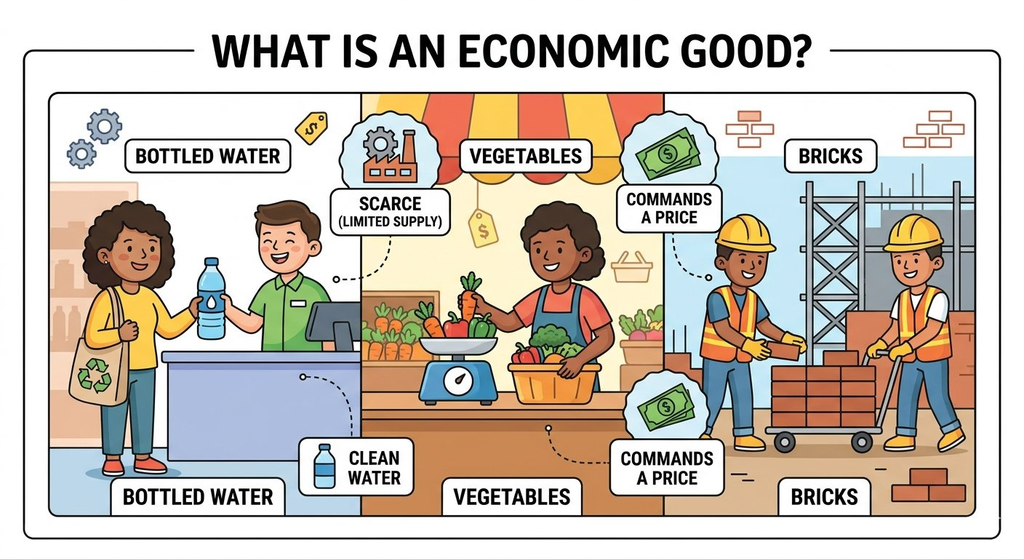
Real-Life Examples:
- Buying Bottled Drinking Water: Water is natural, but it takes work and money to purify, bottle, and transport it. Therefore, a bottle of water has a price in the store.
- Buying Vegetables: Vegetables like carrots and potatoes are grown on a farm. Farmers must spend money and work hard to produce them. You buy them in a market or grocery store.
- Buying Bricks: Bricks are made in a factory from materials like clay. The raw materials and effort to make them are limited. You must buy bricks to build a house.
Why Knowing the Difference Matters
This simple distinction helps us understand how cost and value work in our world.
- Value: Even free goods like sunlight are incredibly valuable to life, but they don’t have a market price. Economic goods have a market price because of their scarcity.
- Making Choices: When a good has a price, it forces us to make a choice. We must decide if we value it enough to spend our limited money on it.
A free good can even become an economic good under certain circumstances. Clean fresh air is a free good outdoors, but if you want extra clean, filtered air in a building, you have to buy an air purifier, which is an economic good. Understanding this helps you see how market forces and costs shape our decisions every day!