
Introduction
Consumers purchase different goods and services to satisfy their needs. However, they may sometimes face problems such as defective products, misleading advertisements, overcharging and poor-quality services.
To protect consumers from such exploitation, the Consumer Protection Act provides important rights. These rights help consumers receive safe products, correct information, fair treatment and suitable remedies.
Meaning of Consumer Rights
Consumer rights are the legal rights given to consumers to protect them against unfair trade practices, defective goods, deficient services and exploitation by businesses.
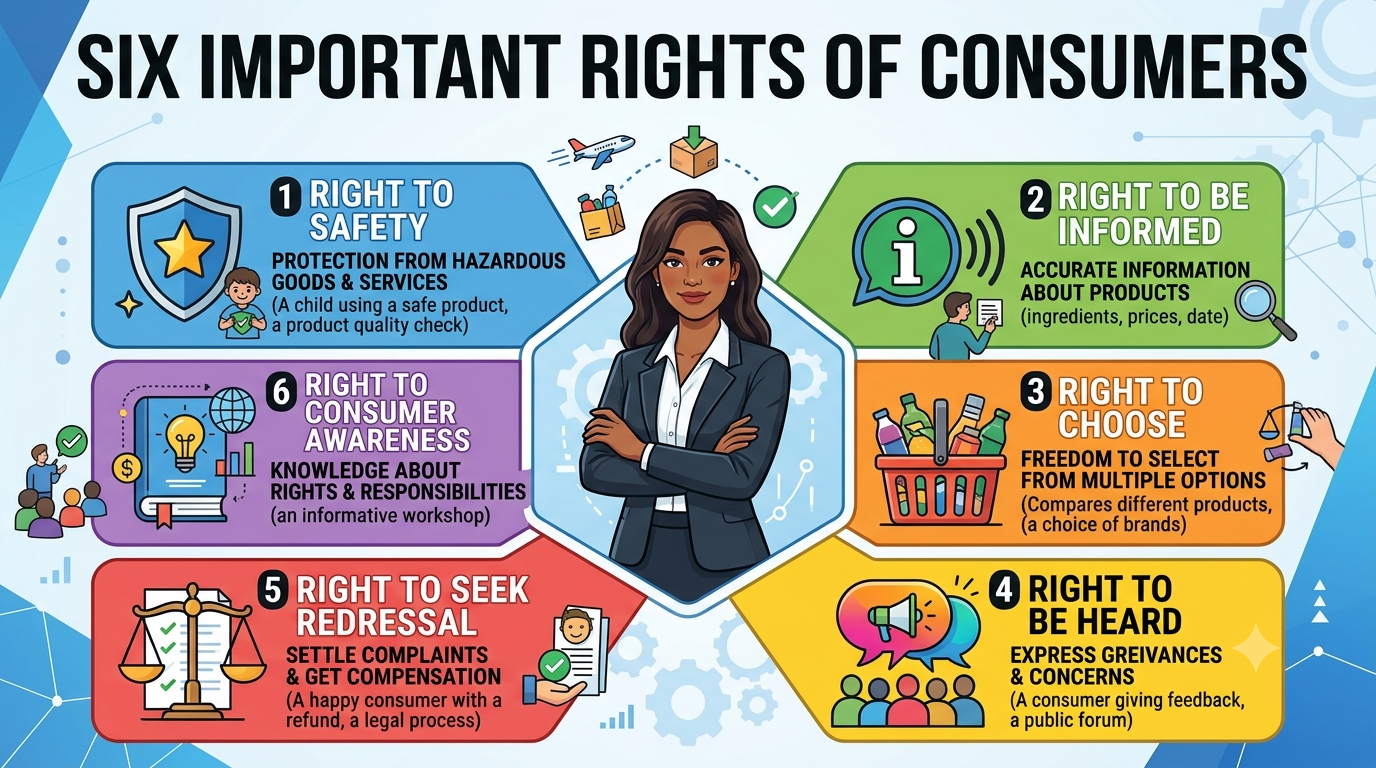
The Consumer Protection Act, 2019 recognises six important consumer rights.
1. Right to Safety
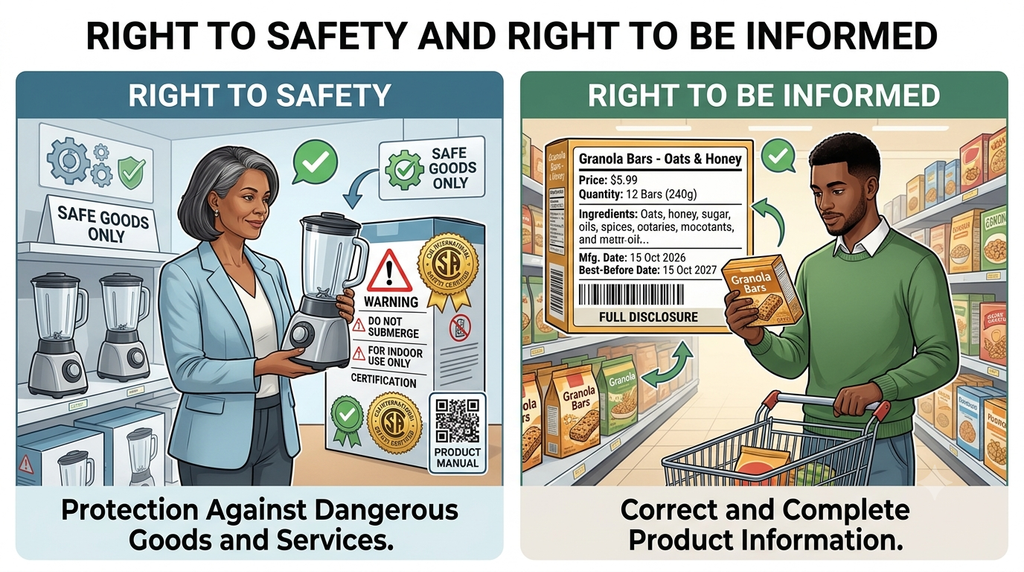
The Right to Safety protects consumers against goods and services that may be dangerous to their life and property.
Consumers have the right to be protected against products that may cause harm when used properly.
Example: Electrical appliances should meet appropriate safety standards so that consumers are protected from electric shocks and other dangers.
2. Right to be Informed
The Right to be Informed means that consumers have the right to receive correct and complete information about the goods and services they purchase.
Important information includes:
- Price of the product.
- Quantity and quality.
- Ingredients and materials used.
- Manufacturing and expiry dates, where applicable.
- Instructions for use.
- Possible risks and side effects, where relevant.
Example: A food product should display information about its ingredients, net quantity, manufacturing details and expiry or best-before date, as applicable.
3. Right to Choose
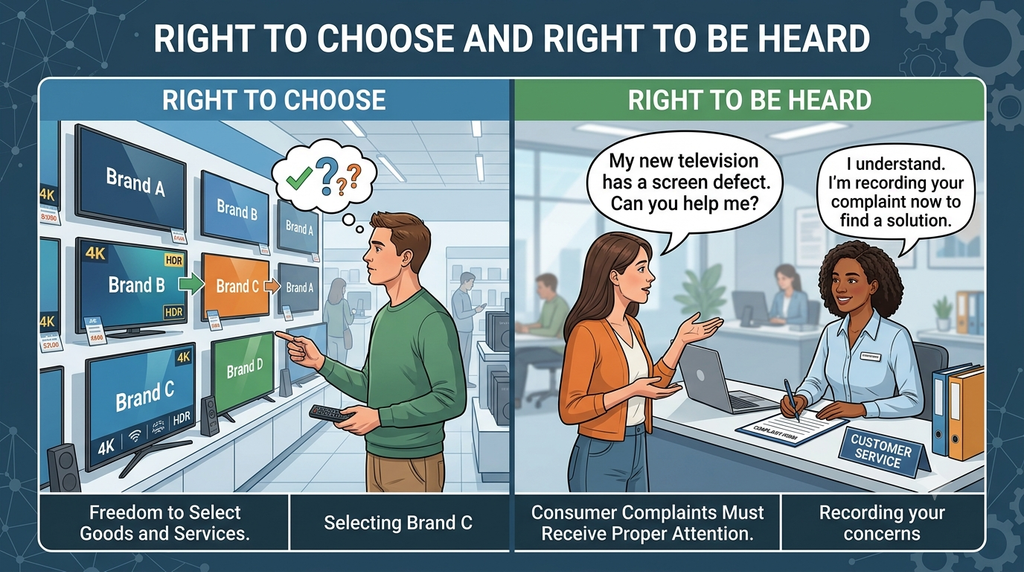
The Right to Choose means that consumers should have access to different goods and services at competitive prices.
They should be free to select products according to their needs, preferences and purchasing power.
Businesses should not force consumers to purchase unwanted products or services as a condition for buying another product, except where permitted by law.
Example: A customer purchasing a television should be free to select a suitable brand and model without being forced to purchase an additional product.
4. Right to be Heard
The Right to be Heard means that consumers have the right to express their complaints and concerns and have their interests considered by appropriate authorities.
Consumer grievances should receive proper attention.
Example: If a customer receives a defective refrigerator, they can raise a complaint with the seller, manufacturer or appropriate consumer commission.
5. Right to Seek Redressal
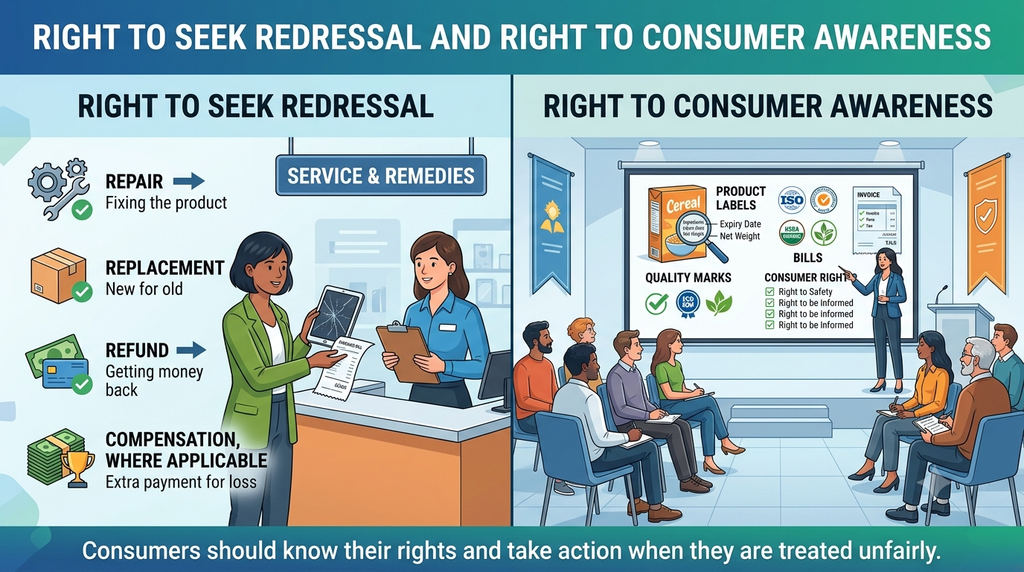
The Right to Seek Redressal means that consumers have the right to seek a suitable remedy against unfair trade practices, defective goods and deficient services.
Depending on the case, remedies may include:
- Repair of defective goods.
- Replacement of goods.
- Refund of the amount paid.
- Removal of defects or deficiencies.
- Compensation for loss or injury.
- Discontinuation of unfair or restrictive trade practices.
Example: If a customer purchases a defective washing machine, they may seek repair, replacement or refund, depending on the circumstances and applicable law.
6. Right to Consumer Awareness
The Right to Consumer Awareness, also known as the Right to Consumer Education, means that consumers should have access to knowledge and information about their rights and responsibilities.
It helps consumers make informed decisions and protect themselves from exploitation.
Example: Consumers should learn how to read product labels, check quality marks, understand bills and file complaints when necessary.
Importance of Consumer Rights
Consumer rights are important because they:
- Protect consumers against exploitation.
- Promote the sale of safe and quality products.
- Encourage businesses to follow fair practices.
- Help consumers make informed purchasing decisions.
- Provide a way to seek remedies for grievances.
- Increase consumer awareness and confidence.
- Promote honesty and accountability in the marketplace.
Conclusion
Consumer rights protect individuals from unfair business practices and help create a fair marketplace. Every consumer should understand these six rights and use them whenever necessary.