Introduction
Consumer protection is not the responsibility of the government alone. Several parties work together to protect consumers from exploitation and unfair trade practices.
The government, businesses, consumers, consumer organisations and non-governmental organisations (NGOs) all play important roles in creating a fair marketplace.
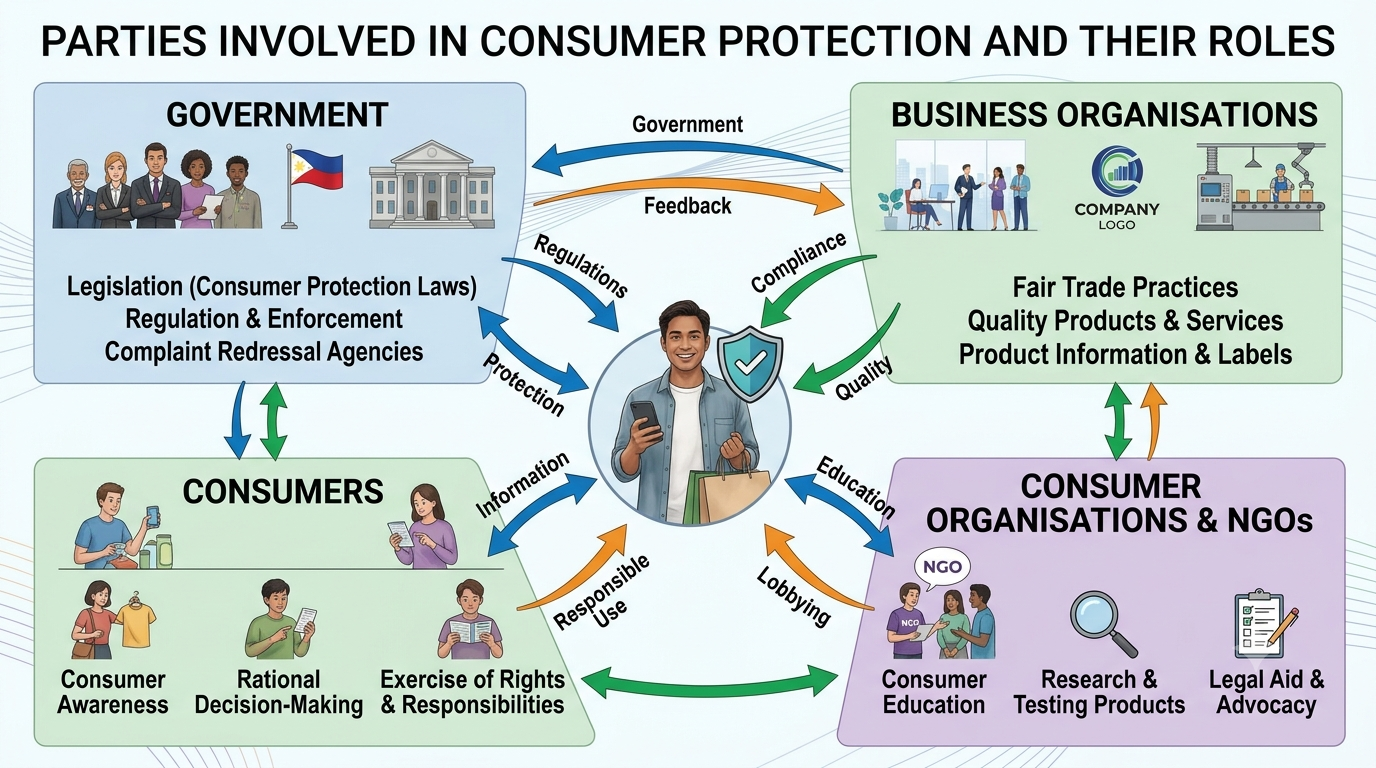
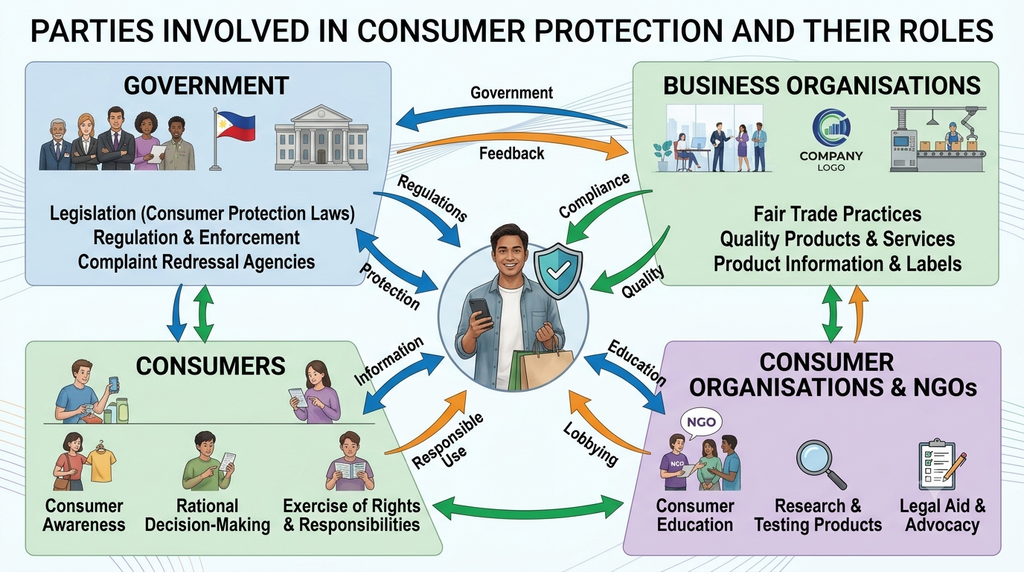
1. Parties Involved in Consumer Protection
The main parties involved in consumer protection are:
- Government.
- Business organisations.
- Consumers.
- Consumer organisations and NGOs.
2. Role of the Government in Consumer Protection
The government plays an important role in protecting consumer interests through laws, rules and consumer dispute redressal institutions.
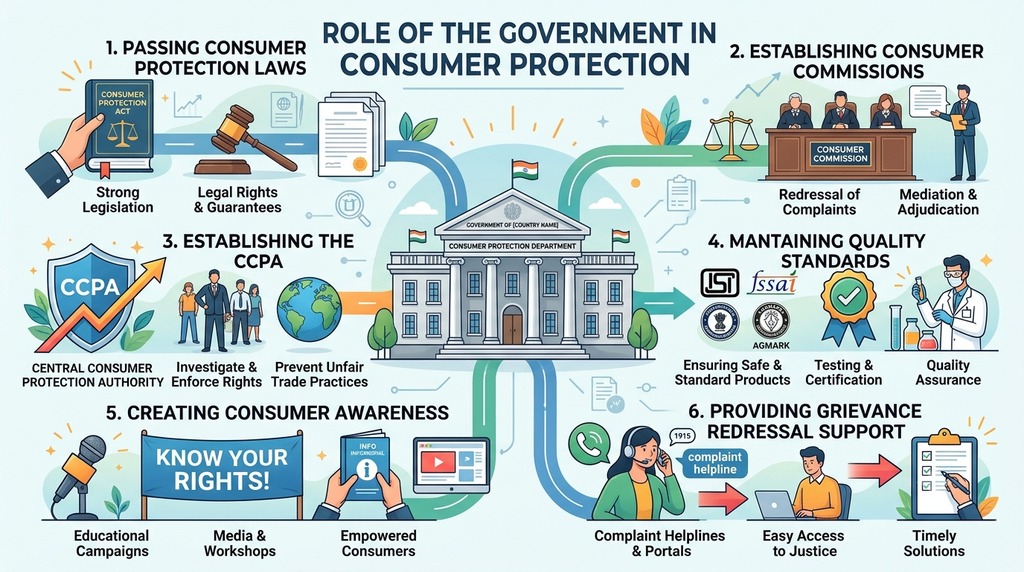
1. Passing Consumer Protection Laws
The government makes laws to protect consumers against defective goods, deficient services, misleading advertisements and unfair trade practices.
2. Establishing Consumer Commissions
The government provides a three-level consumer dispute redressal system:
- District Consumer Disputes Redressal Commission.
- State Consumer Disputes Redressal Commission.
- National Consumer Disputes Redressal Commission.
These commissions hear consumer complaints and provide suitable remedies.
3. Establishing the Central Consumer Protection Authority
The Central Consumer Protection Authority (CCPA) works to protect, promote and enforce the rights of consumers as a class.
It can investigate violations of consumer rights, act against unfair trade practices and take action against misleading advertisements.
4. Maintaining Quality Standards
The government supports quality and safety standards through institutions such as the Bureau of Indian Standards (BIS).
These standards help ensure that products meet prescribed requirements.
5. Creating Consumer Awareness
The government conducts awareness programmes and campaigns to educate people about their rights and responsibilities.
6. Providing Grievance Redressal Support
Government initiatives such as the National Consumer Helpline help consumers raise grievances and seek assistance.
3. Role of Business Organisations in Consumer Protection
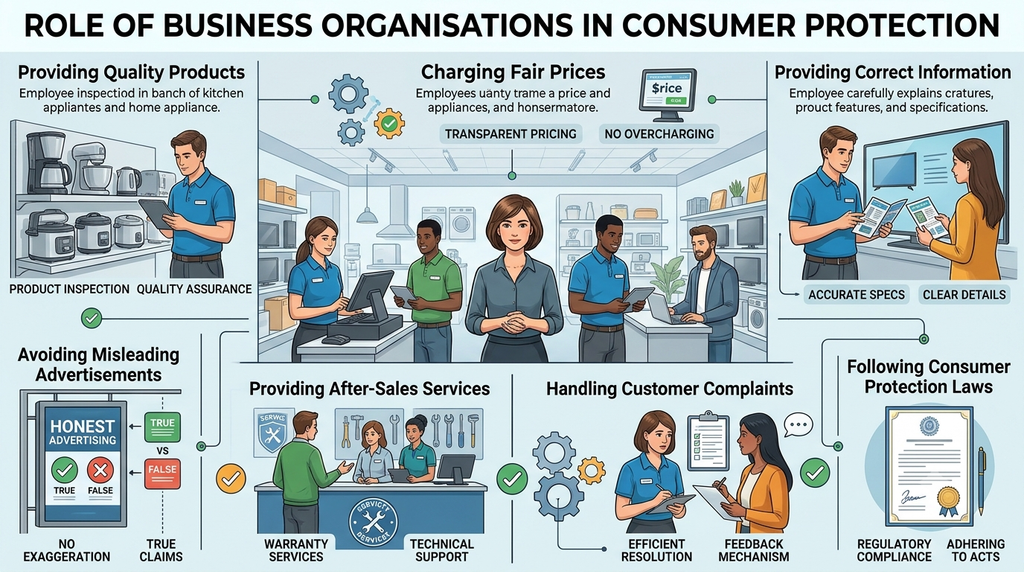
Business organisations also have a responsibility to protect consumers. They should not depend only on legal requirements but should follow ethical business practices.
Their important responsibilities include:
- Providing Quality Products: Businesses should manufacture and sell goods that meet required quality and safety standards.
- Charging Fair Prices: They should avoid overcharging and unfair pricing practices.
- Providing Correct Information: Product labels and advertisements should contain accurate information.
- Avoiding Misleading Advertisements: Businesses should not make false or exaggerated claims about their products.
- Providing After-Sales Services: They should offer proper repair, maintenance and customer support.
- Handling Complaints: Businesses should listen to consumer complaints and try to resolve them quickly.
- Following Consumer Laws: They should obey consumer protection laws and other applicable regulations.
4. Role of Consumers in Consumer Protection
Consumers also have an important role in protecting themselves and other buyers.
They should:
- Understand their consumer rights.
- Check product quality and labels.
- Ask for bills and purchase receipts.
- Compare prices and quality.
- Avoid misleading offers.
- Report unfair trade practices.
- Preserve purchase documents.
- File complaints when their rights are violated.
5. Role of Consumer Organisations and NGOs
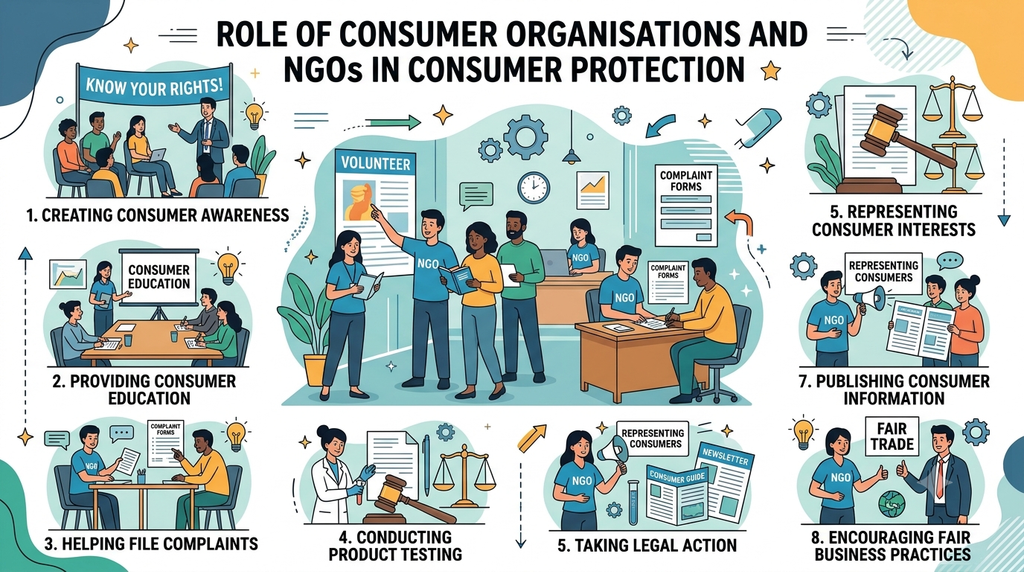
Consumer organisations and Non-Governmental Organisations (NGOs) are voluntary organisations that work to protect consumer interests.
They act as a link between consumers, businesses and government authorities.
Important Roles of NGOs in Consumer Protection
1. Creating Consumer Awareness
NGOs organise meetings, workshops, seminars and awareness campaigns to educate people about consumer rights and responsibilities.
2. Providing Consumer Education
They explain how to check product quality, read labels, understand bills and identify misleading advertisements.
3. Helping Consumers File Complaints
Many consumer organisations guide consumers in preparing complaints and approaching the appropriate consumer commission.
4. Conducting Product Testing
Some organisations arrange independent testing of products to identify defects, unsafe materials or poor quality.
5. Taking Legal Action
Recognised consumer associations can file complaints before consumer commissions, subject to the provisions of the Consumer Protection Act.
6. Representing Consumer Interests
NGOs raise consumer-related issues before government departments and other authorities.
7. Publishing Consumer Information
They publish magazines, newsletters, reports and educational materials to inform people about product quality, consumer rights and unfair trade practices.
8. Encouraging Fair Business Practices
They encourage manufacturers and sellers to maintain quality, provide correct information and treat consumers fairly.
Conclusion
Consumer protection requires cooperation among the government, businesses, consumers and consumer organisations. The government provides laws and institutions, businesses must follow fair practices, and NGOs help educate and support consumers. Together, these parties help protect consumer interests and promote a fair marketplace.