
Introduction
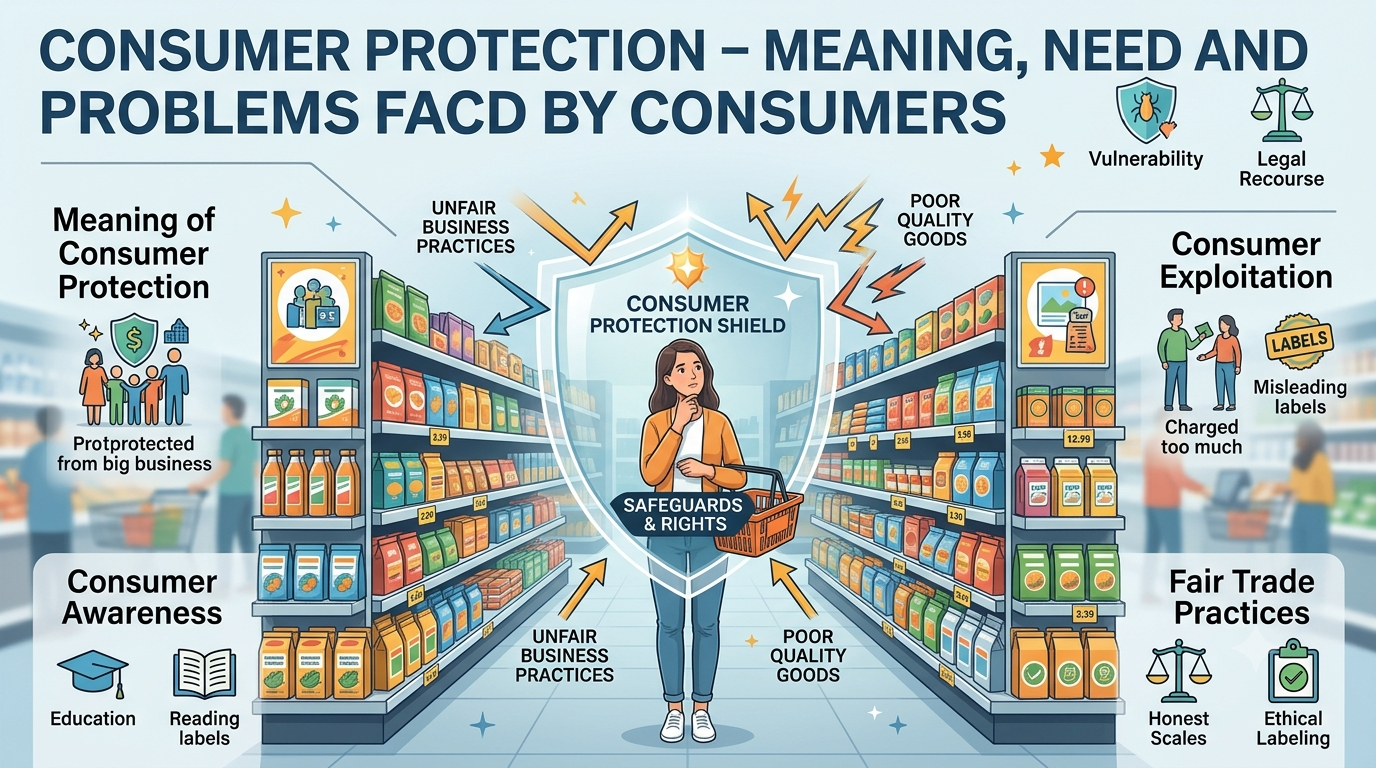
Consumers are an important part of every business activity. Businesses produce goods and provide services to satisfy the needs of consumers. However, consumers do not always receive fair treatment. They may face problems such as poor-quality products, overcharging, adulteration, misleading advertisements and defective goods.
Therefore, consumers need protection against unfair business practices. Consumer protection helps ensure that consumers receive safe products, correct information and fair treatment.
1. Meaning of Consumer Protection
Consumer protection refers to the measures taken by the government, businesses, consumer organisations and other institutions to protect consumers from exploitation and unfair trade practices.
It aims to safeguard consumer interests and ensure that consumers receive good-quality goods and services at fair prices.
Consumer protection also provides a system through which consumers can raise complaints and seek suitable remedies when their rights are violated.

2. Why Should Consumers Be Protected?
Consumers should be protected for the following reasons:
1. Protection Against Exploitation
Consumers may be cheated by dishonest sellers through overcharging, false promises, adulteration and the sale of defective products. Protection helps prevent such exploitation.
2. Lack of Consumer Awareness
Many consumers do not know their rights and responsibilities. They may not understand product labels, quality marks, warranties or complaint procedures.
Consumer protection helps educate them.
3. Limited Bargaining Power
Individual consumers usually have less bargaining power than large manufacturers and sellers. Businesses may take advantage of this situation.
Consumer protection helps create a fair balance between buyers and sellers.
4. Protection of Health and Safety
Unsafe products, adulterated food, defective electrical appliances and harmful medicines can affect the health and safety of consumers.
Consumer protection encourages businesses to follow safety and quality standards.
5. Prevention of Unfair Trade Practices
Some businesses use misleading advertisements, false discounts, incorrect weights and measures or hidden charges to attract customers.
Consumer protection discourages such practices.
6. Consumer Satisfaction
Consumers should receive goods and services that match the promised quality and price. Protection helps improve customer confidence and satisfaction.
7. Responsible Business Behaviour
Consumer protection encourages businesses to follow ethical practices, provide accurate information and take responsibility for defective products and poor services.

3. Problems Faced by Consumers in Daily Life
Consumers may face several problems while purchasing goods and using services.
1. Adulteration
Adulteration means mixing inferior, harmful or unwanted substances with products, especially food items.
Example: Mixing harmful substances or cheaper ingredients with milk, spices or edible oils.
2. Sale of Substandard Goods
Some sellers offer goods that do not meet the required quality or safety standards.
Example: Selling low-quality electrical appliances that may stop working or create safety risks.
3. Sale of Duplicate and Counterfeit Products
Consumers may unknowingly purchase fake products that imitate well-known brands.
Example: Selling counterfeit branded shoes, watches or electronic accessories.
4. Overcharging
Some sellers charge more than the printed Maximum Retail Price (MRP) or the agreed price.
Example: A shopkeeper charging more than the printed MRP for a packaged product, without a lawful basis.
5. Misleading Advertisements
Some advertisements make false or exaggerated claims about the quality, benefits or performance of products.
Example: An advertisement promising unrealistic results from a health or beauty product.
6. Incorrect Weights and Measures
Some sellers use faulty weighing machines or provide less quantity than promised.
Example: A shopkeeper selling one kilogram of rice but giving only 900 grams.
7. Defective Goods

Consumers may receive products that do not work properly or fail to meet the promised standards.
Example: Purchasing a new washing machine that does not function correctly.
8. Deficiency in Services
Consumers may receive poor or incomplete services from banks, insurance companies, transport providers, internet companies and other service providers.
Example: A bank failing to provide a service within the promised time or an internet provider repeatedly failing to deliver the agreed service.
9. Hoarding and Black Marketing
Some traders deliberately store essential goods to create artificial shortages and sell them at higher prices.
Example: Stocking essential commodities during a shortage and selling them at excessive prices.
10. Poor After-Sales Service
Some sellers and manufacturers fail to provide proper repairs, replacements or customer support after selling a product.
Example: A company refusing to honour a valid warranty claim without a proper reason.
Conclusion
Consumer protection is necessary to safeguard consumers from exploitation and unfair business practices. Consumers should be aware of their rights and responsibilities, while businesses should provide safe products, accurate information and fair services. A strong consumer protection system helps create a fair and responsible marketplace.