
The Four Rules of Human Wants: Why We Keep Wanting More
In economics, “wants” are the desires we feel for goods and services. Our wants are a powerful force. They drive everything from why we go to work to which cereal we buy.
Understanding why we want things—and how these desires work—is crucial for understanding the whole economy. While everyone wants different things (like a new phone versus a safe home), most human wants share four main characteristics.
Here is a simple look at the four rules that define human desires.
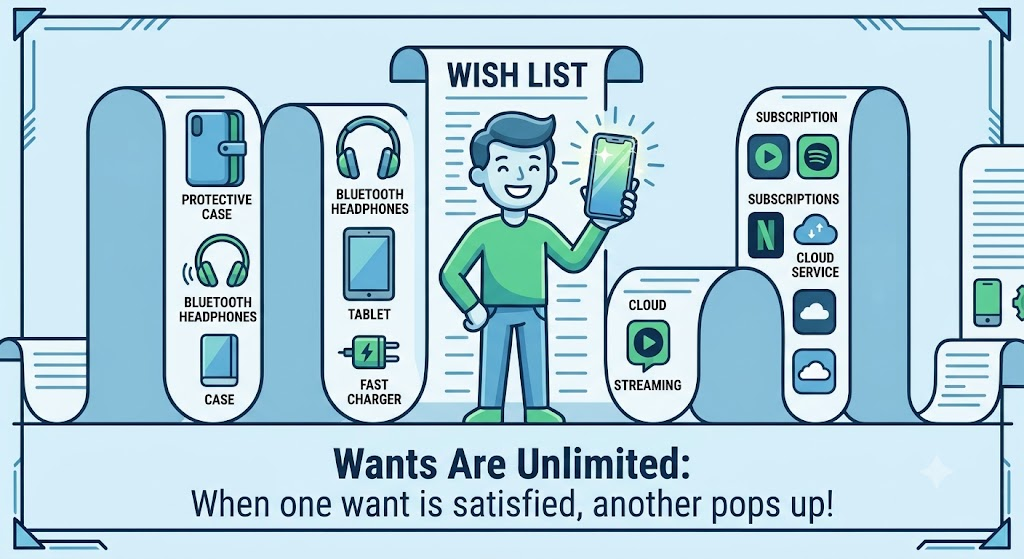
1. Wants Are Unlimited: The Never-Ending Wish List
This is the most fundamental rule. Human wants never stop. As soon as you get the thing you wanted most, a new desire immediately appears in its place.
Imagine you finally save enough money to buy your dream smartphone. You are happy. But then you immediately realize you want a protective case, high-quality wireless headphones, and maybe a streaming subscription to use on the phone. The wish list simply never ends.
2. A Single Want Is Satiable: You Can Get Enough
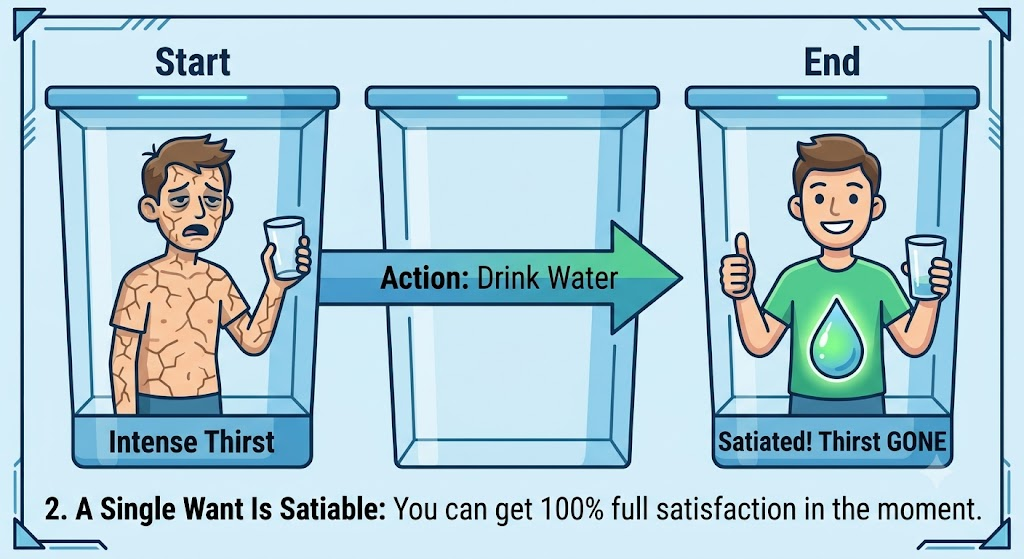
While the total list of wants is endless, any individual want can be completely satisfied.
Take hunger. If you are extremely hungry, you feel a intense want for food. If you sit down and eat a full meal, you eventually become full. At that exact moment, your want for food is totally gone, or “satiable.” You can get 100% satisfaction for a single want in a moment.
3. Some Wants Arise Again and Again: The Recurring Needs
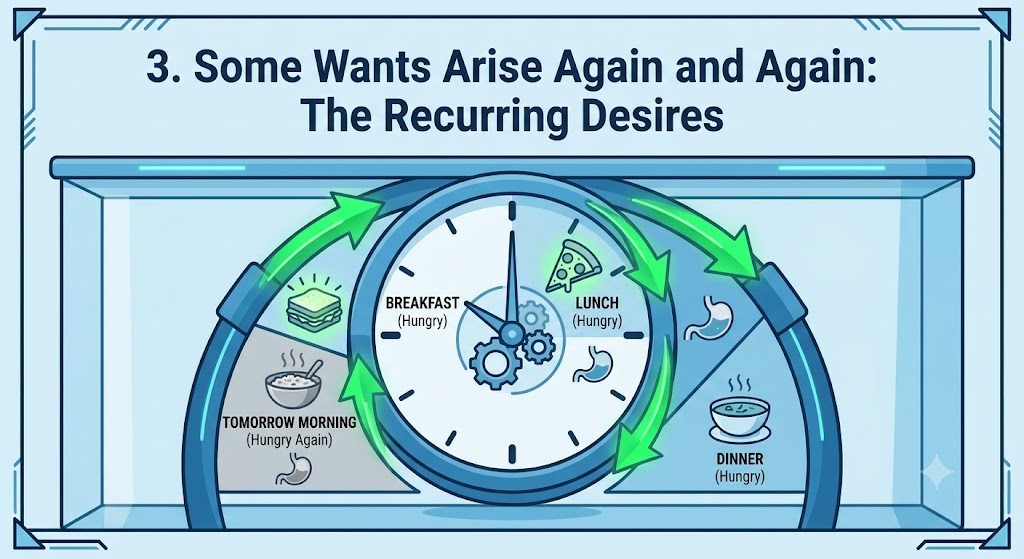
Even if you satisfy a want today, that doesn’t mean it’s gone forever. Some desires are recurring. They are like predictable timers that reset periodically.
Your basic needs (hunger and thirst) are the best examples. You satisfy your hunger with breakfast, but by lunchtime, the exact same want has arisen again. Other examples include the need for a haircut, refilling your car’s fuel tank, or paying monthly bills.
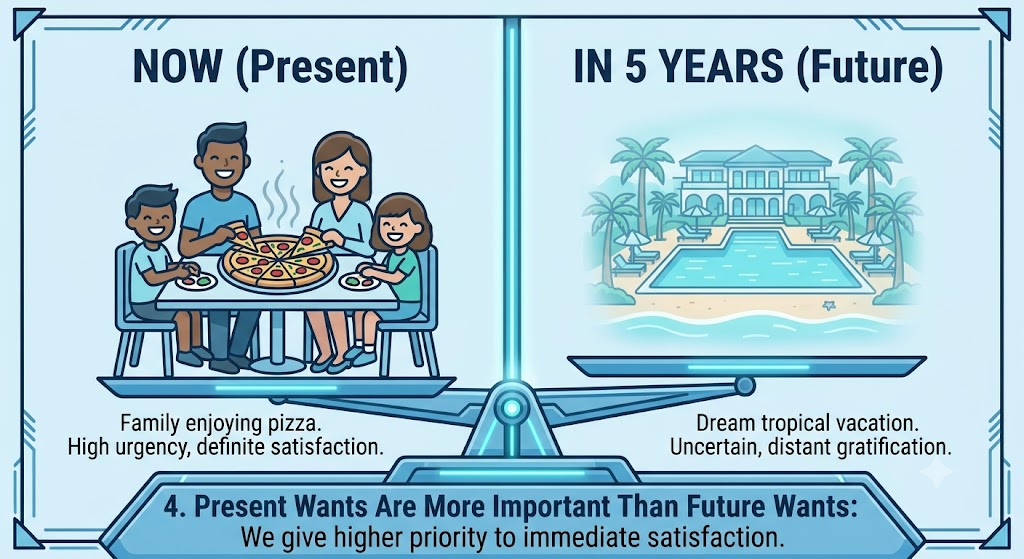
4. Present Wants are More Important than Future Wants: Prioritizing “Now”
Humans are naturally wired to prioritize immediate needs over hypothetical future ones. We place higher value on satisfying a want right now rather than waiting.
If you are hungry at this very moment, a warm meal today is vastly more important to you than the promise of a luxury feast next year. Economists call this “time preference.” We usually choose immediate satisfaction, especially when the future is uncertain.
Summary
Human wants are unlimited, recurring, and prioritize the present. But we are capable of satisfying specific desires completely when we allocate our resources. Understanding these rules is the key to managing our finite budgets (Image 3) and optimizing (Image 4) how we live.