
Why Controlling Our Endless Wants is the Secret to Happiness: A Simple Guide
Imagine you are trying to fill a bucket that has holes in the bottom. No matter how much water you pour in, it never stays full. This is exactly what happens when our desires and wants (the things we wish to have, like a new car, expensive clothes, or the latest phone) keep growing endlessly[cite: 1].
Both ancient philosophies and practical economics teach us a simple but powerful lesson: Keeping our wants expanding leads to permanent frustration because our resources are limited[cite: 1]. Let’s explore why we should consciously try to limit our wants in plain language[cite: 1].
The Problem: When Desires Take Over
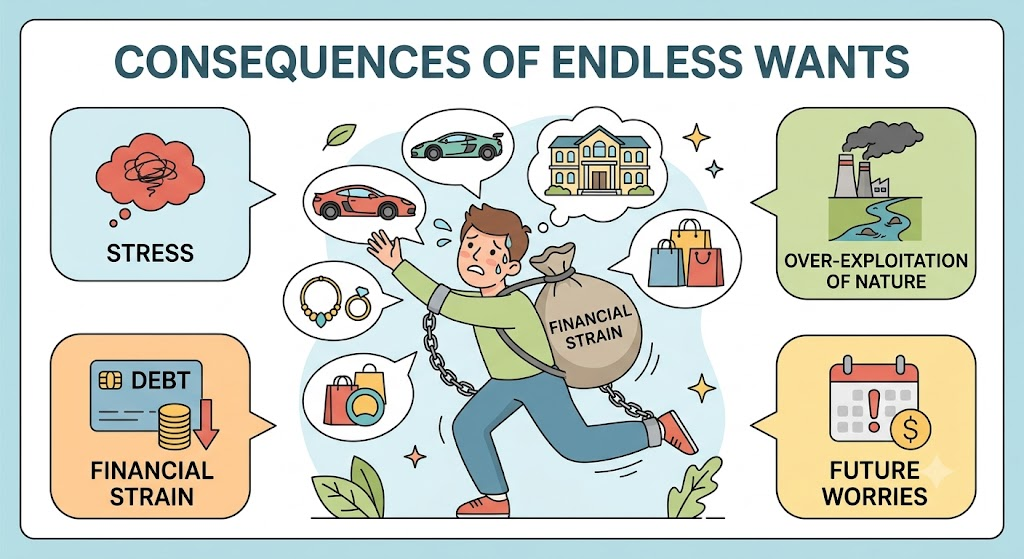
Our wants can quickly become like a runaway train. If we fail to control our endless desires, we run after infinite material possessions, leading to several negative outcomes[cite: 1]:
- Infinite Stress: The pressure to constantly earn more money and work harder to afford “the next big thing” creates immense stress[cite: 1]. We forget how to enjoy life because we are always looking for what’s next.
- Harm to Nature: Chasing endless material possessions means factories produce more and we consume more. This leads to the over-exploitation of nature, pollution, and depletion of natural resources[cite: 1].
- Financial Strain: Trying to buy everything we want can easily lead to spending money we don’t have, creating financial strain, debt, and worry about bills[cite: 1].
The Solution: Finding Peace by Limiting Desires
The good news is that we have the power to consciously limit our wants[cite: 1]. By learning to do this, we can achieve true happiness in several important ways[cite: 1]:
- True Mental Peace: We stop the constant chase. We can relax and breathe easily because we are satisfied with less. This brings real calm and mental peace[cite: 1].
- Living Within Our Means: Limiting wants means we spend our money carefully. We can live within our means (spending less than we earn), avoid debt, and build savings for emergencies or future needs[cite: 1].
- Greater Satisfaction: We learn to appreciate the simple joys in life and find greater satisfaction with what we already have, rather than always wanting more[cite: 1]. A good meal, time with family, or a walk outside becomes enough.
Final Thoughts: A Simple Choice
In the end, it’s a choice between the unending frustration of chasing empty desires versus the simple, lasting happiness of being content[cite: 1]. By knowing when to say “enough,” we can protect our peace of mind, our finances, and our planet. This wisdom isn’t about being poor; it’s about being free from the endless pursuit of “more[cite: 1].”