Understanding Human Desires: Economic vs. Non-Economic Wants
Every single day, we feel the desire for many different things. Some days, you might want a warm cup of coffee, a new pair of shoes, or a box of medicine when you feel unwell. Other days, you just want to sit outside, breathe fresh air, or spend quality time with your family.
In simple terms, all these desires are called human wants. But did you know that economics divides our wants into two clear groups? They are called Economic Wants and Non-Economic Wants. Let’s break them down in plain, easy-to-understand language.
1. What Are Economic Wants?
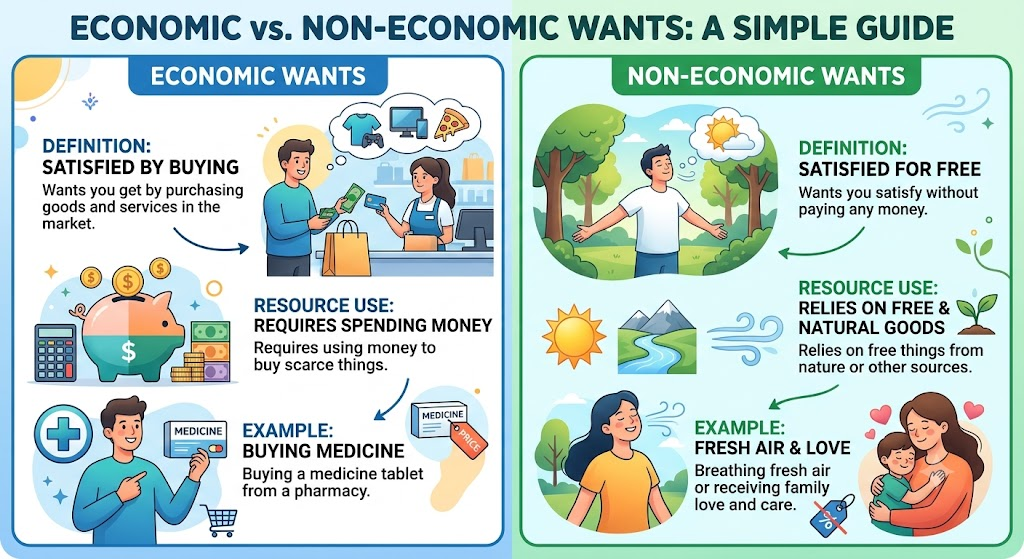
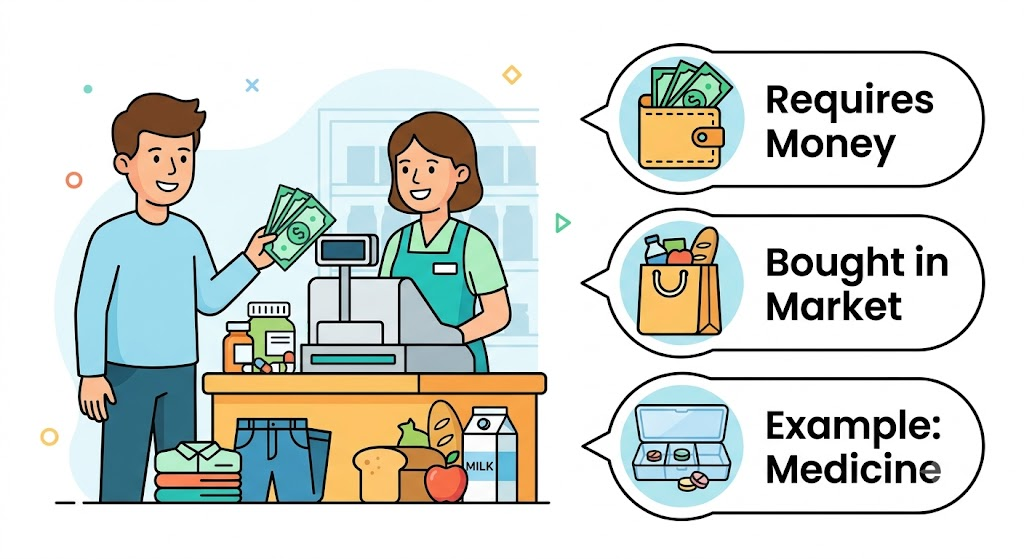
An economic want is any desire that you can satisfy only by paying money.
How it works: To get these items or services, you must go to a shop, a market, or an online store and pay a price.
Resource Use: These items are made using limited resources (like effort, raw materials, and time). Because these items are not available endlessly for free, they cost money.
Real-Life Example: Buying a medicine tablet from a pharmacy when you have a headache. You cannot simply walk out with the medicine; you must spend your money to get it.
2. What Are Non-Economic Wants?
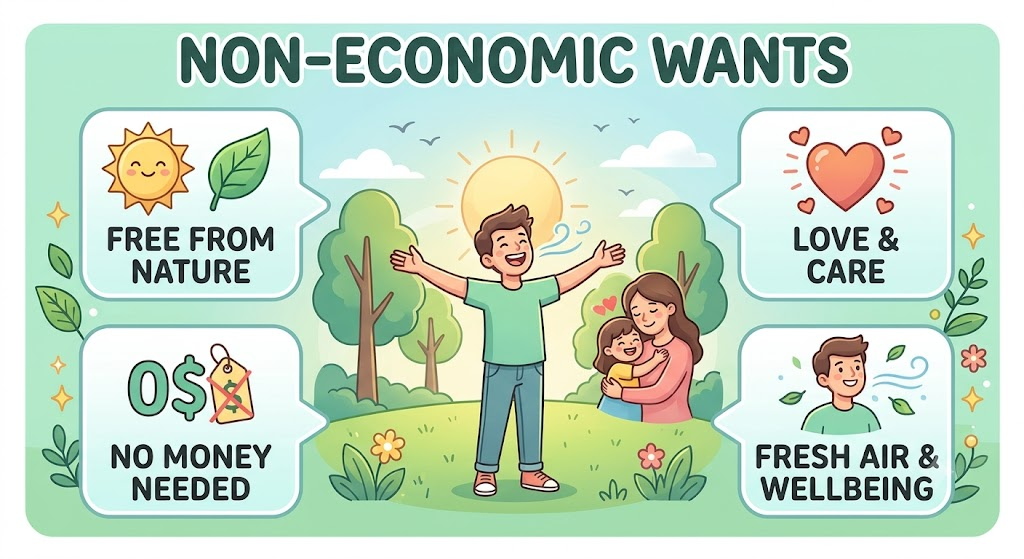
A non-economic want is any desire that you can satisfy completely for free, without spending a single penny.
How it works: These wants do not come from a shop or a paid market. You enjoy them freely as a gift from nature or from the people around you.
Resource Use: They rely on natural resources that are freely available in abundance, or on emotional care that has no price tag.
Real-Life Example: Breathing fresh outdoor air while sitting in a park, or receiving unconditional love and care from a family member. No one hands you a bill for breathing outdoor air or for receiving a hug from your parents.
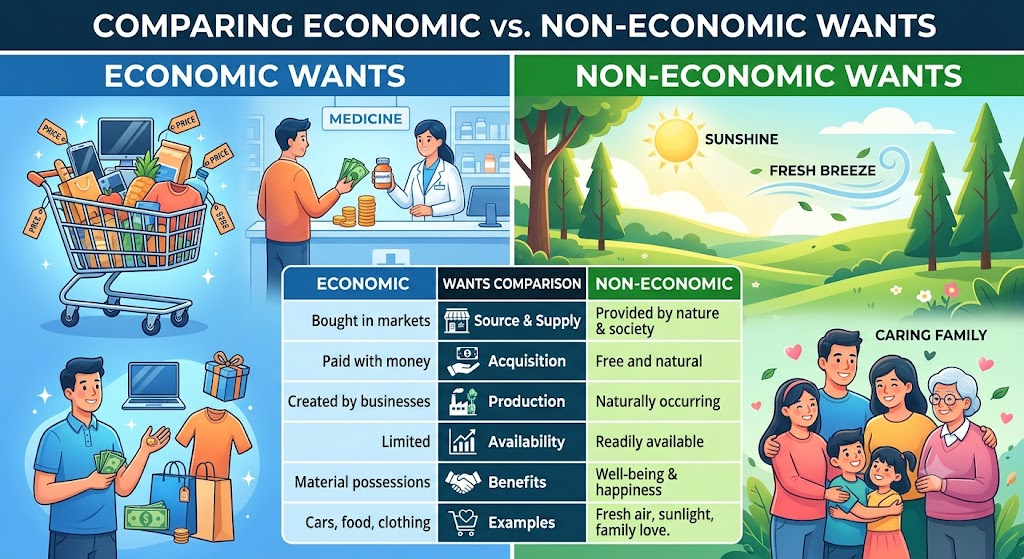
Quick Comparison: Side-by-Side Summary
Here is a quick breakdown to help you see the key differences at a glance:
Feature
Economic Wants
Non-Economic Wants
Definition
Wants satisfied by purchasing goods and services from the market by paying a price.
Wants satisfied without having to pay a market price.
Resource Use
Requires spending money or using scarce marketed commodities.
Relies on free or natural goods and services.
Example
Buying a medicine tablet from a pharmacy.
Breathing fresh outdoor air or receiving unconditional love from a family member.
Final Thoughts
Understanding the difference between economic and non-economic wants is very simple:
If it comes with a price tag and requires your hard-earned money, it is an economic want.
If nature or loved ones give it to you freely with no bill attached, it is a non-economic want.
Bizniz uses cookies to improve your experience, analyze website traffic, and make our Commerce learning resources better. Choose which cookies you allow.
Functional
Always active
The technical storage or access is strictly necessary for the legitimate purpose of enabling the use of a specific service explicitly requested by the subscriber or user, or for the sole purpose of carrying out the transmission of a communication over an electronic communications network.
Preferences
The technical storage or access is necessary for the legitimate purpose of storing preferences that are not requested by the subscriber or user.
Statistics
The technical storage or access that is used exclusively for statistical purposes.The technical storage or access that is used exclusively for anonymous statistical purposes. Without a subpoena, voluntary compliance on the part of your Internet Service Provider, or additional records from a third party, information stored or retrieved for this purpose alone cannot usually be used to identify you.
Marketing
The technical storage or access is required to create user profiles to send advertising, or to track the user on a website or across several websites for similar marketing purposes.