A shop sells goods for ₹50,000. Does that mean the owner has earned ₹50,000 in profit?
Not even close. The shop had to buy the goods and may have paid wages, rent, advertising costs and other expenses. To discover the actual result, accountancy examines profit in two stages.
Stage 1: The Trading Account
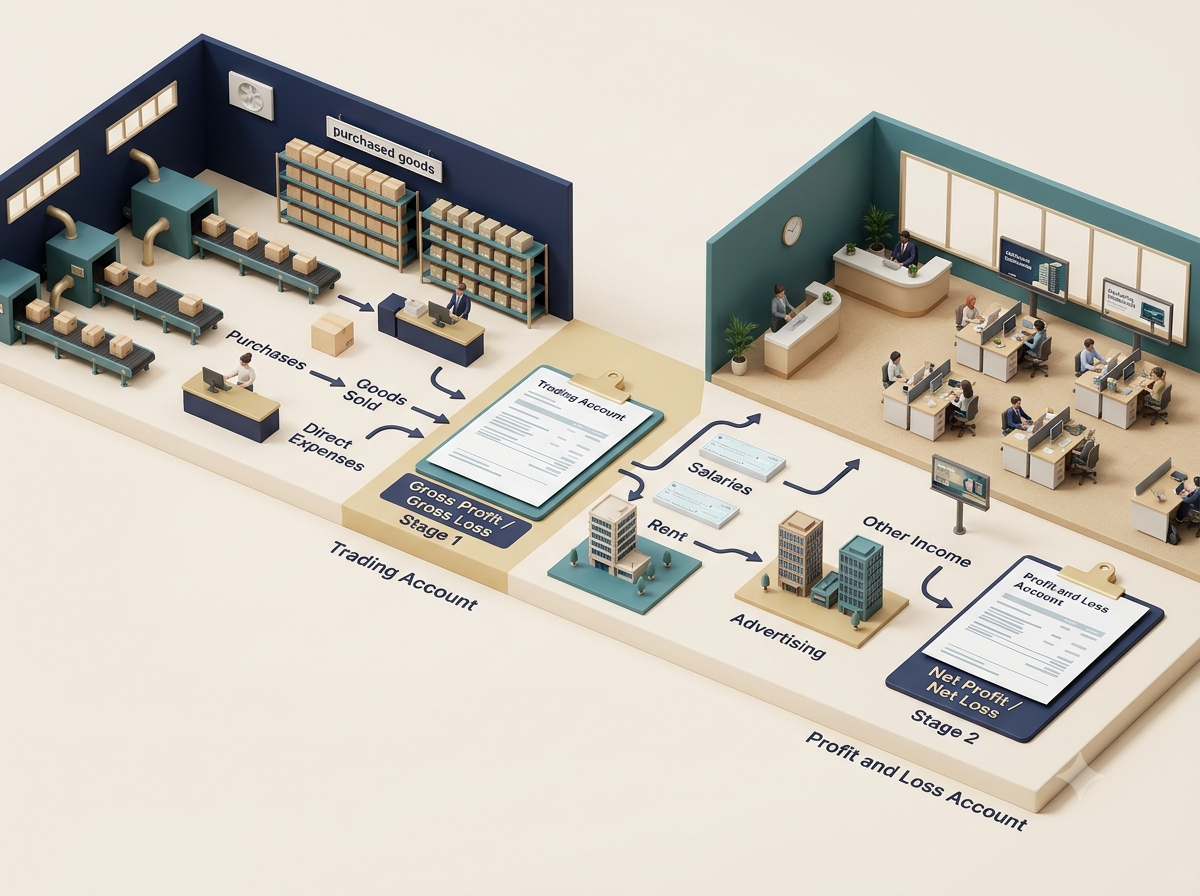
The Trading Account is prepared to determine the gross profit or gross loss from trading in goods.
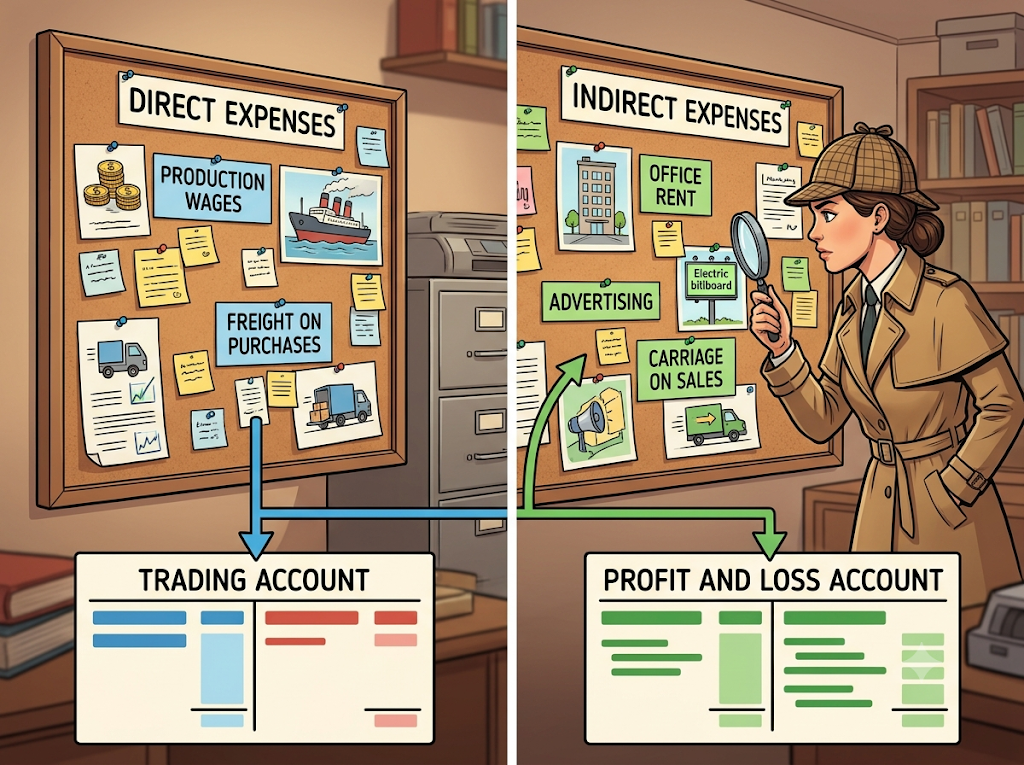
It considers sales and the cost of goods sold, including opening stock, net purchases and relevant direct expenses. Direct expenses are costs directly connected with purchasing, manufacturing or bringing goods to a saleable condition.
Examples include:
- Wages directly connected with production
- Carriage on purchases
- Freight inward
- Relevant factory expenses
These items help determine the gross result from the business’s trading activities.
Stage 2: The Profit and Loss Account
The Profit and Loss Account begins with the gross profit or gross loss. It then considers indirect expenses and other incomes to determine net profit or net loss.
Indirect expenses are generally incurred in running and managing the business or selling its goods. Examples include:
- Office rent
- Office salaries
- Advertising expenses
- Carriage on sales
- Office expenses
The distinction depends on the nature and purpose of the expense. For example, carriage paid to bring purchased goods into the business is generally a direct expense, while carriage paid to deliver sold goods to customers is generally an indirect expense.
The difference in one example
Imagine a business earns ₹40,000 in net sales and the cost of goods sold, including relevant direct expenses, is ₹25,000.
Gross profit = ₹40,000 − ₹25,000 = ₹15,000.
Now suppose the business has ₹9,000 in indirect expenses and ₹1,000 in other income.
Net profit = ₹15,000 + ₹1,000 − ₹9,000 = ₹7,000.
These figures are illustrative. They show why gross profit and net profit are not the same: the second stage accounts for other incomes and indirect expenses.
Exam-ready takeaway: The Trading Account calculates gross profit or gross loss using sales, cost of goods sold and direct expenses. The Profit and Loss Account then considers indirect expenses and other incomes to calculate net profit or net loss.