Imagine you’re throwing the biggest party of the year. You didn’t just pay cash for everything upfront—oh no. You ordered bulk pizzas on credit from your favorite restaurant, you haven’t paid the DJ yet for spinning tracks all night, and you borrowed cash from your best friend to rent the sound system.
When you look at who you owe, you realize debt isn’t just one big blob. It comes in completely different shapes and sizes!
In the business world, people or businesses you owe money to are called Creditors. But not all creditors are created equal. Let’s break down the Three Types of Creditors that every business owner must master, using our legendary neighborhood bakery!
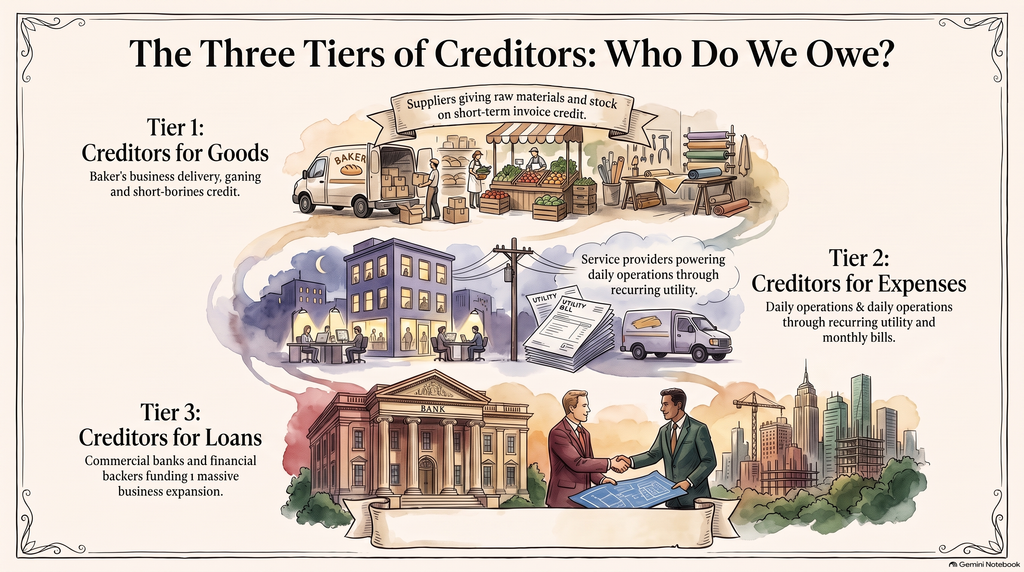
1. Creditors for Goods: The Inventory Lifeline 🥖🥛
- Simple Answer: These are suppliers who provide your business with raw materials, merchandise, or stock on credit, meaning you take the goods now and pay them back later.
- Why it matters: Without them, your shelves would be empty, and your ovens would be cold. They trust you to turn their ingredients into cash before settling the bill.
- Two Classic Examples:
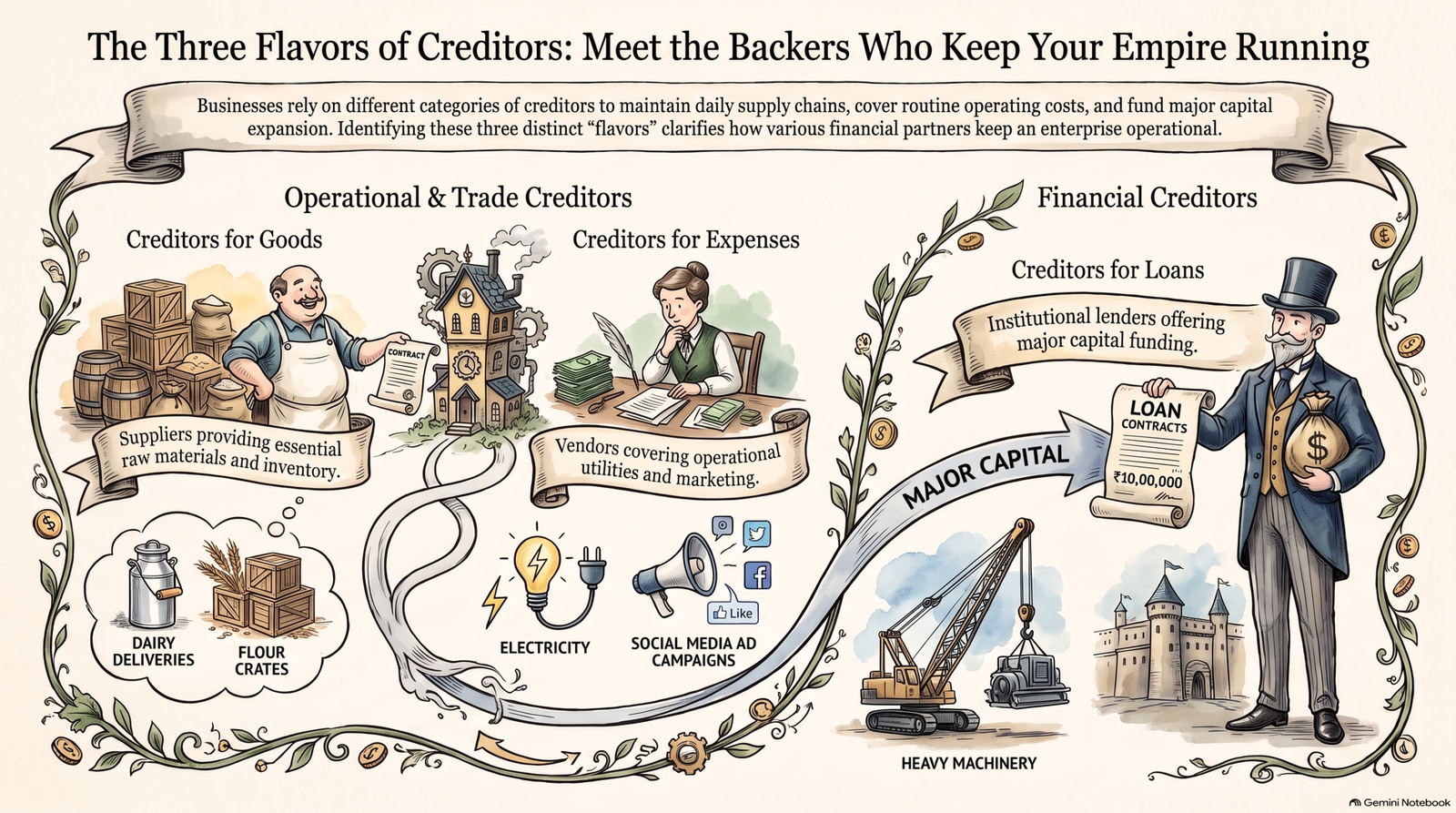
- A flour mill supplier who drops off 50 sacks of wheat today so you can bake bread all week.
- A dairy product distributor who delivers crates of fresh milk and butter with a 30-day payment window.
- Real-World Scenario: Your bakery runs low on essentials. The dairy truck pulls up, drops off massive tubs of fresh cream, and the driver hands you an invoice due next month. That dairy distributor is officially your creditor for goods.
2. Creditors for Expenses: The Operational Fuel 💡📢
- Simple Answer: These are parties to whom your business owes money because they provided essential services to keep your daily operations running smoothly.
- Why it matters: You consume their services first (like power or marketing) and pay the bill at the end of the billing cycle.
- Two Classic Examples:
- The electric utility company for the power you consumed to keep your massive industrial ovens hot.
- An advertising agency that ran social media promotion campaigns for your grand weekend opening.
- Real-World Scenario: The month ends, and your bakery’s power bill arrives in the mail showing ₹12,000 due for electricity consumption. Until you swipe your card and clear that bill, the local power company is recorded on your books as your creditor for expenses.
3. Creditors for Loans: The Big Money Backers 🏦🤝
- Simple Answer: These are financial institutions or institutional lenders who have provided direct monetary loans to finance your business growth.
- Why it matters: This isn’t about buying a bag of flour or paying a monthly electric bill—this is heavy-duty capital injection used to build, expand, or rescue a business.
- Two Classic Examples:
- A commercial bank that approved a ₹10,00,000 machinery expansion loan.
- A registered financial cooperative society providing short-term business liquidity support.
- Real-World Scenario: You want to scale your tiny bakery into a full-scale cafe, so you secure a business development advance from the city bank. That bank is your ultimate creditor for loans, holding a legal claim until every rupee of principal and interest is fully repaid.
Quick-Recall Concept Summary Table 📊
| Type of Creditor | What Do They Provide? | How Do They Help? | Real-Life Bakery Example |
| 1. Creditors for Goods | Raw materials, stock, inventory. | Lets you produce products without paying cash upfront. | A dairy distributor giving you milk and butter on credit. |
| 2. Creditors for Expenses | Operational services / utilities. | Keeps your infrastructure running day-to-day. | The electric utility company waiting for last month’s power bill. |
| 3. Creditors for Loans | Direct cash financing. | Fuels massive business expansion and major asset purchases. | A commercial bank holding your capital development loan. |
Mind-Blowing Fast Facts to Lock It In Your Brain 🧠⚡
- The Trust Economy: Modern commerce doesn’t run on physical cash flying back and forth every second—it runs entirely on the reputation of these three creditor relationships. If your credit score is pristine, doors open automatically.
- Short-Term vs. Long-Term: Creditors for goods and expenses are usually short-term liabilities (cleared within days or weeks), while creditors for loans can span years. Knowing the difference keeps your cash flow from crashing!
- The Ultimate Dopamine Hit: When your business generates enough revenue to completely clear your dairy supplier, pay off your electricity bill, and close out your bank loan, you feel an unmatched surge of total financial freedom. You aren’t just surviving—you’re mastering the game!