
Introduction
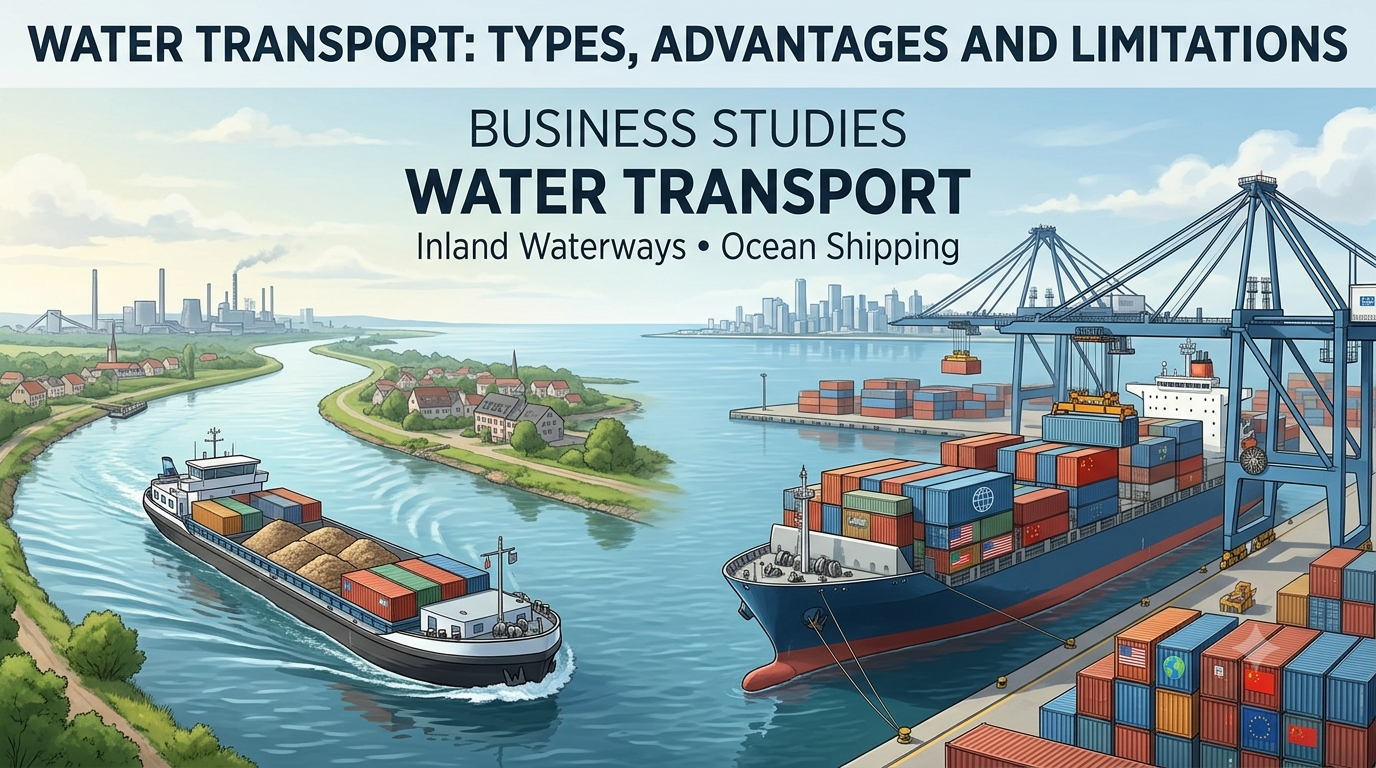
Water transport involves carrying goods and passengers through rivers, canals, lakes, seas, and oceans. It is particularly important for transporting bulky cargo and supporting domestic and international trade.
Types of Water Transport

1. Inland Water Transport
Inland water transport operates on navigable rivers, canals, lakes, and backwaters within a country.
It may use boats, motor barges, and river vessels to transport goods.
Example: A business may transport cement along the Ganga using motor barges.
2. Ocean or Marine Transport
Ocean transport carries goods and passengers across seas and oceans.
It includes two important forms:
- Coastal shipping: Moves goods between ports along the same country’s coastline.
- Overseas shipping: Moves goods between ports in different countries.
Example: An automobile company may transport exported cars from Chennai to Dubai using a cargo vessel.
Advantages of Water Transport
1. Low Cost for Heavy Cargo
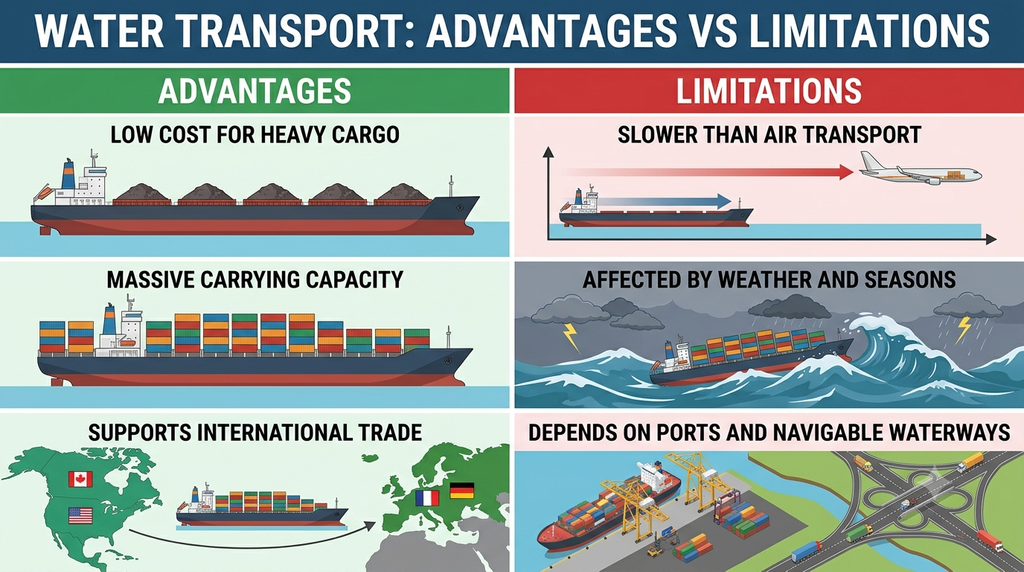
Water transport is generally economical for moving heavy and bulky goods over long distances, especially in international trade.
2. High Carrying Capacity
Large container ships, bulk carriers, and oil tankers can carry enormous quantities of cargo in a single voyage.
3. Suitable for International Trade
Ocean shipping connects countries and supports the international movement of raw materials, manufactured goods, and energy products.
4. Natural Water Routes
Water transport can use navigable rivers and seas without requiring railway tracks. However, ports, terminals, vessels, and supporting infrastructure still require investment.
Limitations of Water Transport
1. Slow Speed
Ships usually take much longer than aircraft to reach distant destinations. Water transport is therefore unsuitable for many urgent deliveries.
2. Weather and Seasonal Dependence
Storms, monsoons, low river water levels, and other weather conditions can affect journeys.
3. Limited Accessibility
Water transport serves locations connected to navigable waterways or ports. Road or rail transport is often required for inland delivery.
Business Example: An Iron Ore Exporter
An exporter may ship a large quantity of iron ore from India to China using a bulk carrier because water transport is economical for heavy cargo.
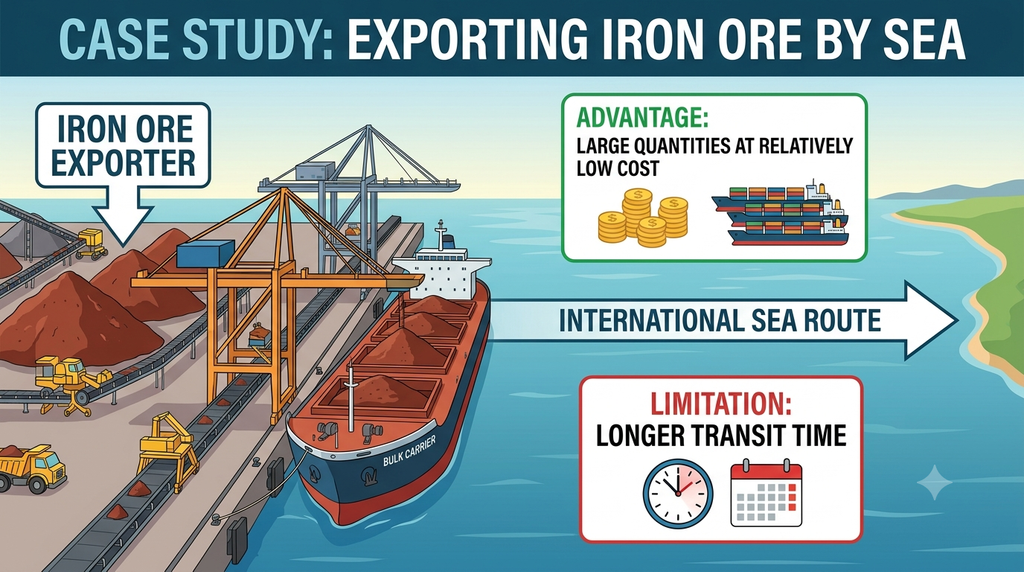
However, if a shipment of urgent medical supplies must reach another country within 24 hours, air transport may be more appropriate.
Conclusion
Water transport is highly useful for heavy cargo, bulk commodities, and international trade. Its low cost and high capacity must be weighed against slower speed, weather risks, and dependence on ports and waterways.