
Meaning of Market Demand
Market demand means the total quantity of a product that all consumers in a market are willing and able to buy at different prices during a given period.
Market demand depends on factors that affect individual consumers. It is also affected by population, income distribution, seasons and government policies.
Let us understand the main factors with simple examples.
1. Size and Composition of Population
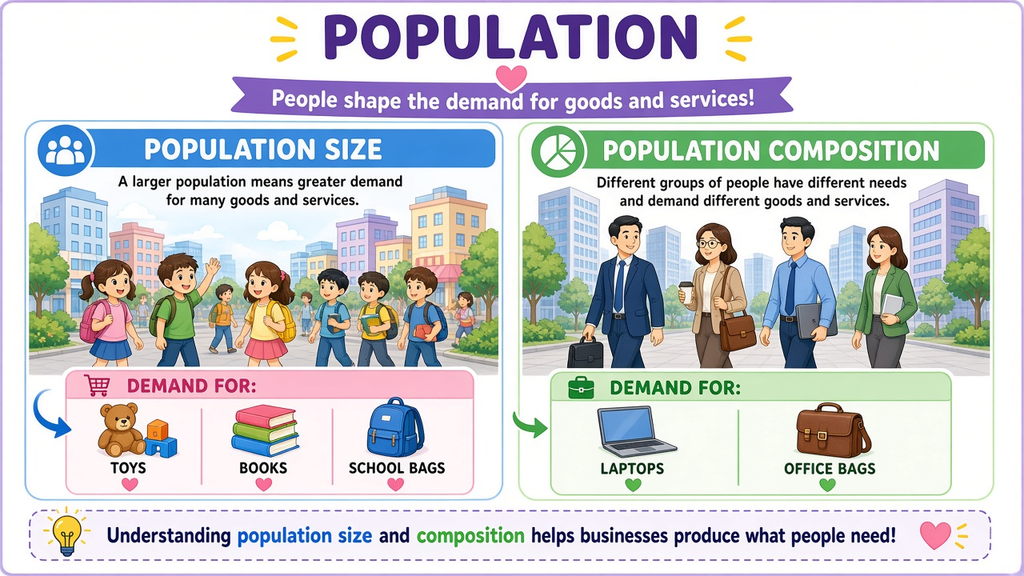
The size of the population means the total number of people living in an area. The composition of the population means the types of people living there, such as children, teenagers, adults and older people.
When the population increases, the demand for many goods may also increase. Different age groups also need different products.
Example: A city with more children may have higher demand for toys, school bags and books. A city with more working professionals may have higher demand for office clothes and laptops.
2. Distribution of Income
Distribution of income means how income is shared among people in a society.
When more people have enough money to buy everyday products, market demand for those products may increase. When most income is concentrated among a small group, demand may be higher for certain luxury goods.
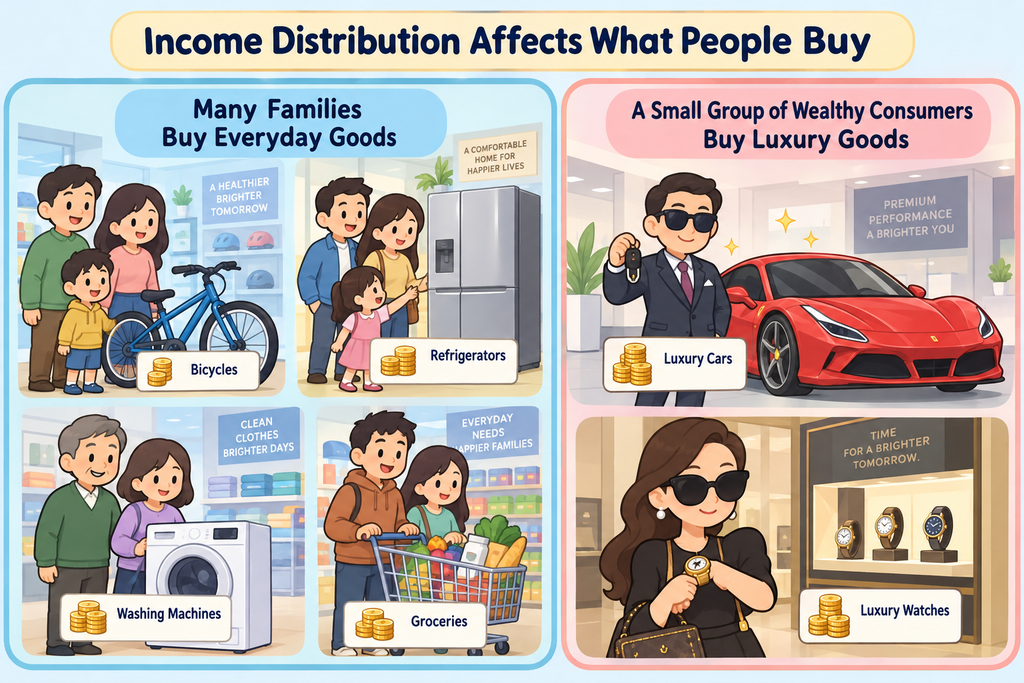
Example: If many families have enough income to buy refrigerators, washing machines and bicycles, demand for these products may rise. If most wealth belongs to a small group of rich people, demand for luxury cars and expensive watches may be higher.
3. Season and Climate
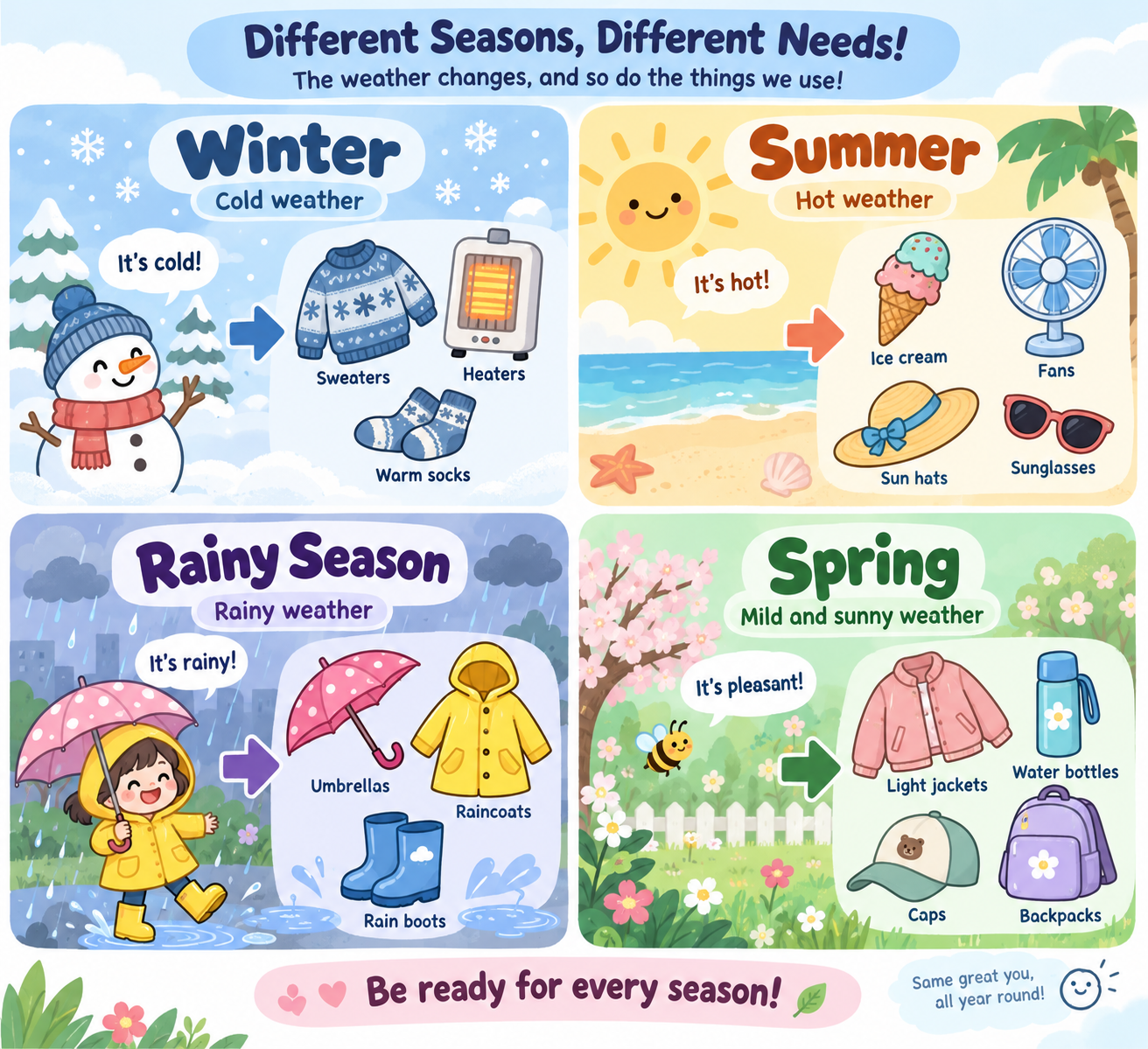
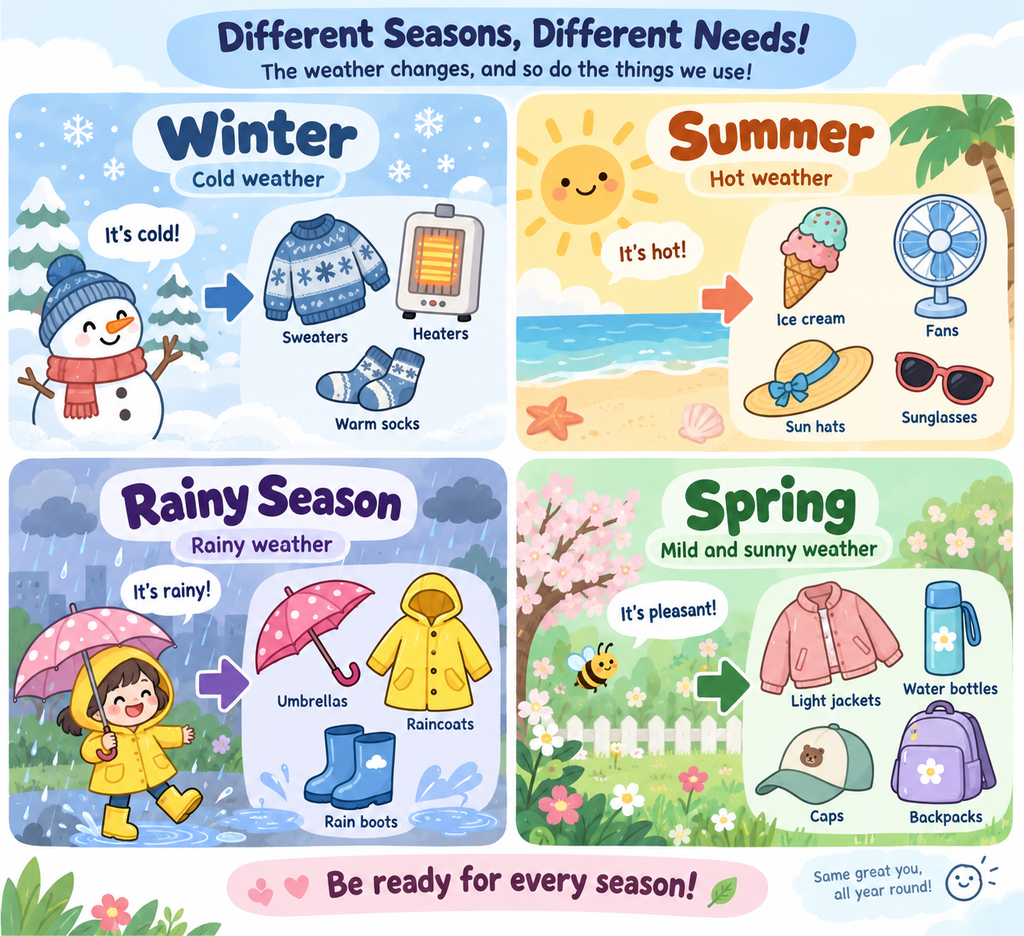
Season and climate affect the demand for products because people’s needs change with the weather.
- In winter, demand for woollen clothes, jackets and heaters usually increases.
- In summer, demand for ice cream, cold drinks, fans and air conditioners usually increases.
- During the rainy season, demand for umbrellas and raincoats may increase.
Example: People buy more woollen sweaters in winter because they need to keep warm.
4. Government Policy and Taxes
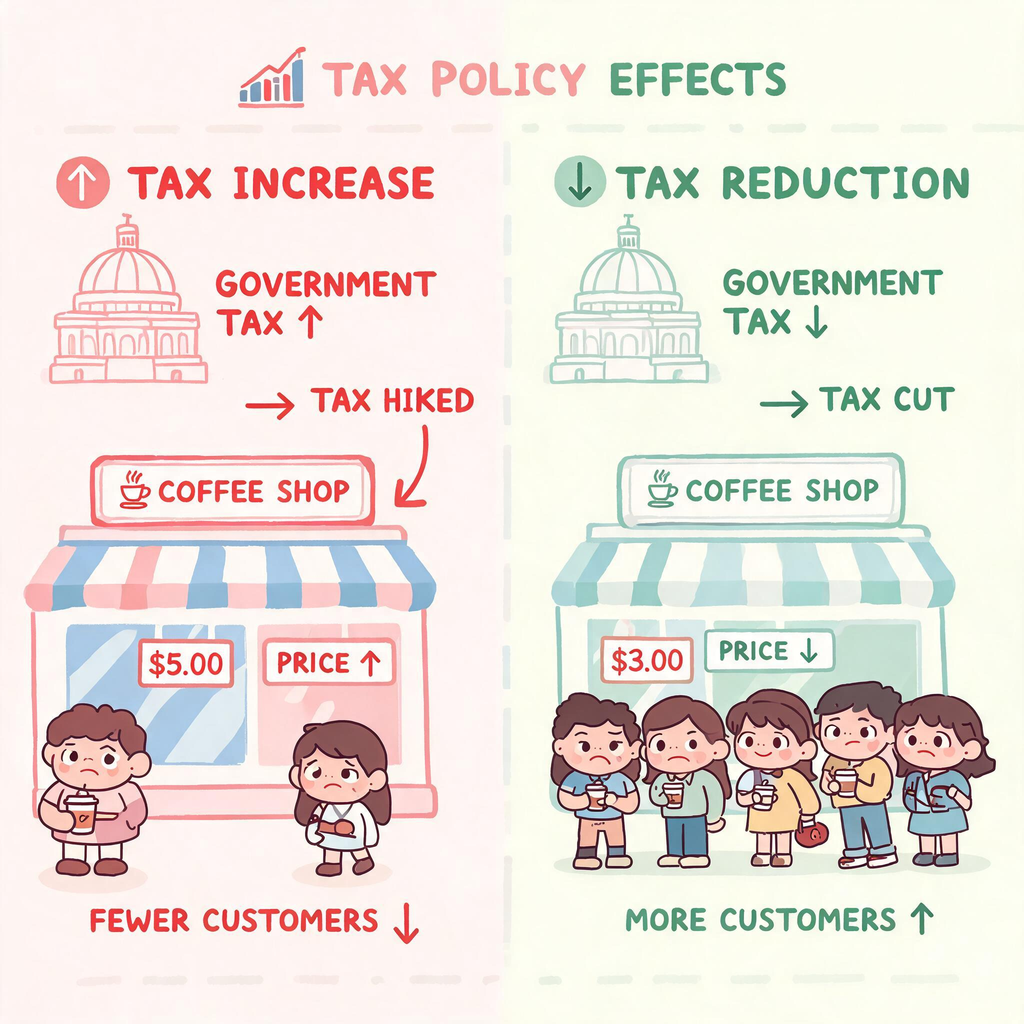
Government policies and taxes can also affect market demand.
When the government increases taxes on a product, its price may rise. As a result, some consumers may buy less of it. If the government reduces a tax, the product may become cheaper and demand may increase.
Example: If a tax increase makes a product more expensive, some people may reduce their purchases or choose a cheaper alternative.
However, the actual effect depends on the product and how consumers respond to the price change.
Quick Revision
| Factor | How it affects market demand |
|---|---|
| Size and composition of population | More people or different age groups change demand for goods. |
| Distribution of income | How income is shared affects what people can afford to buy. |
| Season and climate | Weather changes people’s needs and purchases. |
| Government policy and taxes | Taxes and policies can change prices and buying decisions. |
Conclusion: Market demand for a commodity is affected by population, distribution of income, season and climate, and government policies and taxes. These factors influence the total quantity consumers are willing and able to buy.
Exam tip: Remember the four headings — Population, Income Distribution, Season and Climate, Government Policy and Taxes. Briefly explain each with one example for a complete answer.