
Have you ever seen a chocolate and wanted to eat it? Have you ever wished for a new toy, a bicycle, a computer, or a beautiful house?
Of course! We all have things we would like to have in our lives.
But here is an interesting question: If you want something, does that automatically mean you can buy it?
Imagine you see a bicycle in a shop. You really want it, but you do not have enough money to buy it.
You have a desire for the bicycle, but you cannot purchase it right now.
Now imagine you have enough money to buy the bicycle and you are ready to purchase it. Your desire can now become an economic want.
This is the basic idea behind the meaning of wants in economics.
Let’s understand it step by step.
1. What Are Desires?
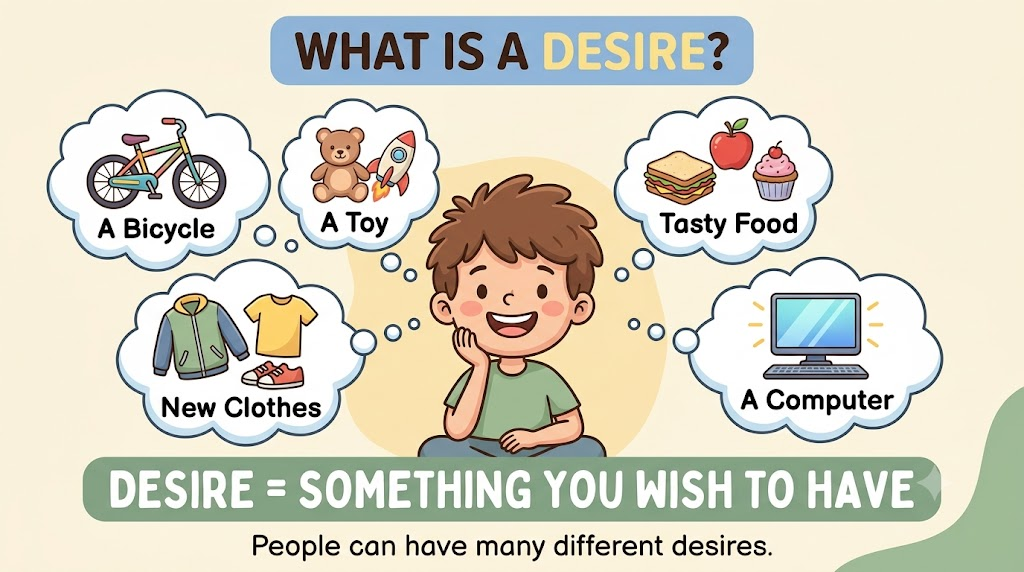
A desire is something you wish to have or something you would like to do.
In simple words, a desire means something you want in your heart or mind.
For example, you may desire:
- A big, beautiful house.
- A new car.
- A computer or laptop.
- Tasty food.
- New clothes.
- A bicycle or a toy.
People have many desires. Some people want simple things, while others wish for expensive things.
There is no fixed limit to the number of things people may desire. When one desire is fulfilled, another may appear.
For example, a child who already has a toy car may wish for a remote-controlled car. Later, the child may want a bicycle.
This is why human desires can be endless.
However, we cannot always fulfil every desire because we have limited money and resources.
Product links

