
Introduction
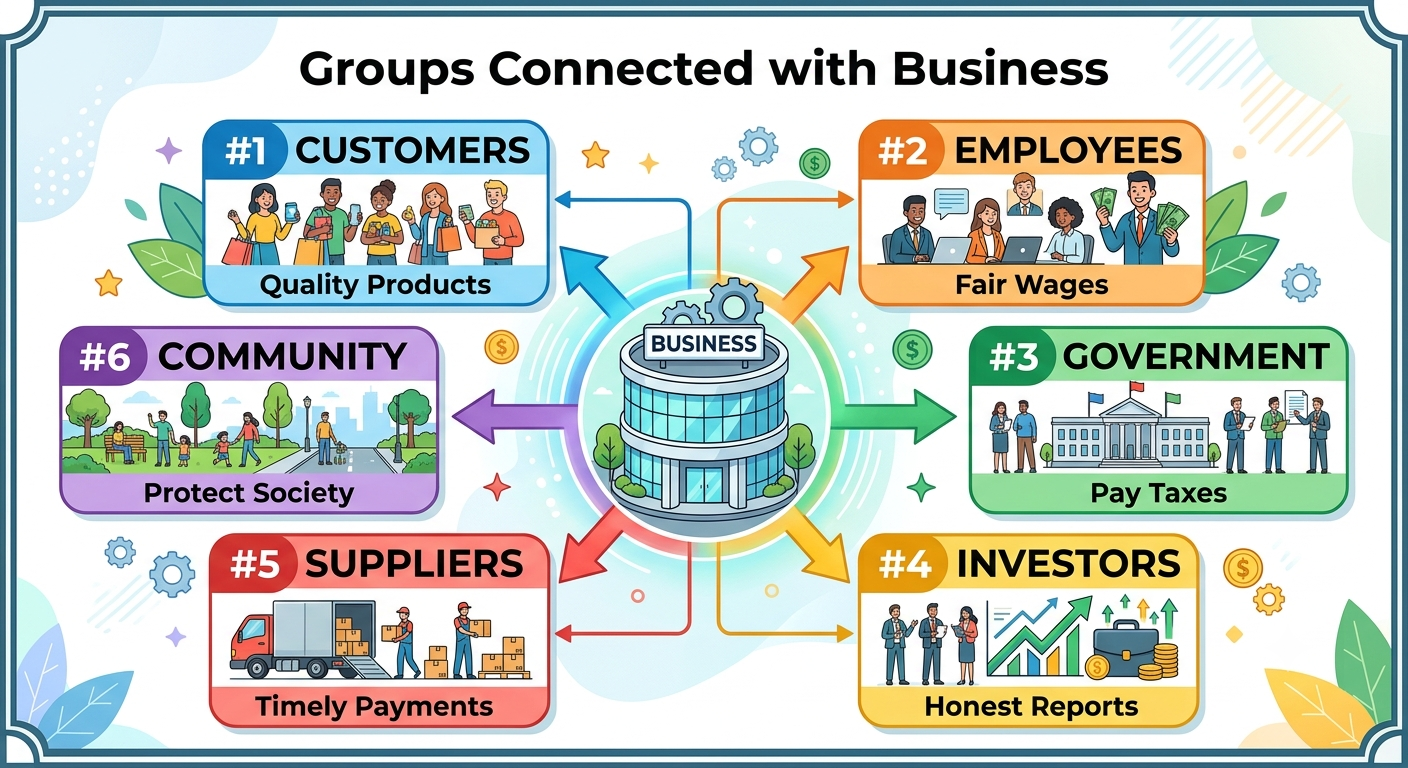
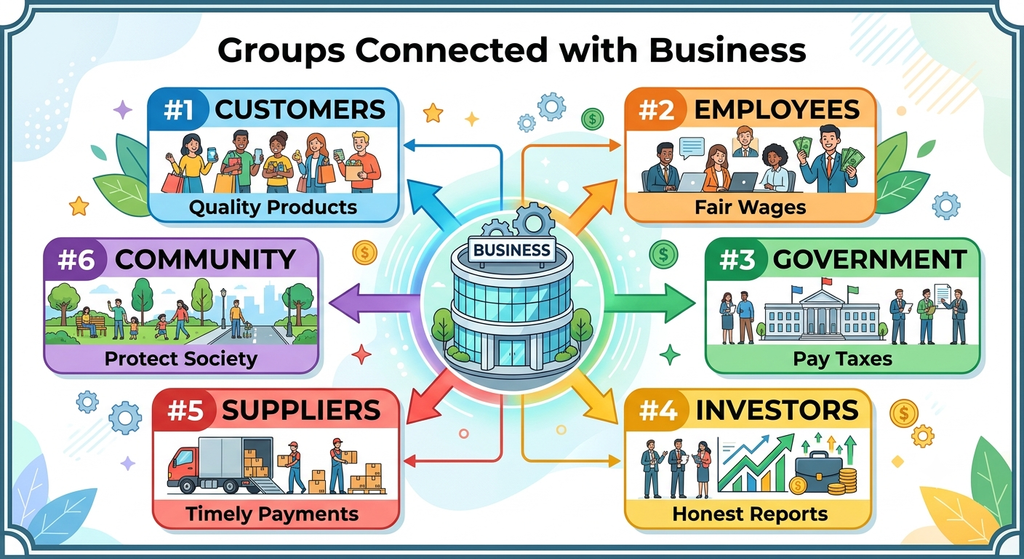
Social responsibility of business means that a business should consider the interests and welfare of society while performing its activities. Businesses use resources, employ workers, sell products, and affect the communities in which they operate.
Therefore, they should act responsibly and follow ethical business practices.
1. Responsibility Towards Customers
Customers are important because they purchase the goods and services offered by a business.
Main Responsibilities
- Provide good-quality products.
- Maintain reasonable prices.
- Supply safe and reliable goods.
- Give correct information about products.
- Avoid false and misleading advertisements.
- Provide after-sales service and warranty support.
- Handle complaints fairly.
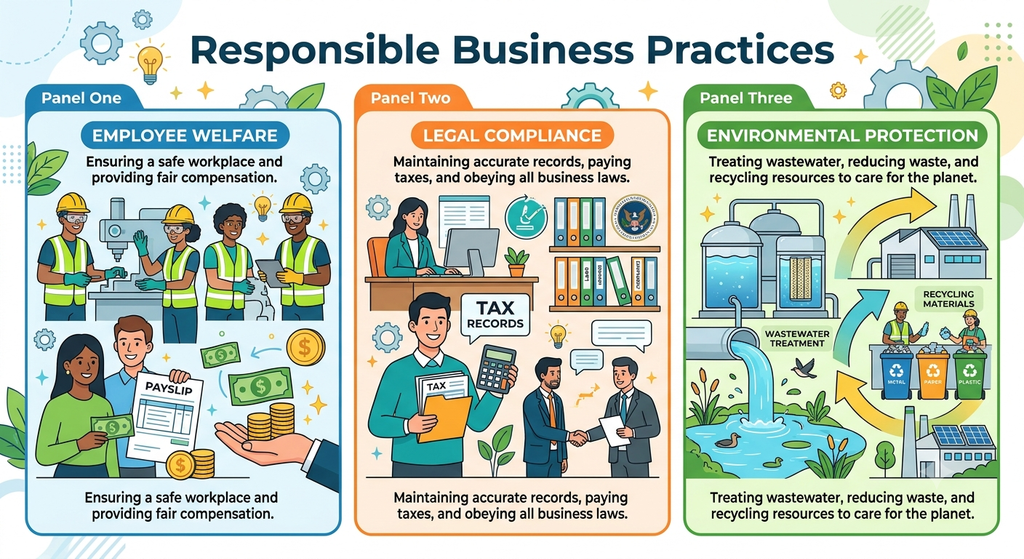
Example: An electronics company replaces a defective product according to its warranty terms and provides clear information about its features.
2. Responsibility Towards Employees
Employees help businesses perform their daily activities and achieve their objectives.
Main Responsibilities
- Pay fair salaries and wages.
- Provide safe working conditions.
- Follow labour laws.
- Offer suitable welfare facilities.
- Provide training opportunities.
- Prevent unfair discrimination.
- Respect employees’ rights.
Example: A factory provides protective equipment, follows workplace safety rules, and pays workers according to agreed terms.
3. Responsibility Towards the Government
Businesses must follow the laws and regulations of the country.
Main Responsibilities
- Pay taxes on time.
- Maintain accurate financial records.
- Follow labour and safety laws.
- Obtain required licences and approvals.
- Follow environmental regulations.
- Cooperate with lawful inspections.
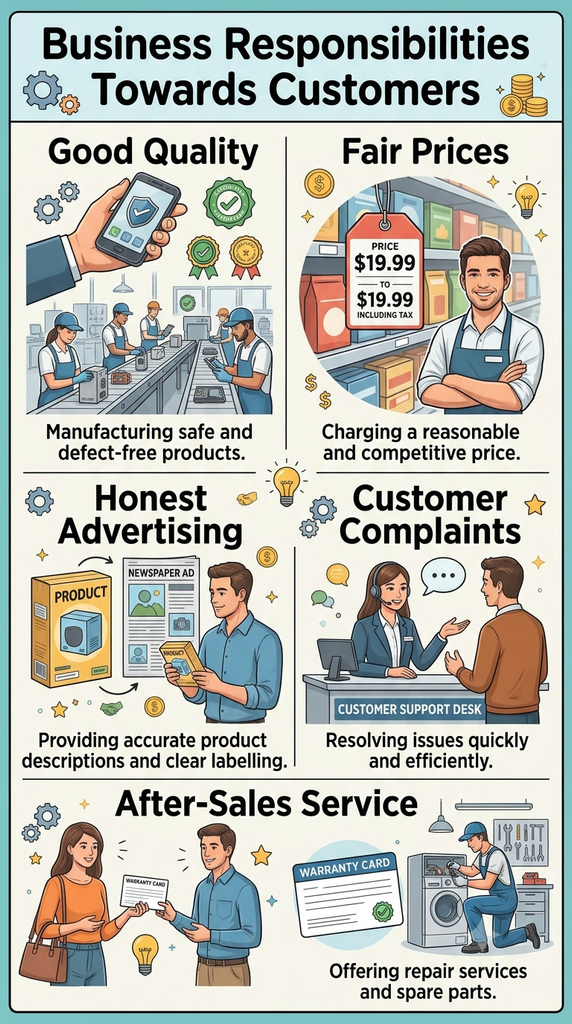
Example: A manufacturing company files its tax returns correctly and follows the rules for disposing of industrial waste.
4. Responsibility Towards Investors and Owners
Investors provide money to establish or expand businesses.
Main Responsibilities
- Use invested money carefully.
- Maintain proper financial records.
- Provide truthful information about business performance.
- Avoid fraud and misuse of funds.
- Make responsible business decisions.
Example: A company provides accurate financial reports so investors can understand its performance.
5. Responsibility Towards Suppliers
Suppliers provide raw materials, products, and other resources needed by businesses.
Main Responsibilities
- Make payments according to agreed terms.
- Place orders honestly.
- Avoid unfair contract practices.
- Maintain long-term business relationships.
Example: A restaurant pays its vegetable suppliers according to the agreed payment schedule.
6. Responsibility Towards Society and the Environment
Businesses operate within communities and depend on natural resources.
Main Responsibilities
- Control air and water pollution.
- Reduce waste and unnecessary packaging.
- Use resources carefully.
- Support community welfare where possible.
- Avoid activities that harm local residents.
- Follow environmental protection laws.
Example: A paper factory treats its wastewater before releasing it and recycles suitable materials.
Importance of Social Responsibility
- It builds customer trust.
- It improves business reputation.
- It supports employee satisfaction.
- It reduces conflicts with society.
- It encourages responsible use of resources.
- It supports long-term business survival.
Conclusion
Social responsibility is an important part of good business management. Businesses should aim to earn profit while respecting customers, employees, suppliers, investors, the government, society, and the environment.