
Introduction
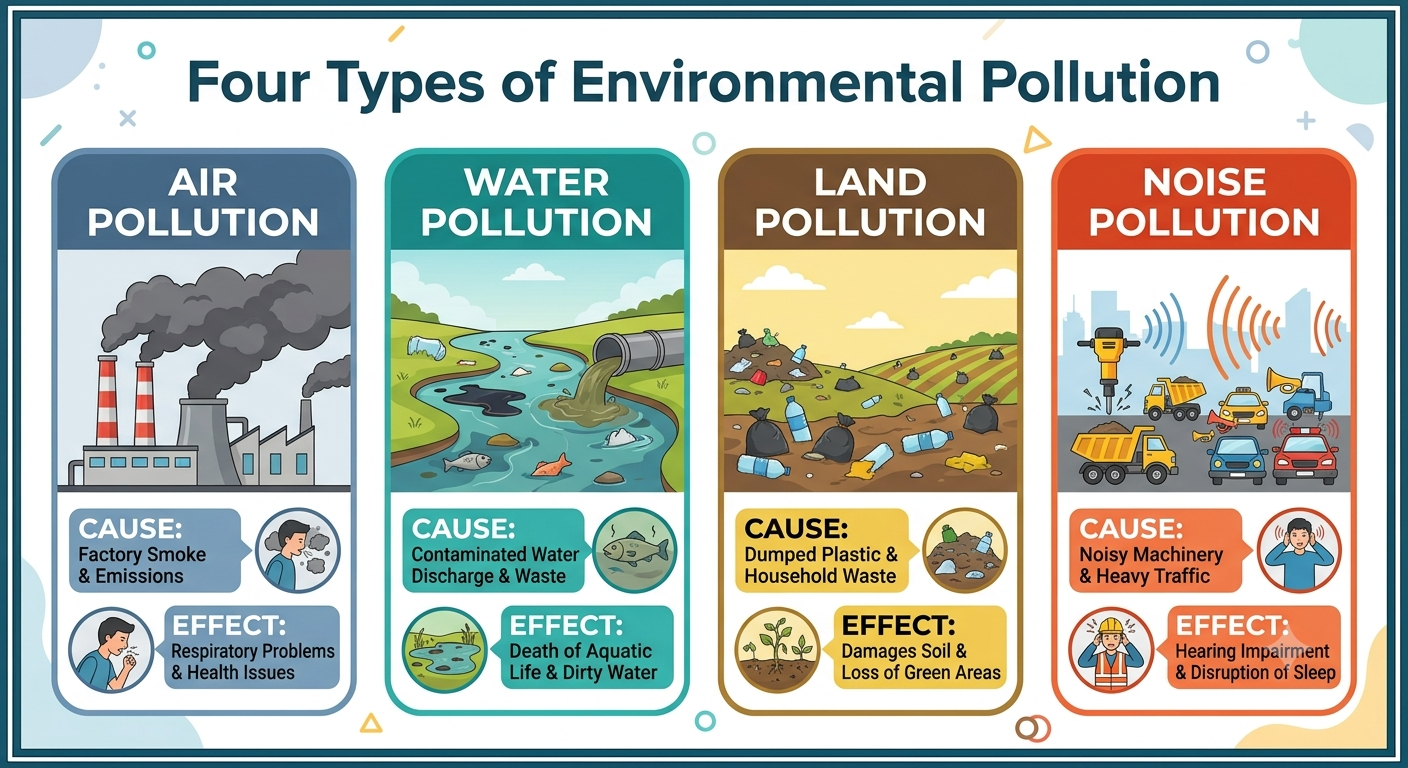
The environment includes air, water, land, plants, animals, and other natural resources. Environmental pollution occurs when harmful substances or activities damage these natural surroundings.
Business and industrial activities can contribute to pollution when waste, smoke, chemicals, and noise are not controlled properly.
1. Air Pollution
Air pollution occurs when harmful gases, smoke, dust, and particles enter the atmosphere.
Main Causes
- Smoke from factory chimneys.
- Exhaust gases from vehicles.
- Burning coal and other fossil fuels.
- Burning plastic and industrial waste.
- Emissions from poorly maintained machinery.
Effects
- Breathing difficulties and other health problems.
- Poor air quality.
- Smog and reduced visibility.
- Damage to plants and ecosystems.
- Contribution to climate change from certain emissions.

Example
A factory releases large amounts of smoke without proper pollution-control equipment. The smoke affects the air quality in nearby residential areas.
2. Water Pollution
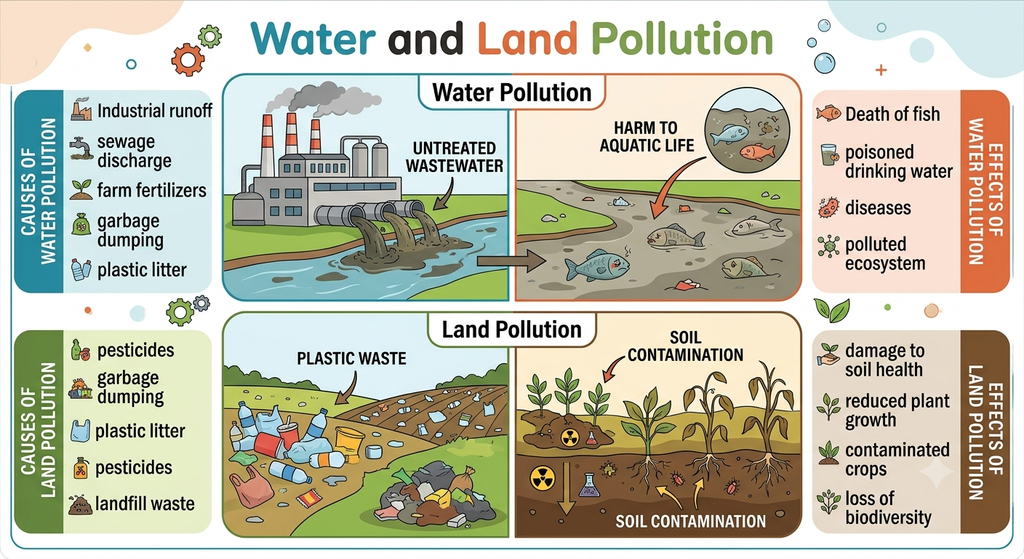
Water pollution occurs when harmful substances enter rivers, lakes, groundwater, and other water sources.
Main Causes
- Untreated industrial wastewater.
- Chemical waste from factories.
- Improper disposal of oils and other harmful substances.
- Domestic sewage entering water bodies.
- Waste from certain agricultural activities.
Effects
- Harm to fish and other aquatic life.
- Contamination of drinking water.
- Spread of waterborne diseases.
- Damage to aquatic ecosystems.
- Reduced suitability of water for farming.
Example
A textile factory releases untreated dye wastewater into a nearby river. The chemicals can harm aquatic life and affect communities that depend on the water.
3. Land or Soil Pollution
Land pollution occurs when harmful waste and substances contaminate the ground.
Main Causes
- Dumping industrial waste on open land.
- Improper disposal of plastics.
- Leakage of harmful chemicals.
- Poor waste management.
- Excessive use of certain harmful substances.
Effects
- Reduced soil quality.
- Damage to plants and animals.
- Contamination of groundwater.
- Unpleasant surroundings.
- Risks to human health.
Example
A factory dumps chemical waste on open land instead of disposing of it safely. This can contaminate the soil and nearby water sources.
4. Noise Pollution
Noise pollution occurs when unwanted or excessive sound disturbs people and other living organisms.
Main Causes
- Heavy industrial machinery.
- Construction activities.
- Delivery trucks and other vehicles.
- Loud equipment operating for long periods.
- Poorly controlled industrial operations.
Effects
- Stress and irritation.
- Sleep disturbance.
- Reduced concentration.
- Hearing problems when exposure is sufficiently loud or prolonged.
Example
A factory operates noisy machinery near residential buildings without suitable noise-control measures. Residents may experience disturbance and difficulty sleeping.
Prevention of Environmental Pollution
- Install suitable pollution-control equipment.
- Treat industrial wastewater.
- Recycle and safely dispose of waste.
- Reduce unnecessary packaging.
- Use energy-efficient machinery.
- Adopt cleaner energy sources where practical.
- Maintain equipment regularly.
- Follow environmental laws and standards.
Conclusion
Environmental pollution affects human health, natural resources, and economic activities. Businesses must control their emissions, manage waste responsibly, and use resources carefully to help protect the environment.