
Introduction
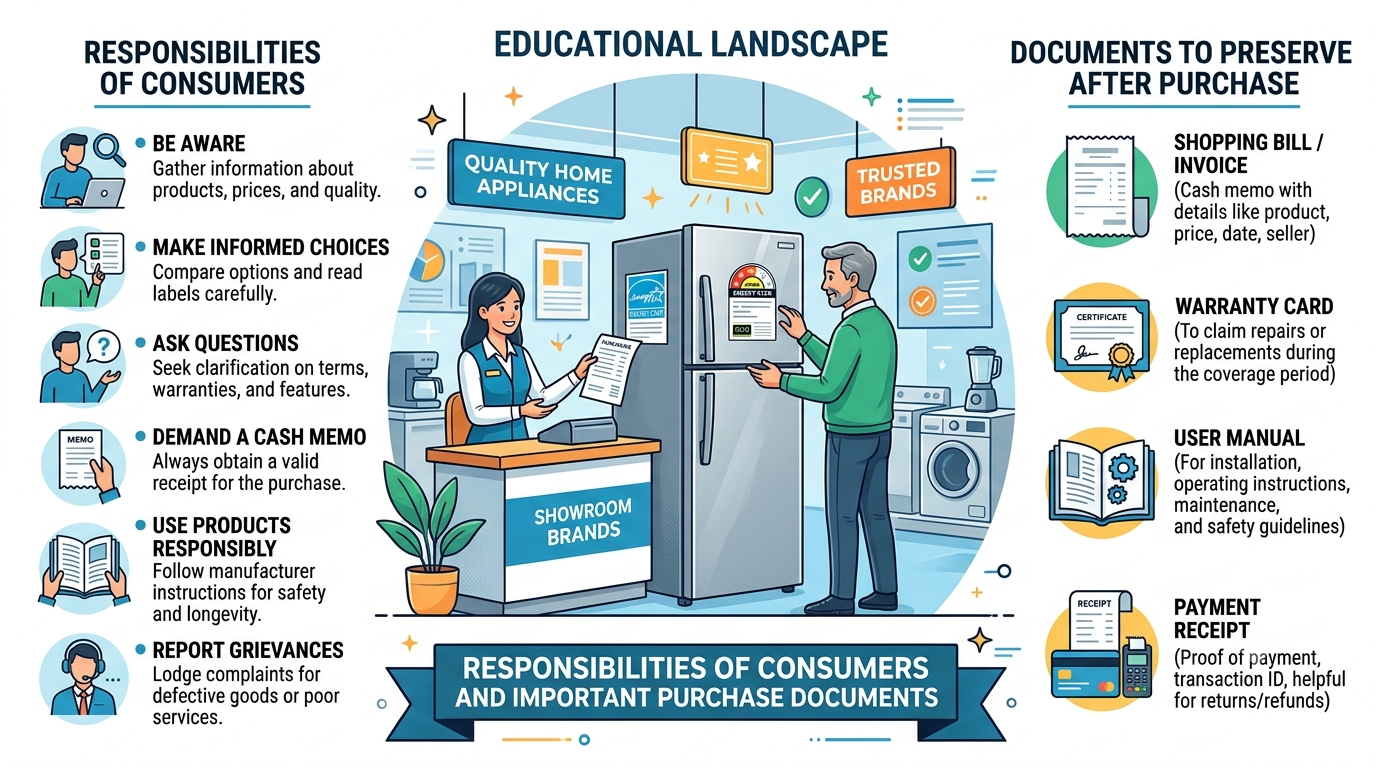
Consumers have certain rights that protect them against exploitation. However, they also have responsibilities that they should follow while purchasing and using goods and services.
An aware and responsible consumer carefully checks products, reads instructions, asks for bills and takes action against unfair trade practices.
1. Who is a Consumer?
A consumer is a person who buys goods or hires or avails services for consideration (payment).
A consumer may purchase goods for personal use or use services such as banking, insurance, transportation and communication.
A person purchasing goods for resale or for a commercial purpose is generally not treated as a consumer under the Consumer Protection Act, 2019, subject to the exception for goods used exclusively to earn a livelihood through self-employment.
2. Responsibilities of a Consumer
Consumers should perform the following responsibilities to protect their own interests.
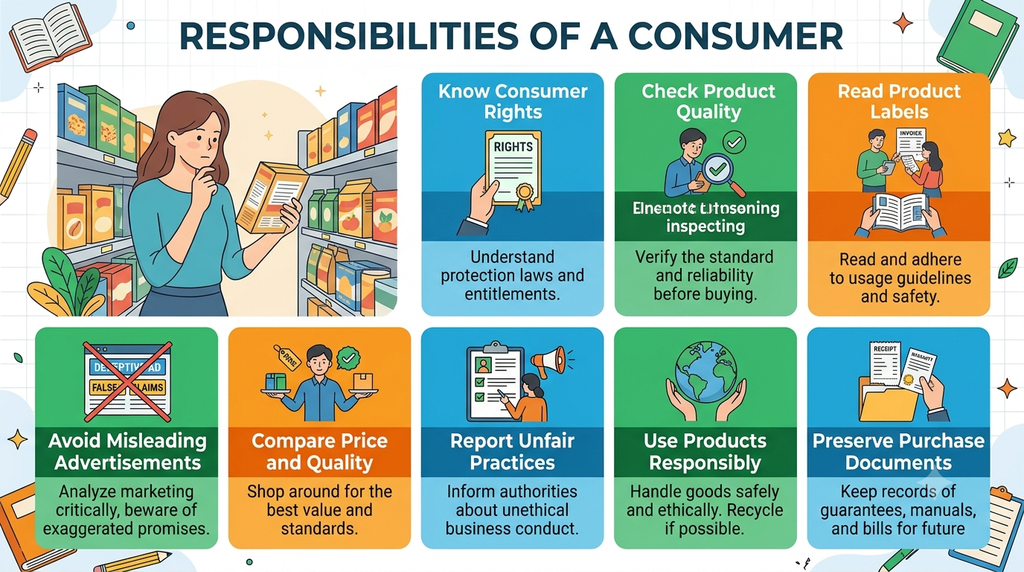
1. Be Aware of Consumer Rights
Consumers should understand their rights, such as the right to safety, information, choice, being heard and seeking redressal.
2. Check the Quality of Goods
Consumers should carefully examine the quality, quantity, condition and standard of products before purchasing them.
They should look for appropriate quality certification marks wherever applicable.
3. Read Product Labels
Consumers should read product labels and check important details such as:
- Price.
- Quantity.
- Ingredients.
- Manufacturing date.
- Expiry or best-before date, where applicable.
- Instructions for use.
- Warning information.
4. Ask for a Cash Memo or Bill
Consumers should always ask for a proper bill or cash memo after purchasing goods or services.
A bill serves as proof of purchase and may be required when making a complaint or claiming warranty benefits.
5. Follow Instructions Carefully
Consumers should read and follow the instructions provided by manufacturers.
They should use products properly to avoid damage, accidents and unnecessary problems.
6. Do Not Be Misled by Advertisements
Consumers should not blindly trust advertisements or attractive promotional offers.
They should compare products, check important details and make purchasing decisions carefully.
7. Compare Prices and Quality
Consumers should compare the prices, features and quality of different products before making a purchase.
This helps them select products that provide suitable value for money.
8. Report Unfair Trade Practices
Consumers should raise complaints when they experience defective products, overcharging, adulteration, misleading advertisements or deficient services.
They should approach the seller, manufacturer or appropriate consumer commission when necessary.
9. Use Products Responsibly
Consumers should use goods and services according to their intended purpose and safety instructions.
They should also avoid wasting resources and follow proper disposal practices.
10. Preserve Purchase Documents
Consumers should safely preserve important documents received after purchasing goods or services. These documents can help them claim warranty benefits and support complaints.
3. Documents a Consumer Should Preserve After Buying Durable Goods
Durable goods are products that can be used for a long period, such as refrigerators, televisions, washing machines, computers, air conditioners and furniture.
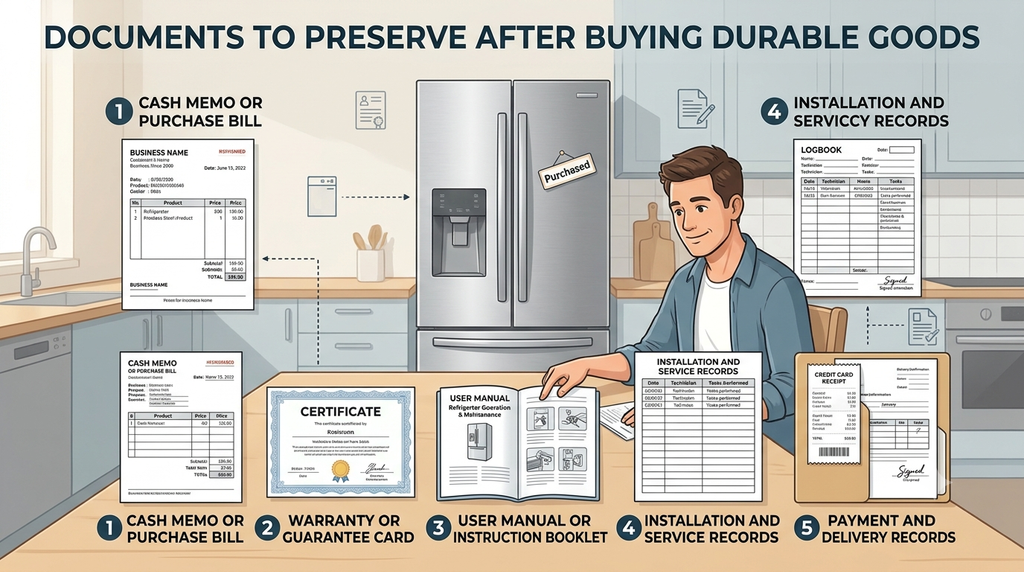
After purchasing durable goods, consumers should preserve the following documents:
1. Cash Memo or Purchase Bill
A cash memo or purchase bill is proof that the consumer purchased the product from a particular seller.
It generally contains:
- Name and details of the seller.
- Date of purchase.
- Product description.
- Price paid.
- Tax details, where applicable.
It is important when requesting repairs, replacement, refunds or other remedies.
2. Warranty Card or Guarantee Card
A warranty or guarantee card contains details of the manufacturer’s or seller’s warranty or guarantee.
It may include:
- Duration of the warranty.
- Conditions of coverage.
- Products or parts covered.
- Procedure for claiming warranty benefits.
- Details of authorised service centres.
Consumers should read these conditions carefully and preserve the card.
3. User Manual or Instruction Booklet
A user manual explains how to install, operate, maintain and use a product safely.
It may also contain troubleshooting instructions and important safety warnings.
Example: A refrigerator user manual explains the correct temperature settings, cleaning methods and precautions for safe use.
4. Installation and Service Records
Consumers should preserve documents related to product installation, repairs and servicing.
These records may help establish that the product was installed or maintained by an authorised service provider.
5. Payment and Delivery Records
Consumers should also preserve relevant payment receipts, online transaction confirmations and delivery records.
These documents may be useful if there is a dispute regarding payment, delivery or the condition of the product.
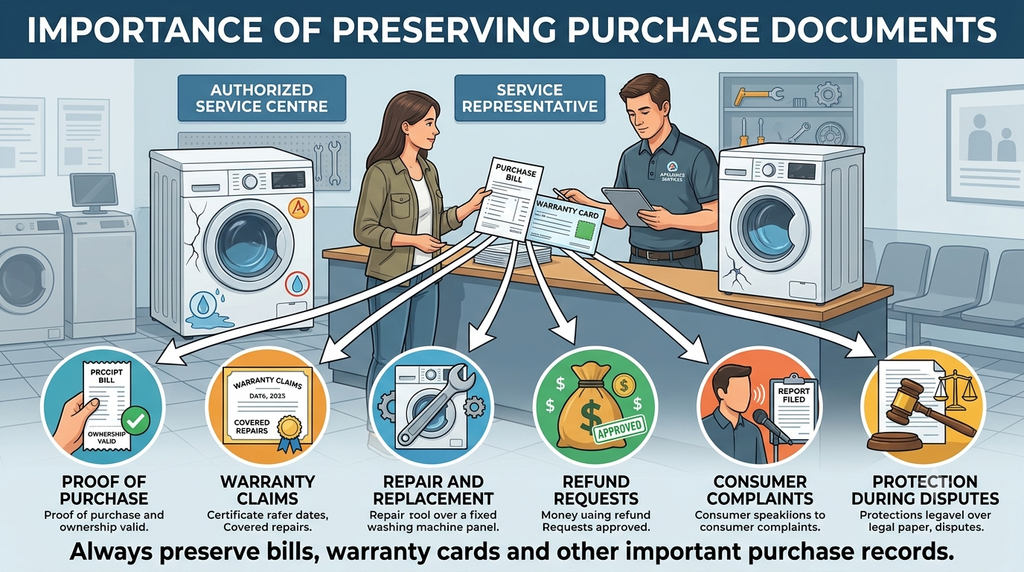
Importance of Preserving Purchase Documents
Preserving purchase documents is important because:
- They provide proof of purchase.
- They help consumers claim warranty or guarantee benefits.
- They make it easier to request repair or replacement.
- They support complaints against sellers or manufacturers.
- They help establish the purchase date and amount paid.
- They protect consumers during disputes.
Conclusion
Consumers should not only understand their rights but also fulfil their responsibilities. Checking product quality, reading labels, asking for bills and reporting unfair practices are important habits of responsible consumers. Preserving purchase documents is especially important when buying durable goods because these documents may be needed for repairs, warranty claims and consumer complaints.