
Introduction
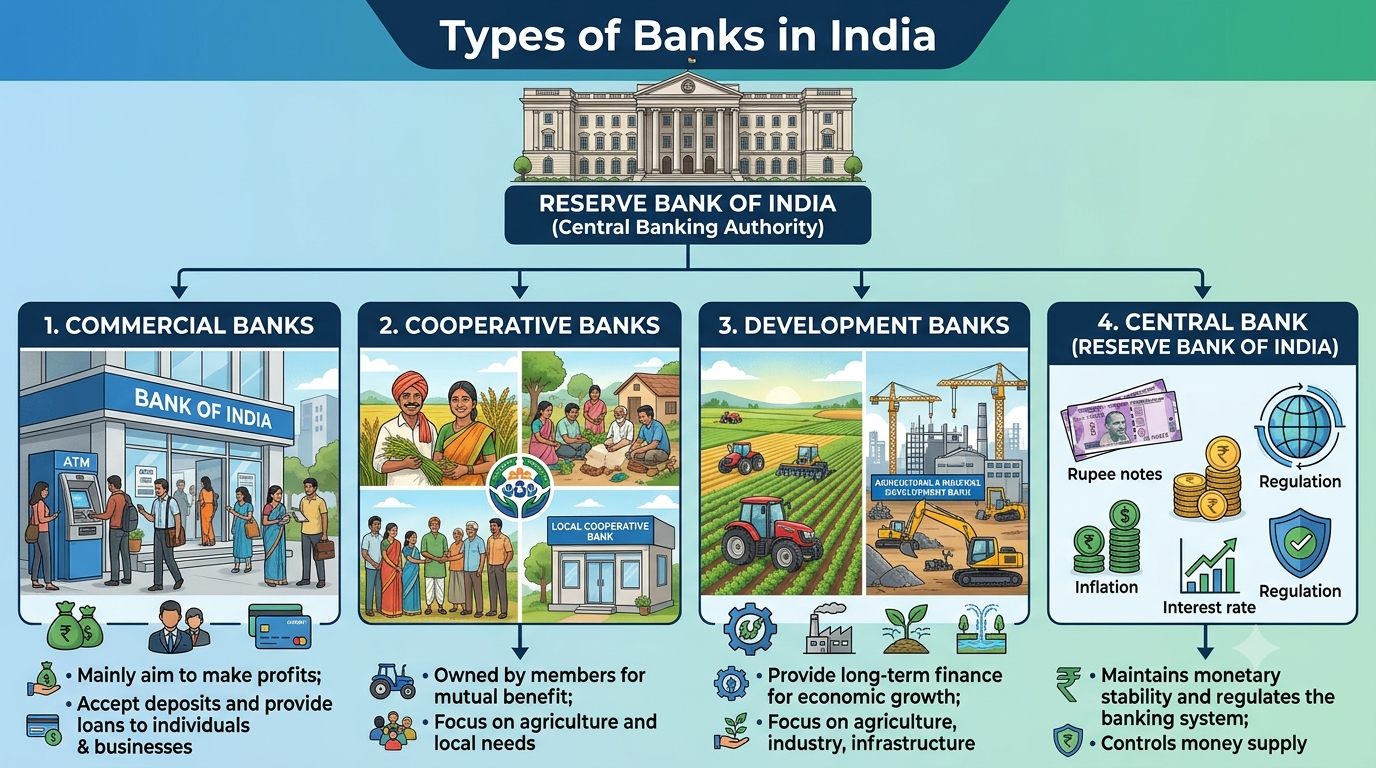
Banks are classified into different types according to their ownership, objectives and functions. In India, important types include commercial banks, cooperative banks, development banks and the central bank. Each type performs specific functions to meet the financial needs of the economy.
1. Commercial Banks
Commercial banks are financial institutions that accept deposits from the public and provide loans and other banking services to earn income.
Types of Commercial Banks
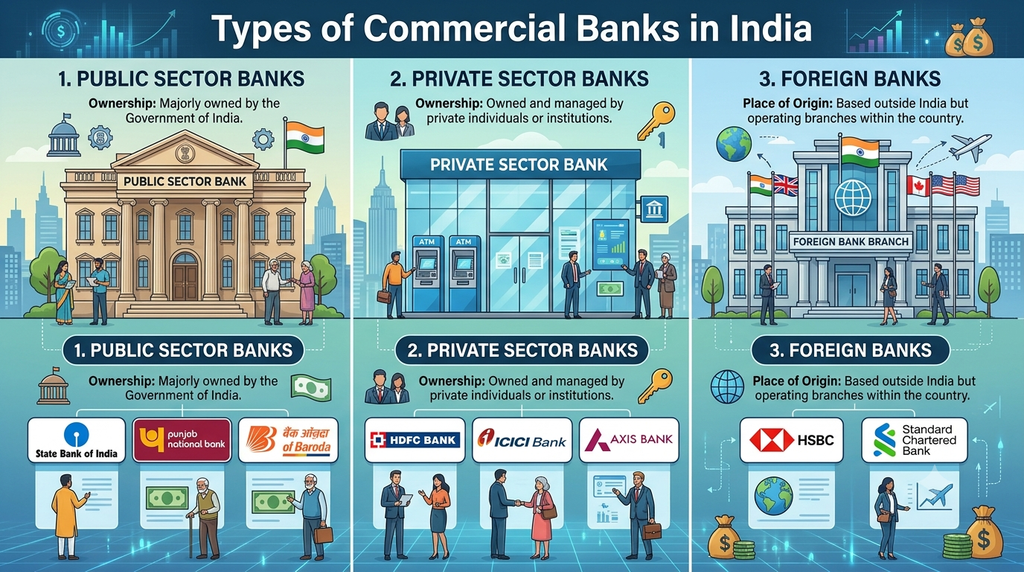
A. Public Sector Banks
These banks are mainly owned and controlled by the government.
Examples:
- State Bank of India (SBI).
- Punjab National Bank (PNB).
- Bank of Baroda.
B. Private Sector Banks
These banks are mainly owned and managed by private individuals or companies.
Examples:
- HDFC Bank.
- ICICI Bank.
- Axis Bank.
C. Foreign Banks
These are banks whose headquarters are located outside India but which operate branches or offices in India.
Examples:
- HSBC.
- Standard Chartered Bank.
2. Cooperative Banks
A cooperative bank is a financial institution organised on cooperative principles to provide banking and credit facilities to its members.
These banks mainly support small businesses, farmers, workers and local communities.
Types of Cooperative Banks in India
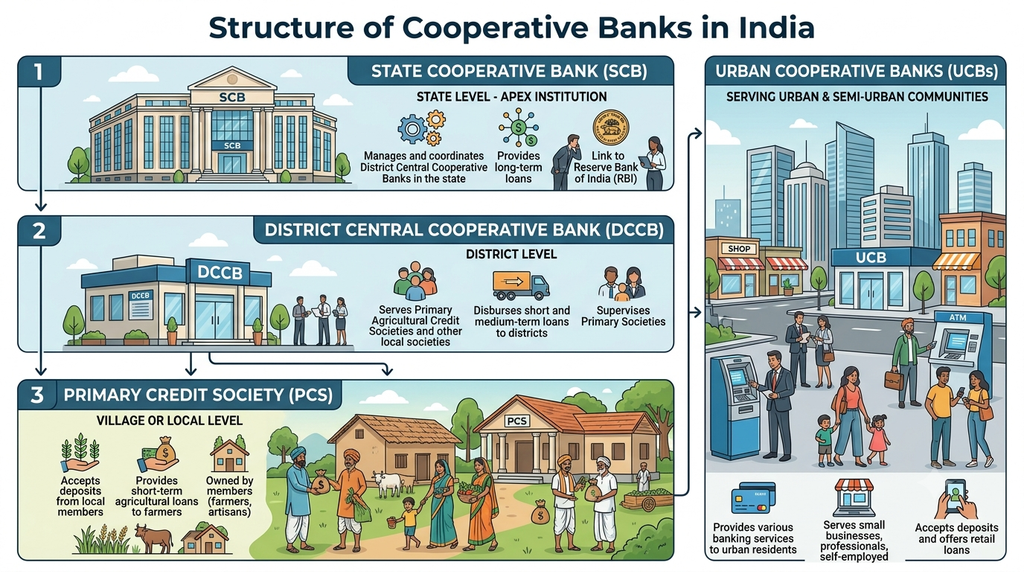
A. Primary Credit Societies
These operate at the village or local level. They provide short-term credit to their members, particularly farmers.
B. District Central Cooperative Banks
These operate at the district level. They connect primary credit societies with higher-level cooperative banking institutions.
C. State Cooperative Banks
These operate at the state level and generally coordinate and support district central cooperative banks.
D. Urban Cooperative Banks
These operate mainly in urban and semi-urban areas. They provide banking and credit facilities to individuals, traders and small businesses.
3. Development Banks
Development banks are financial institutions that provide long-term finance and other support for the development of important sectors of the economy.
Important examples include:
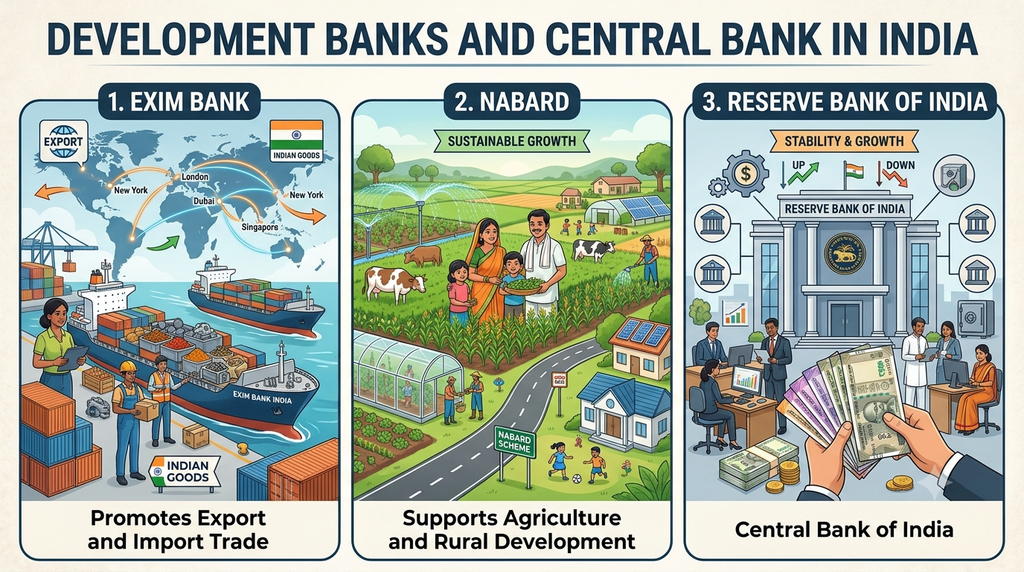
A. EXIM Bank
The Export-Import Bank of India (EXIM Bank) promotes international trade by providing financial assistance and support to exporters and importers.
Its functions include:
- Providing finance for exports and imports.
- Supporting Indian companies in international business.
- Providing financial assistance for overseas investment.
- Offering advisory and other trade-related services.
B. NABARD
The National Bank for Agriculture and Rural Development (NABARD) supports agriculture and rural development.
Its functions include:
- Providing and supporting rural credit.
- Promoting agricultural development.
- Supporting rural industries and small businesses.
- Supervising and strengthening eligible rural financial institutions.
- Supporting rural infrastructure and development programmes.
4. Central Bank
A central bank is the highest monetary authority of a country. It regulates the country’s banking system and manages important monetary functions.
The Reserve Bank of India (RBI) is India’s central bank.
Main Functions of the Central Bank
- Issue of Currency: It has the authority to issue banknotes in India, subject to the applicable legal provisions.
- Bankers’ Bank: It provides banking support to commercial banks.
- Government’s Banker: It acts as banker, agent and adviser to the government.
- Credit Control: It uses monetary policy tools to regulate credit and money supply.
- Foreign Exchange Management: It performs functions relating to foreign exchange reserves and exchange management.
- Banking Regulation: It regulates and supervises banks under applicable laws.
Conclusion
Different types of banks perform different functions in the economy. Commercial banks serve the public, cooperative banks support their members, development banks promote important sectors, and the central bank regulates the monetary and banking system.