
Introduction
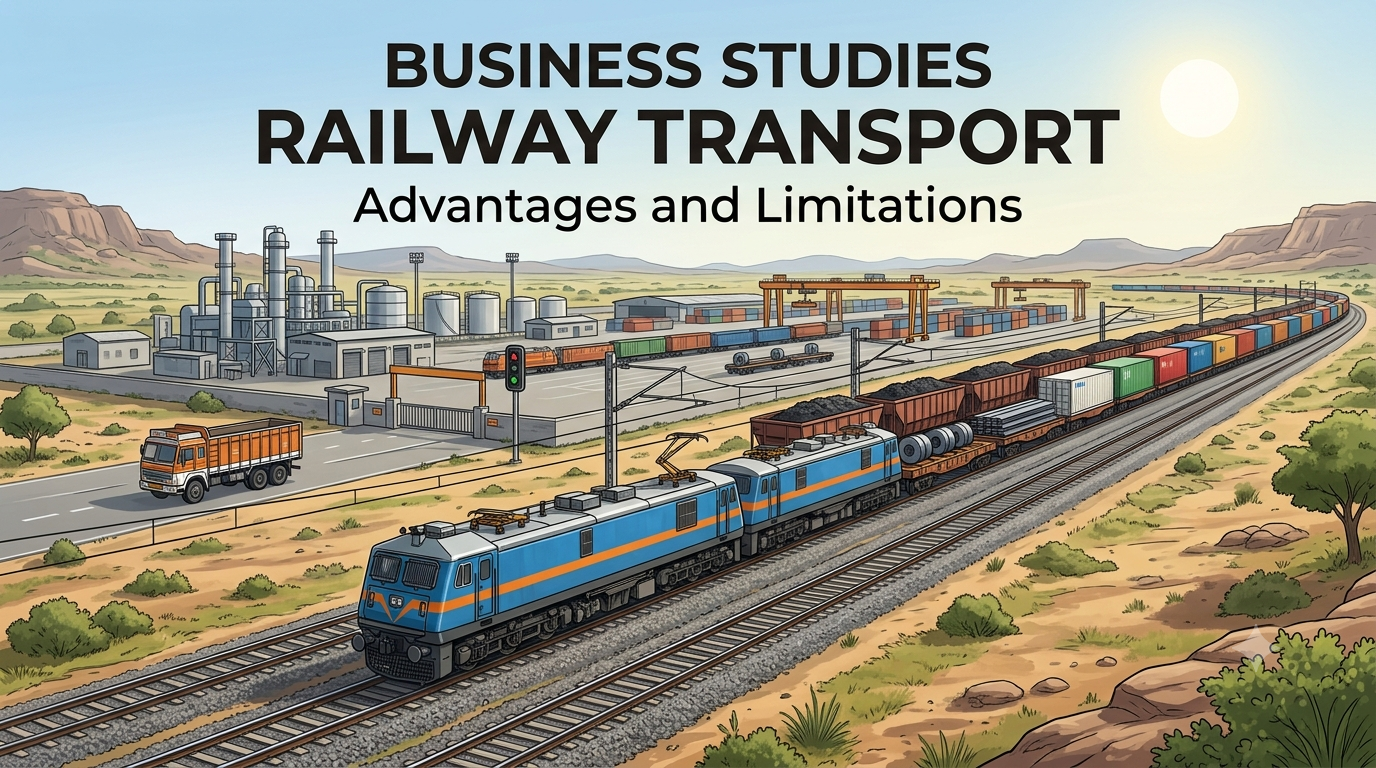
Railway transport is an important means of moving passengers and goods over land. It is especially useful for businesses that need to transport heavy or bulky materials across long distances.
Freight trains carry goods such as coal, iron ore, steel, cement, and food grains.
Advantages of Railway Transport
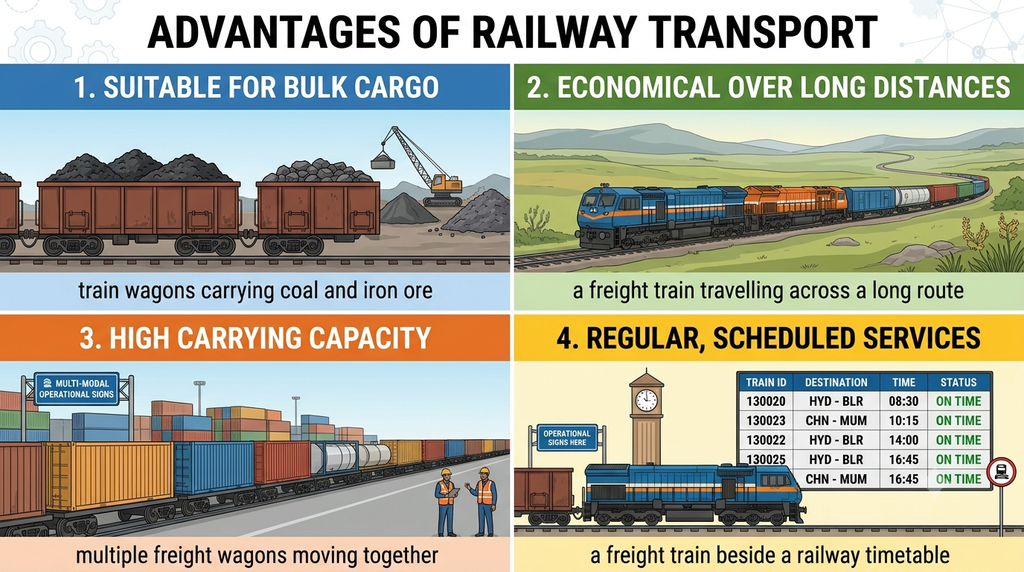
1. Suitable for Bulk Cargo
Freight trains can carry large quantities of heavy goods in a single journey. This makes them suitable for industries such as steel, mining, cement, and agriculture.
2. Economical for Long Distances
Railways can offer lower transportation costs per unit of cargo over long distances, particularly when large quantities are moved.
3. High Carrying Capacity
A single freight train can carry a substantial load, reducing the number of individual vehicles required to transport the same quantity.
4. Regular and Scheduled Services
Railway services generally operate according to planned routes and timetables. They are less directly affected by road traffic congestion.
Limitations of Railway Transport
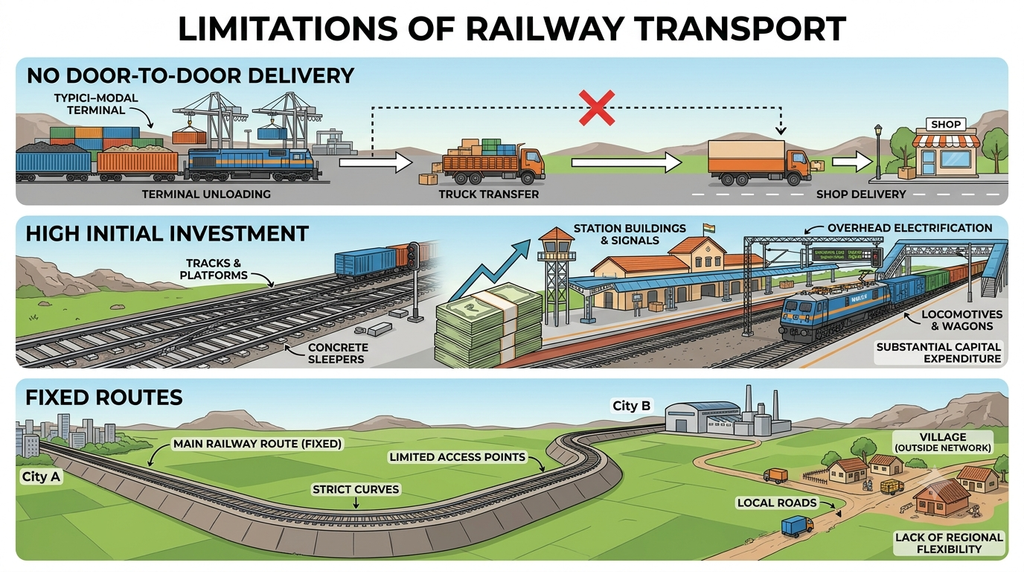
1. No Door-to-Door Delivery
Trains operate between railway stations and freight terminals. Additional road transport may be required to deliver goods to the final customer.
2. High Initial Investment
Building railway tracks, stations, signalling systems, and locomotives requires substantial capital investment.
3. Fixed Routes
Trains cannot travel beyond existing railway networks. Businesses in remote locations may need other modes of transport to connect with the railway system.
4. Additional Handling
Goods may need to be loaded onto trucks, unloaded at railway terminals, and loaded again for onward distribution. This can increase handling time and cost.
Business Example: A Steel Manufacturing Company
A steel manufacturer transports iron ore and coal from mines to its production plant using freight trains. The large carrying capacity helps the company move bulk materials efficiently.
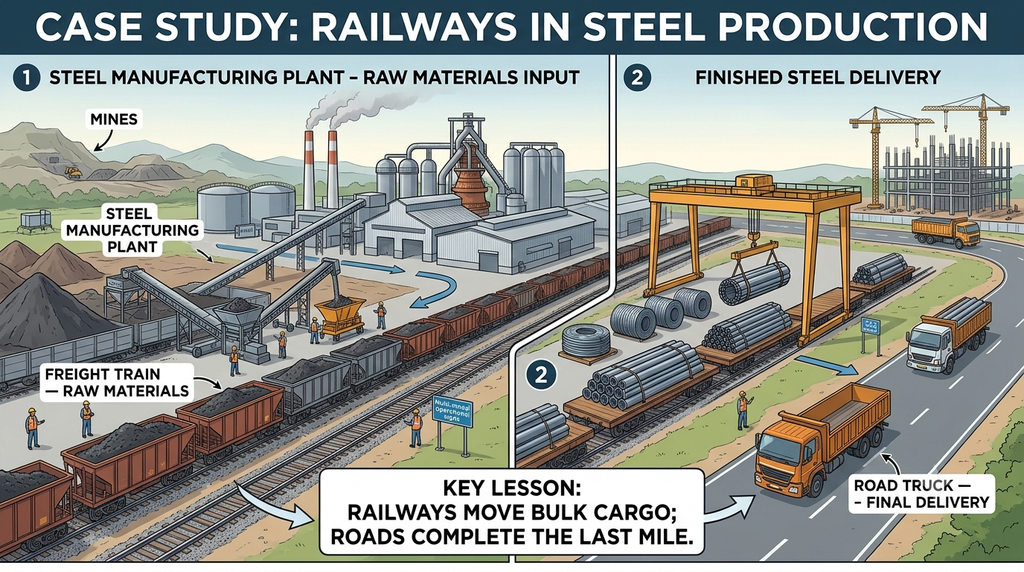
However, when finished steel pipes must reach a contractor’s construction site, road trucks may be needed for the final delivery.
When Should a Business Choose Railway Transport?
Railway transport is generally suitable when:
- The goods are heavy or bulky.
- Large quantities must be transported.
- The route is connected to the railway network.
- The shipment can be planned.
- Cost efficiency is more important than immediate delivery.
Conclusion
Railway transport is valuable for large-scale, long-distance movement of goods. However, its fixed routes and lack of direct door-to-door service mean that businesses may need to combine it with road transport.