
Introduction
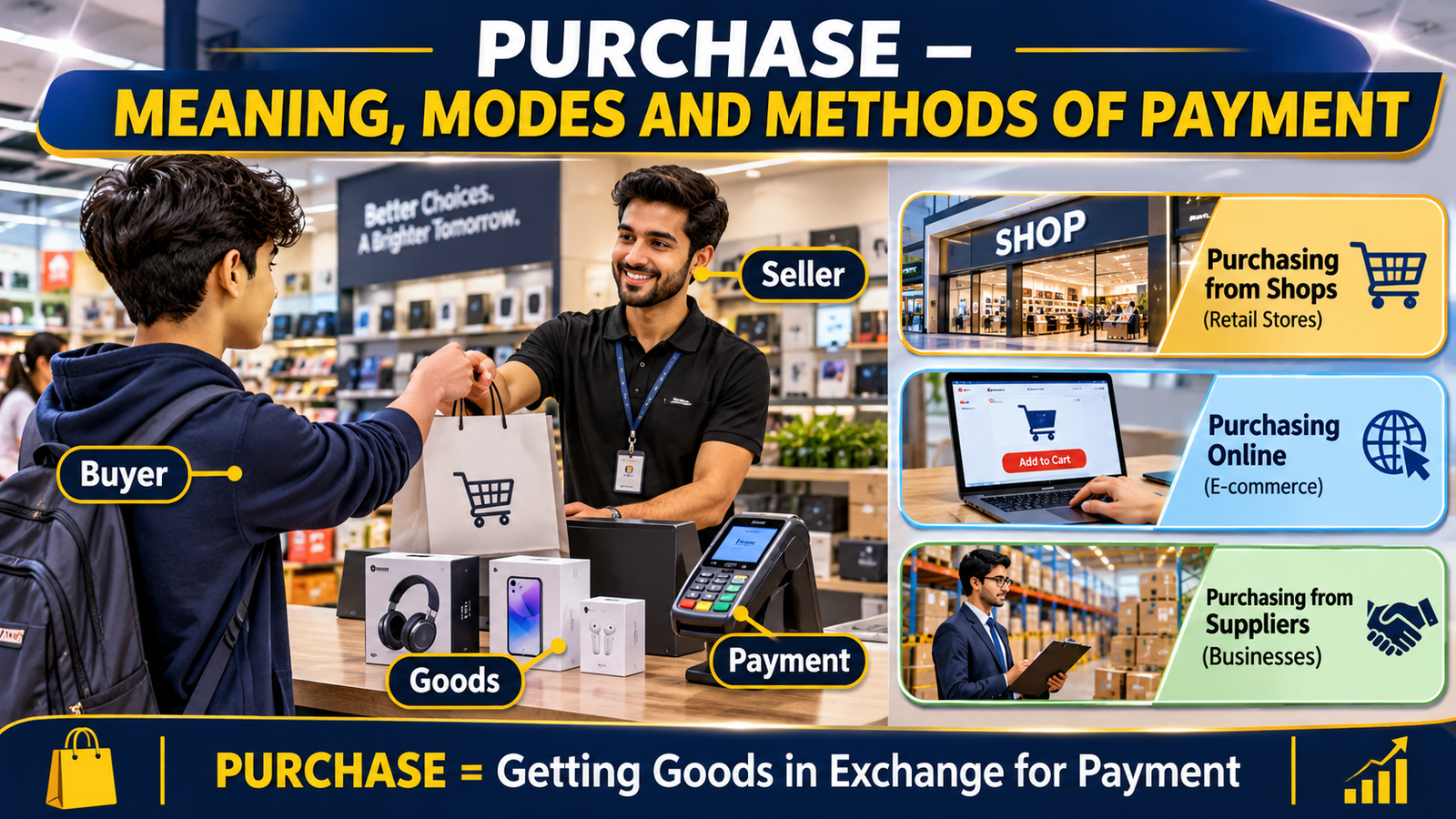
Purchase is an important activity in business. Every business needs to purchase raw materials, machinery, equipment, furniture and other goods required for its operations. Similarly, consumers purchase goods and services to satisfy their needs and wants.
A purchase involves selecting a product, placing an order, making payment and receiving the goods.
1. What is Meant by Purchase?
Purchase refers to the process of buying goods or services from a seller in exchange for money or an agreed form of payment.
In simple words, when a person or organisation pays money to obtain a product or service, it is called a purchase.
Examples:
- A student purchasing a textbook from a bookstore.
- A shopkeeper purchasing goods from a wholesaler.
- A company purchasing machinery for its factory.
- A customer purchasing a mobile phone through an online shopping website.
2. Different Modes of Purchasing a Product
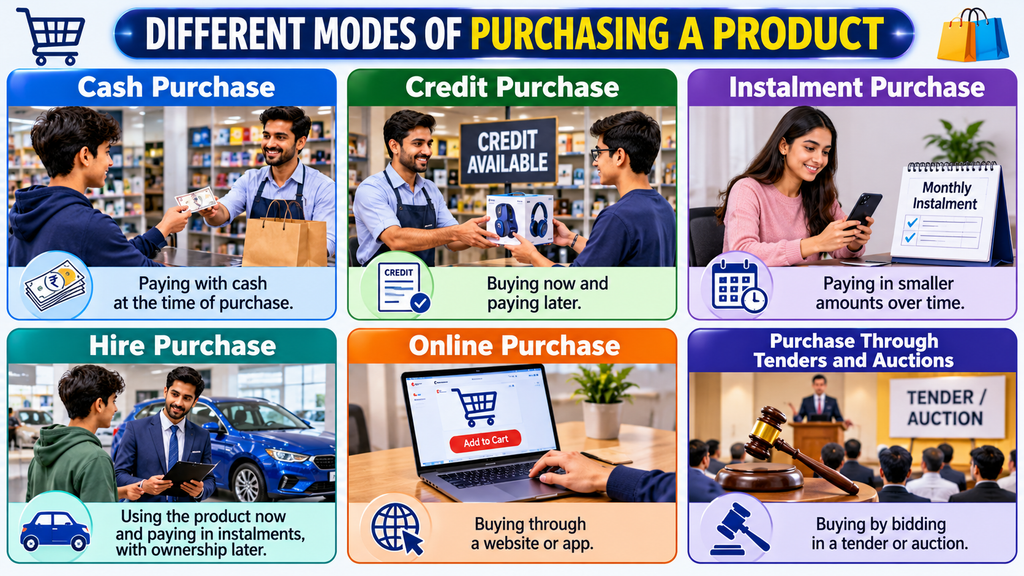
A buyer can purchase products through different methods depending on the nature of the goods, the seller and the payment arrangement.
1. Cash Purchase
Under this method, the buyer makes payment immediately while purchasing the goods.
Example: Purchasing groceries from a shop and paying cash at the counter.
2. Credit Purchase
Under this method, the buyer receives the goods immediately but makes payment at a later agreed date.
Example: A retailer purchasing goods from a wholesaler on credit and paying after 30 days.
3. Instalment Purchase
Under this method, the buyer pays the price of the product in several instalments over an agreed period.
Example: Purchasing furniture and paying its price in monthly instalments.
4. Hire Purchase
Under the hire purchase method, the buyer obtains possession of the goods by paying an initial amount and agrees to pay the remaining amount in instalments. Ownership generally passes to the buyer after all the required instalments are paid and the agreement’s conditions are fulfilled.
Example: Purchasing a washing machine through a hire purchase agreement.
5. Online Purchase
Under this method, the buyer selects and orders products through an online shopping platform or a seller’s website.
Example: Purchasing clothes, books or electronic goods through an e-commerce website.
6. Purchase Through Tenders
Under this method, a buyer invites quotations or offers from different suppliers. The buyer evaluates the offers and selects a suitable supplier according to the stated conditions.
Example: A government department inviting tenders for purchasing computers.
7. Purchase Through Auction
In an auction, interested buyers compete by offering bids. The product is generally sold to the highest acceptable bidder, subject to the auction conditions.
Example: Purchasing an antique item through an auction.
3. Various Methods of Payment for Purchasing a Product
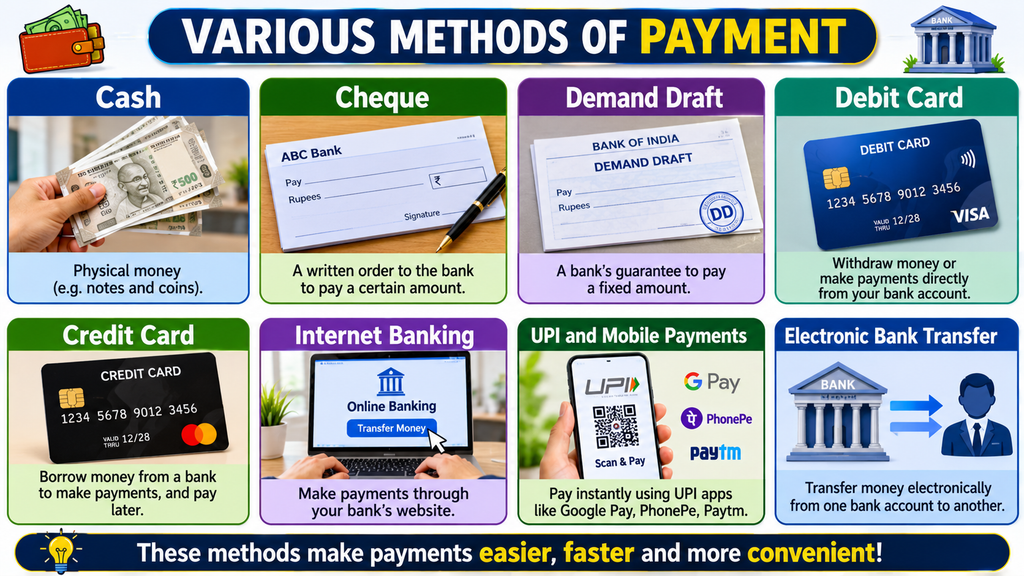
A buyer can make payment through different methods. The choice depends on convenience, safety, the amount involved and the agreement between the buyer and seller.
1. Cash Payment
The buyer pays physical currency directly to the seller.
Example: Paying cash at a grocery store.
2. Cheque Payment
A cheque is a written instruction given by an account holder to a bank to pay a specified amount to a person or organisation.
Example: A company issuing a cheque to its supplier.
3. Demand Draft
A demand draft is a prepaid payment instrument issued by a bank, directing payment of a specified amount to the named person or organisation.
Example: Paying fees or making a business payment through a demand draft.
4. Debit Card
A debit card allows a customer to make payments directly from the available balance in their bank account.
Example: Paying for electronic goods using a debit card.
5. Credit Card
A credit card allows the cardholder to purchase goods or services using credit provided by the card issuer. The amount must be repaid according to the billing terms.
Example: Purchasing a laptop using a credit card.
6. Internet Banking
Internet banking allows customers to transfer money and make payments through their bank’s online services.
Example: Paying a supplier through an online bank transfer.
7. UPI and Mobile Payments
Unified Payments Interface (UPI) and mobile payment applications allow customers to transfer money electronically using a mobile phone.
Example: Scanning a QR code at a shop and making payment through a UPI application.
8. Electronic Bank Transfer
Money can be transferred directly from one bank account to another through electronic banking systems such as NEFT, RTGS and IMPS.
Example: A business transferring payment directly to its supplier’s bank account.
Importance of Choosing a Suitable Payment Method
- It makes the purchasing process convenient.
- It helps maintain proper payment records.
- It reduces the need to carry physical cash.
- It supports business transactions.
- It allows buyers to choose payment methods according to their financial requirements.

Conclusion
Purchase is the process of obtaining goods or services in exchange for money or an agreed payment arrangement. Buyers can purchase products through cash, credit, instalments, hire purchase, online platforms, tenders and auctions. Different payment methods, such as cash, cheques, cards, UPI and bank transfers, make purchasing easier and more convenient.