
Introduction
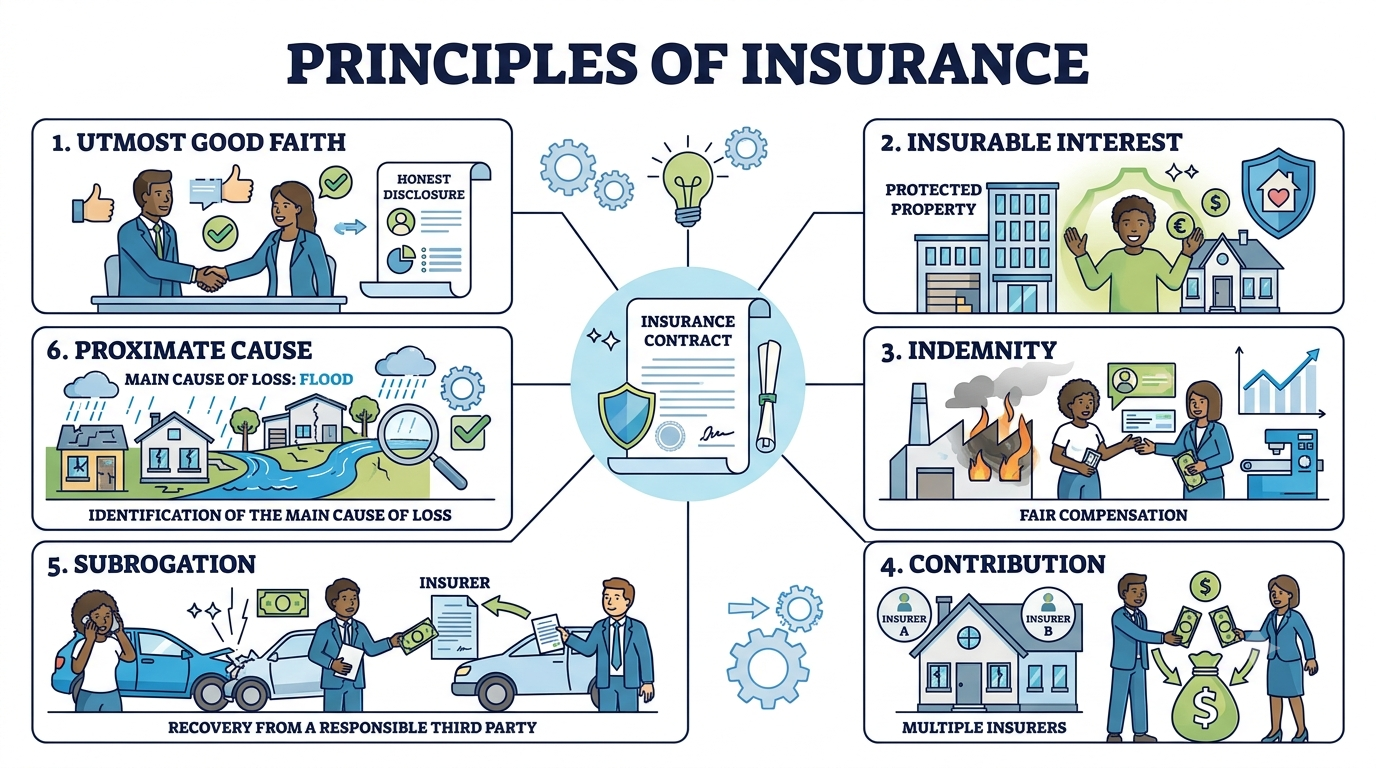
Insurance contracts are based on certain important principles. These principles establish the rights and responsibilities of both the insurer and the insured.
They help ensure fairness, honesty and proper settlement of insurance claims.
The major principles of insurance include utmost good faith, insurable interest, indemnity, contribution, subrogation and proximate cause.
1. Principle of Utmost Good Faith
The principle of utmost good faith means that both the insurer and the insured must disclose all material facts honestly and accurately while entering into an insurance contract.
A material fact is information that can influence the insurer’s decision to accept the risk or determine the premium and policy conditions.
Example
Suppose a person suffering from cancer applies for a life insurance policy but deliberately hides this medical information.
The person violates the principle of utmost good faith because they fail to disclose an important fact that may affect the insurance company’s decision.
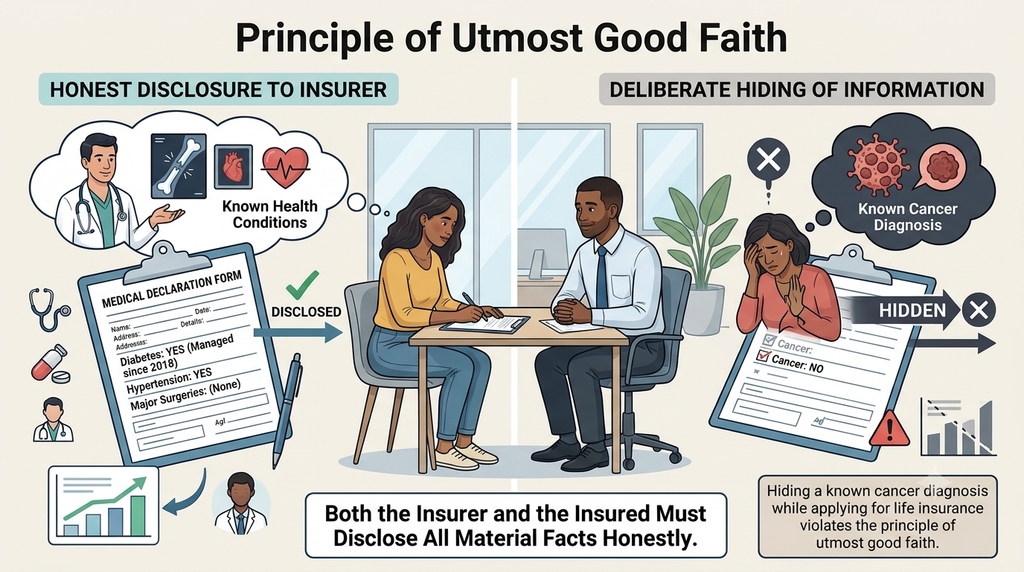
The insurer may take action according to the policy terms and applicable law.
2. Principle of Insurable Interest
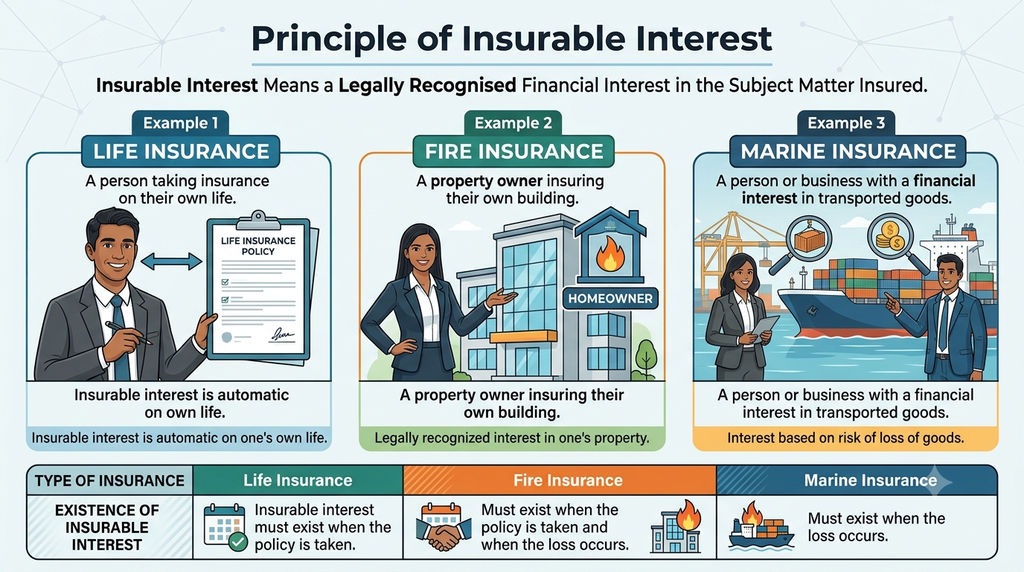
The principle of insurable interest means that the person taking an insurance policy must have a legally recognised financial interest in the subject matter being insured.
The insured must have an interest in the safety or continued existence of the insured subject matter.
Example
A person has an insurable interest in their own life and property. A business owner has an insurable interest in the business property they own.
When Must Insurable Interest Exist?
The timing of insurable interest differs according to the type of insurance.
| Type of Insurance | When Must Insurable Interest Exist? |
|---|---|
| Life Insurance | At the time of taking the policy. |
| Fire Insurance | At the time of taking the policy and at the time of loss. |
| Marine Insurance | At the time of loss, though it need not necessarily exist when the policy is taken. |
3. Principle of Indemnity
The principle of indemnity means that the insured should be compensated for the actual financial loss suffered, subject to the policy terms.
The purpose is to restore the insured to approximately the same financial position as before the loss, not to allow them to make a profit from insurance.
This principle generally applies to fire and marine insurance, but not in the same way to life insurance.
4. Principle of Contribution
The principle of contribution applies when the same property is insured against the same risk with more than one insurance company.
If a covered loss occurs, the insurance companies share the liability for compensation according to the applicable rules and policy conditions.
5. Principle of Subrogation
The principle of subrogation gives the insurer the right, after compensating the insured for a covered loss, to exercise certain rights of the insured against the third party responsible for the loss.
Example: If an insured vehicle is damaged due to another person’s negligence and the insurer pays the claim, the insurer may seek recovery from the responsible party, subject to applicable law.
6. Principle of Proximate Cause
The principle of proximate cause helps determine the main or effective cause of a loss when several events are involved.
The insurer examines whether the dominant cause of the loss is covered under the insurance policy.
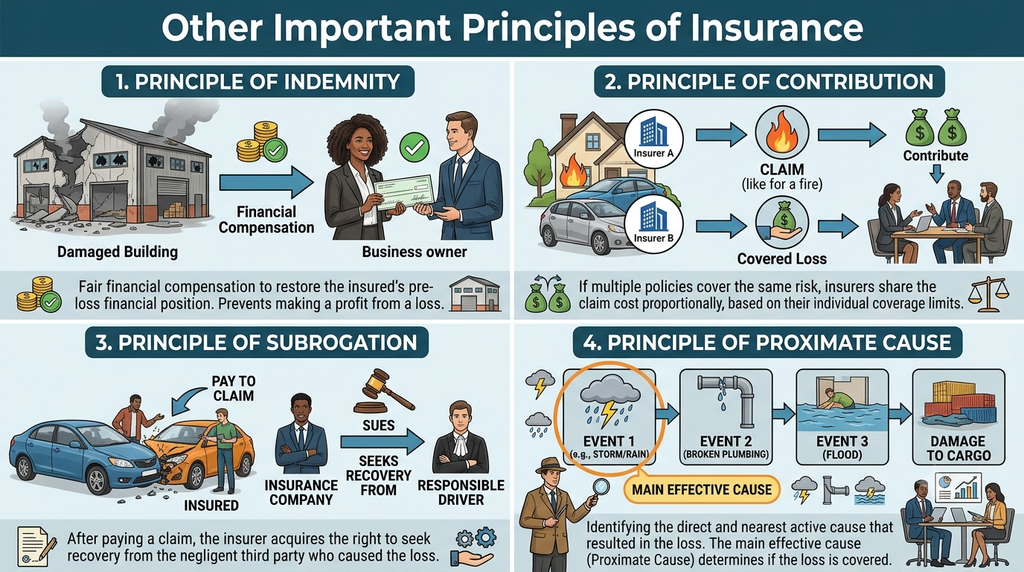
Example: If a building is damaged due to a chain of events, the insurer examines the effective cause to determine whether the loss is covered.
Importance of the Principles of Insurance
- Promotes Honesty: Encourages both parties to disclose important information.
- Prevents Fraud: Helps reduce dishonest insurance claims.
- Ensures Fair Compensation: Prevents the insured from making an unfair profit from indemnity-based policies.
- Clarifies Responsibilities: Establishes the duties of the insurer and insured.
- Supports Proper Claim Settlement: Helps insurance companies assess and settle claims fairly.
Conclusion
The principles of insurance form the foundation of insurance contracts. Utmost good faith ensures honesty, insurable interest establishes a valid interest in the insured subject matter, and other principles help determine compensation and claim settlement. These principles make insurance more reliable and systematic.