
Introduction
Multiple shops are a popular form of large-scale retail trade. They allow a business to sell the same products through several branches located in different areas or cities.
Customers can visit any branch and usually find similar products, prices,ces and shopping arrangements. This helps businesses reach more customers and maintain a consistent brand image.
1. Meaning of Multiple Shops
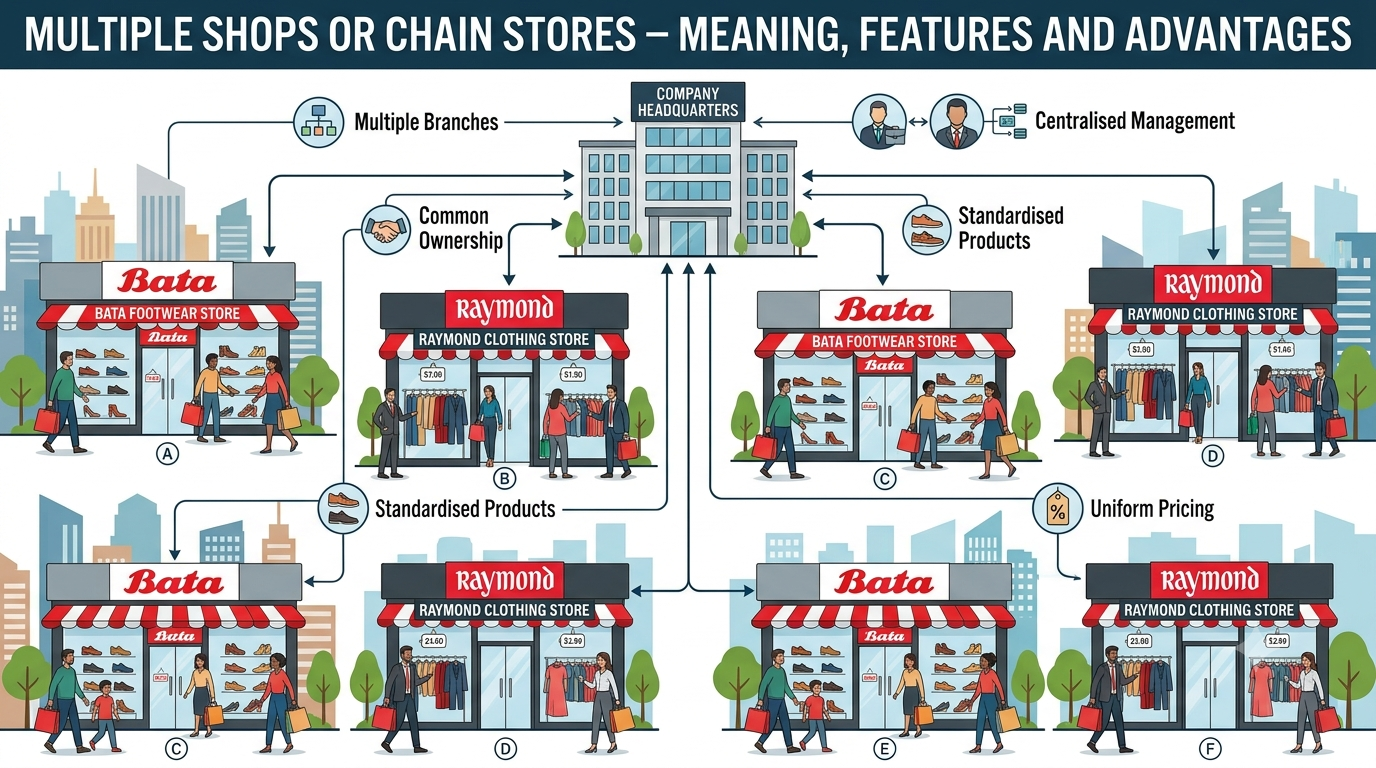
Multiple Shops, also known as Chain Stores, are a type of large-scale retail organisation in which several similar retail shops operate under common ownership and central management at different locations.
These shops generally sell the same type of products and follow common business policies.

Examples of Multiple Shops in India:
- Bata Shoe Stores.
- McDonald’s outlets.
- Raymond stores.
2. Features of Multiple Shops
1. Several Branches
Multiple shops operate through many branches located in different localities, towns, and cities.
2. Similar Appearance
All branches generally follow a similar design, layout,t and business style. This helps customers recognise the brand easily.
3. Specialisation in Products
Multiple shops generally focus on a particular product line, such as footwear, clothing, or food products.
4. Centralised Management
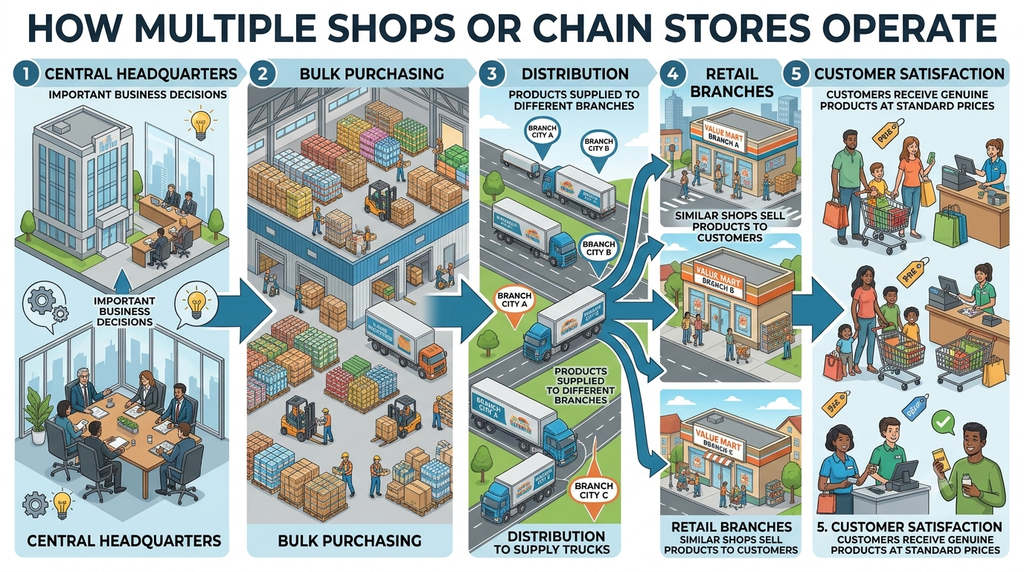
All branches operate under common central management. Important decisions regarding purchasing, pricing, and business policies are controlled centrally.
5. Uniform Pricing
The branches generally follow common pricing policies. Customers can expect similar prices for the same products across different locations.
6. Standardised Quality
The products sold through different branches generally follow common quality standards. This helps maintain customer trust.
7. Cash Sales
Many multiple shops mainly follow cash or immediate-payment sales policies. This reduces the risk of bad debts caused by unpaid customer credit.
3. Advantages of Multiple Shops to Buyers
Multiple shops provide several benefits to customers.
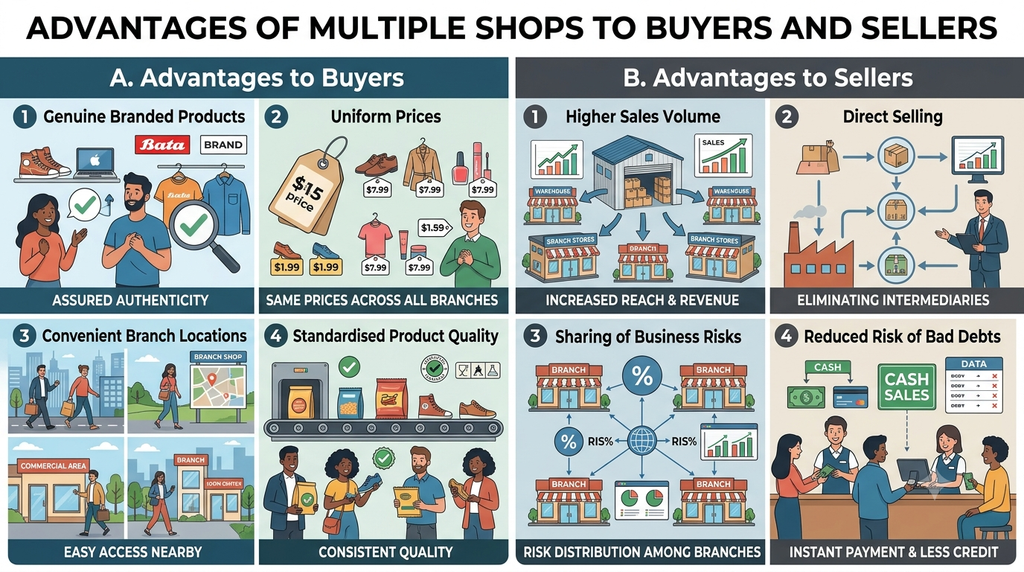
1. Genuine Products
Customers can purchase genuine products directly from the company’s authorised branches.
2. Uniform Prices
Customers generally pay similar standard prices for the same products at different branches.
3. Convenient Locations
Multiple branches in different areas make products easily available to customers.
4. Standardised Quality
Customers can expect similar product quality and standards across different branches.
4. Advantages of Multiple Shops to Sellers
Multiple shops also provide important benefits to business owners.
1. Higher Sales Volume
Operating several branches helps businesses reach more customers and increase total sales.
2. Elimination of Middlemen
Manufacturers can sell directly to customers through their own retail branches, reducing dependence on wholesalers and other intermediaries.
3. Shared Business Risk
Losses suffered by one branch may be balanced by profits earned by other branches.
4. Reduced Risk of Bad Debts
When branches mainly follow cash sales, the business faces less risk of customers failing to pay their dues.
5. Difference Between Departmental Stores and Multiple Shops
| Basis | Departmental Stores | Multiple Shops |
|---|---|---|
| Location | Usually located at one major central place. | Located at several different places. |
| Products | Sell many different categories of goods. | Generally specialise in one product line. |
| Customer Services | Offer several additional services. | Usually offer limited additional services. |
| Pricing | Prices may vary between products and departments. | Generally follow uniform pricing policies. |
| Example | Shoppers Stop. | Bata Shoe Stores. |
6. Practical Business Example
Suppose a footwear manufacturer opens 50 retail shops in different cities.
Each shop sells the company’s footwear products and follows the same pricing and quality policies. Customers can purchase genuine shoes from any branch.
The company can increase sales by reaching more customers, while customers benefit from standardised products and convenient locations.
Conclusion
Multiple shops or chain stores are an effective form of large-scale retail trade. They help businesses expand their market, increase sales, and maintain consistent product quality. They also benefit customers by providing genuine products, convenient locations,ons and uniform pricing.