
Introduction
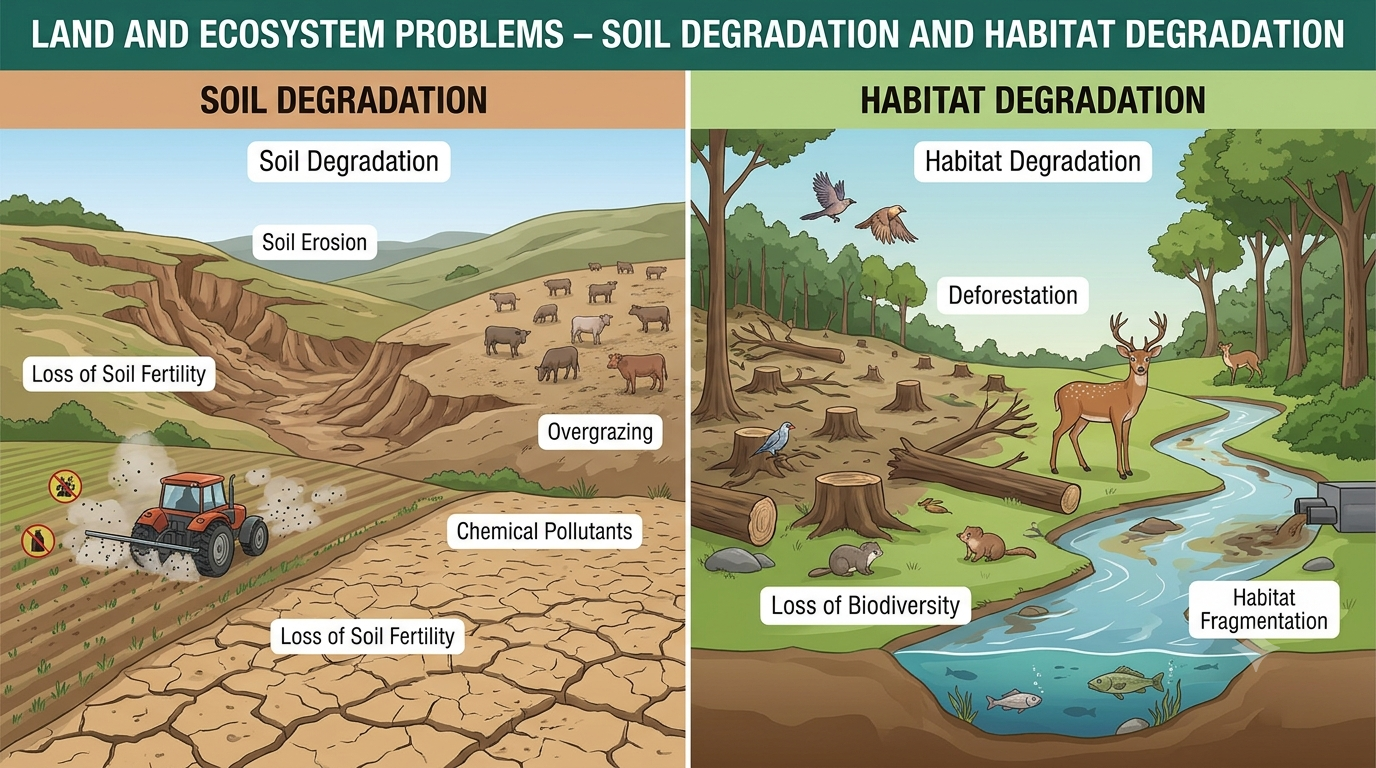
Land and natural habitats are important parts of the environment. Soil supports agriculture and plant growth, while natural habitats provide food and shelter to different plants and animals.
However, human activities such as deforestation, industrialization, pollution, and excessive use of chemicals are damaging land and natural ecosystems. Two major environmental problems are soil degradation and habitat degradation.
1. Soil Degradation
Soil degradation refers to the decline in the overall quality and fertility of soil. It reduces the ability of soil to support agriculture and vegetation.
Healthy soil is necessary for growing crops, maintaining forests and supporting living organisms.
Major Causes of Soil Degradation
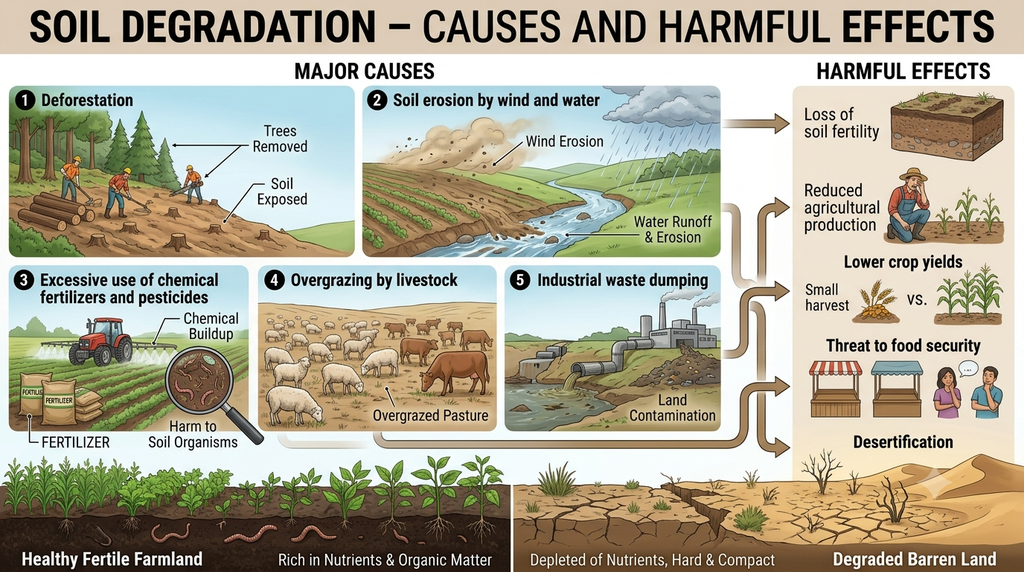
- Deforestation: Cutting down trees exposes the soil to wind and water erosion.
- Soil Erosion: Wind and flowing water remove the fertile upper layer of soil.
- Excessive Use of Chemicals: Overuse of chemical fertilizers and synthetic pesticides can damage soil quality.
- Overgrazing: When animals graze excessively, vegetation is destroyed, and soil becomes exposed.
- Industrial Waste: Dumping harmful industrial waste on land can reduce soil quality.
Harmful Effects of Soil Degradation
- Reduction in Agricultural Production: Loss of soil fertility reduces crop yields and may threaten food security.
- Desertification: Fertile land may gradually become dry and barren, making it unsuitable for agriculture and vegetation.
2. Habitat Degradation
Habitat degradation refers to the damage or alteration of the natural environment in which plants and animals live. When a habitat becomes severely damaged, it may no longer provide suitable conditions for native species to survive.
Forests, rivers, grasslands, and wetlands are examples of natural habitats.
Major Causes of Habitat Degradation
- Deforestation: Cutting down forests destroys the natural homes of many animals and plants.
- Urban Expansion: Construction of buildings, roads,oads and industries reduces natural living spaces.
- Agricultural Expansion: Clearing natural land for farming damages existing ecosystems.
- Environmental Pollution: Chemicals, plastic waste, and other pollutants damage natural habitats.
- Climate Change: Changes in temperature and weather patterns affect the natural conditions required by different species.
Harmful Effects of Habitat Degradation
- Loss of Biodiversity: Many plants and animals lose their natural homes and may become endangered or extinct.
- Disturbance of Food Chains: The loss of species affects the balance between producers, consumers, and other organisms.
- Disruption of Ecosystems: Natural ecological processes become disturbed when habitats are damaged.
- Threat to Wildlife: Animals may struggle to find food, water, and shelter.
3. Difference Between Soil Degradation and Habitat Degradation
| Soil Degradation | Habitat Degradation |
|---|---|
| It refers to the decline in soil quality and fertility. | It refers to damage to the natural homes of plants and animals. |
| It mainly affects the productivity of land. | It mainly affects the survival of different species. |
| Major causes include erosion, overgrazing, and excessive chemical use. | Major causes include deforestation, urbanization,n and pollution. |
| It can reduce agricultural production. | It can cause biodiversity loss and disturb food chains. |
4. Measures to Prevent Soil and Habitat Degradation
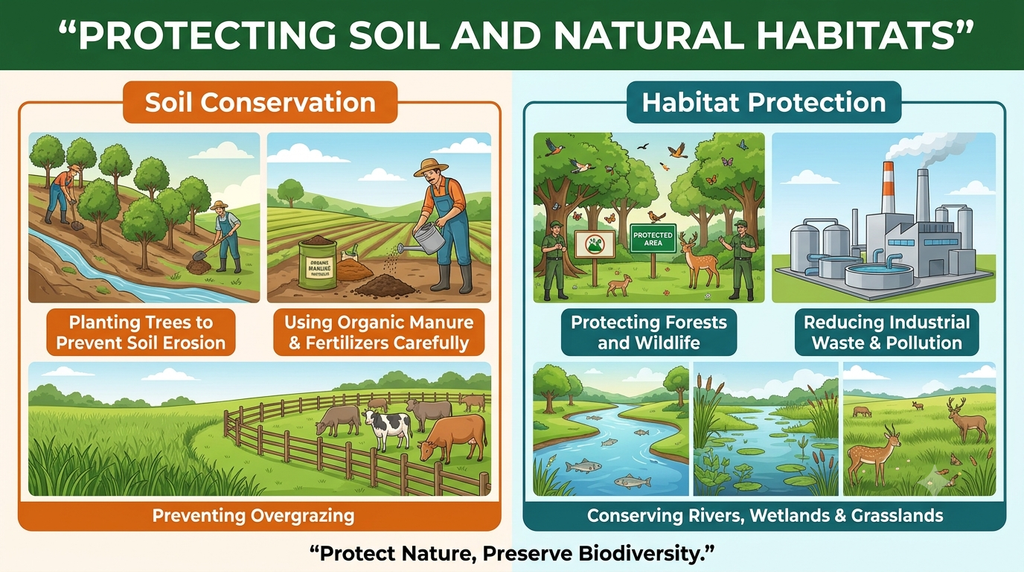
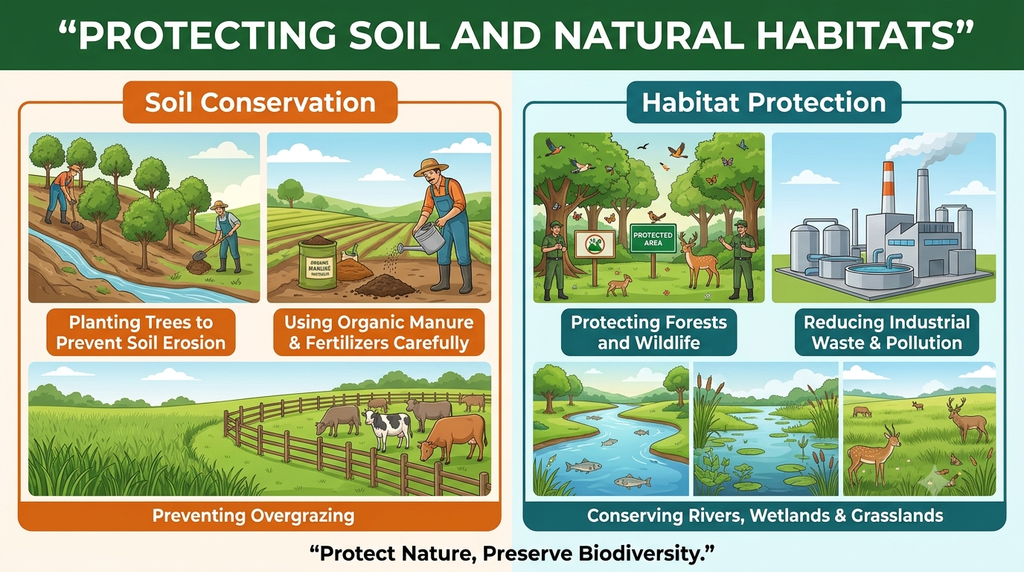
- Plant more trees and prevent unnecessary deforestation.
- Use fertilizers and pesticides carefully.
- Prevent excessive grazing by livestock.
- Control industrial waste and land pollution.
- Protect forests, wetlands, and wildlife areas.
- Promote sustainable farming practices.
- Avoid destroying natural habitats for unnecessary construction.
Conclusion
Soil and habitats are essential for maintaining environmental balance. Soil degradation affects agricultural production, while habitat degradation threatens plants, animals,als and biodiversity. Protecting land and natural ecosystems is necessary for a healthy environment.