

Introduction
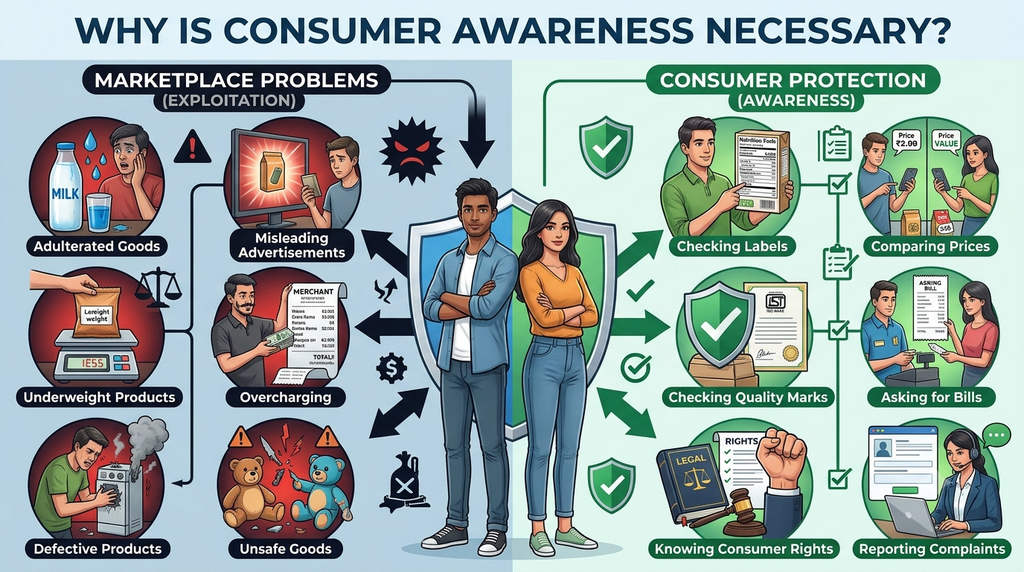
Consumers play an important role in the economy because they purchase goods and services to satisfy their needs. However, consumers are sometimes cheated or exploited by sellers through poor-quality products, misleading advertisements, adulteration, and overcharging.
Therefore, consumers must be aware of their rights and responsibilities. Consumer awareness helps people make correct purchasing decisions and protects them from unfair business practices.
Meaning of Consumer Awareness
Consumer awareness means having knowledge about consumer rights, responsibilities, product quality, prices, and available methods of protection against exploitation.
It helps consumers understand what they should purchase, what quality they should expect, and what action they can take if they are cheated.
Example: A customer checks the expiry date and quality certification mark before purchasing a food product.
Need and Importance of Consumer Awareness
Consumer awareness is necessary for the following reasons:
1. Protection Against Exploitation
Consumers may be cheated through defective products, adulterated goods, false weights, and misleading advertisements. Awareness helps them identify such unfair practices.
2. Knowledge of Consumer Rights
Consumers should know their legal rights so that they can demand fair treatment from sellers and manufacturers.
3. Protection Against Misleading Advertisements
Some advertisements make false claims about products. Awareness helps consumers check product information before making a purchase.
4. Ensures Product Safety
Consumers must be careful while purchasing food items, medicines, and electrical appliances. Checking quality and safety marks can help reduce the risk of buying unsafe products.
5. Encourages Correct Buying Decisions
An informed consumer compares prices, quality, and features before purchasing goods or services.
6. Prevents Unfair Trade Practices
Consumer awareness encourages people to raise complaints against overcharging, adulteration, underweight packaging, and other unfair practices.
Rights of Consumers in India
The Consumer Protection Act recognises six important rights of consumers.
1. Right to Safety
Consumers have the right to be protected against goods and services that may be dangerous to their life and property.
Example: Electrical appliances should meet the required safety standards.
2. Right to be Informed
Consumers have the right to receive correct information about the quality, quantity, price, ingredients, and other details of products.
Example: A food package must provide information such as manufacturing date, expiry date, and ingredients.
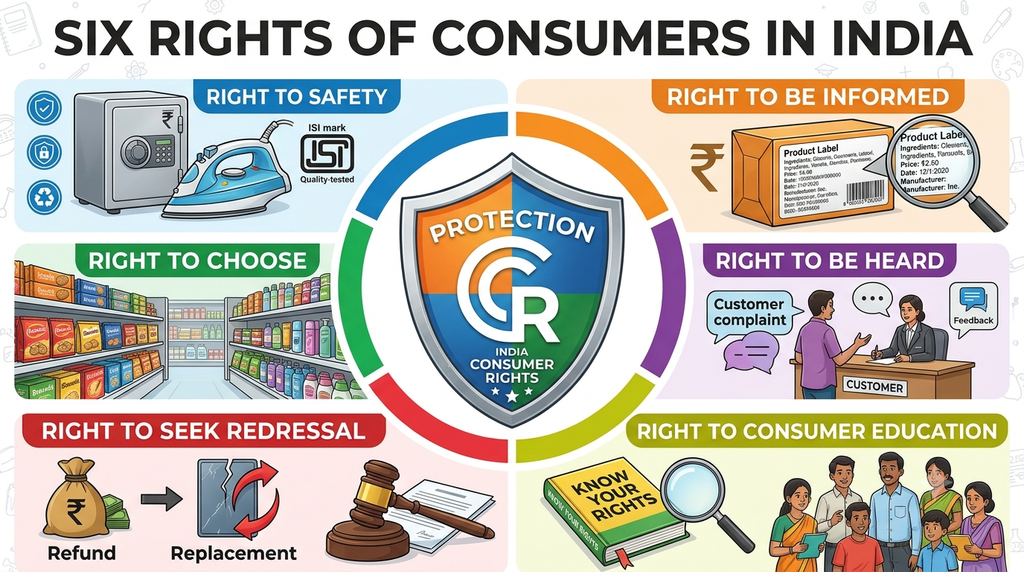
3. Right to Choose
Consumers have the freedom to choose from different products and services at competitive prices.
Example: A customer can compare different mobile phone brands before purchasing one.
4. Right to be Heard
Consumers have the right to express their complaints and concerns. Their interests should receive proper consideration by businesses and appropriate consumer authorities.
Example: A customer can raise a complaint against a company for supplying a defective product.
5. Right to Seek Redressal
Consumers have the right to seek a fair solution when they suffer because of defective goods or deficient services.
Possible remedies may include repair, replacement, refund, or compensation, depending on the case.
Example: A customer may seek a replacement for a defective refrigerator.
6. Right to Consumer Education
Consumers have the right to acquire knowledge and skills to make informed decisions and understand their rights.
Example: Learning about consumer protection laws through awareness programmes.
Responsibilities of a Responsible Consumer
Consumers should not depend only on laws for their protection. They must also act responsibly while purchasing goods and services.
1. Insist on Cash Memos and Receipts
Always ask for a bill or receipt after purchasing goods. It acts as proof of purchase and can help when filing a complaint.
2. Check Quality Marks
Look for appropriate quality certification marks before purchasing products.
Examples include:
- ISI Mark: Indicates conformity with applicable Indian Standards for certified products.
- AGMARK: Used for agricultural products covered by the certification scheme.
- Hallmark: Indicates the purity of precious metal jewellery covered by the hallmarking system.
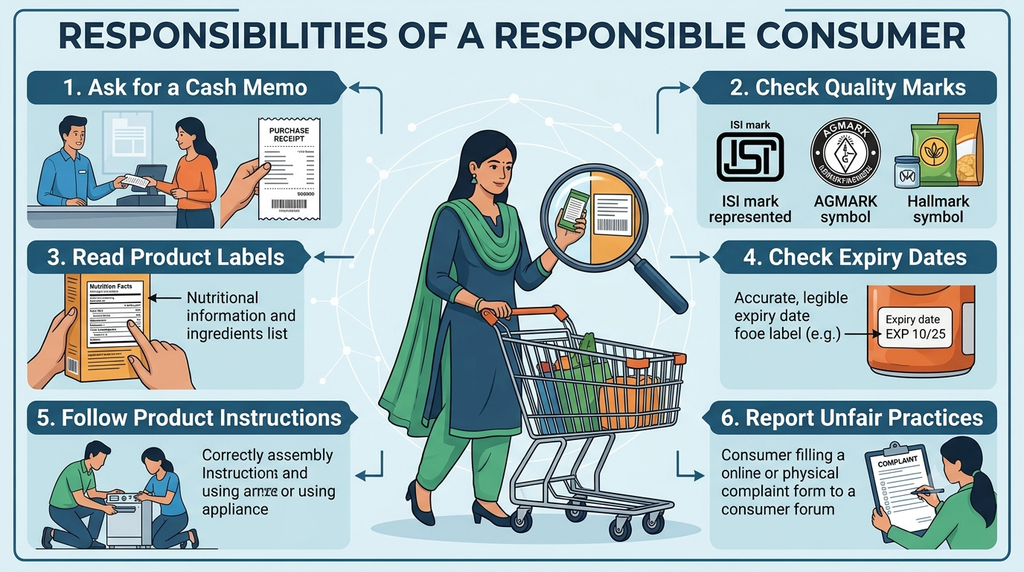
3. Read Product Labels Carefully
Check the manufacturing date, expiry date, price, ingredients, quantity,y and instructions before purchasing products.
4. Follow Product Instructions
Use products according to the instructions and safety warnings provided by the manufacturer.
5. Avoid Misleading Advertisements
Do not blindly trust advertisements. Compare product information and check whether the claims are reliable.
6. Raise Your Voice Against Exploitation
Consumers should report defective products, overcharging, adulteration, and unfair trade practices instead of remaining silent.
7. Keep Purchase Documents Safely
Bills, receipts, warranties and payment records should be preserved because they may be required when making a complaint.
Practical Example
Ravi purchases an electric iron from a shop. After using it for two days, he notices that it produces sparks.
As a responsible consumer, Ravi keeps the purchase bill and warranty card, contacts the seller, and requests a replacement. If the seller refuses to help, Ravi can approach the appropriate consumer grievance redressal system.
This example shows why consumer awareness and responsibility are important.
Conclusion
Consumer awareness is essential for protecting people from exploitation in the marketplace. Knowledge of consumer rights and responsibilities helps individuals make informed decisions, identify unfair practices, and seek justice when necessary. An aware and responsible consumer contributes to a fair and healthy marketplace.