

Introduction
Communication is not simply the act of speaking or writing. It is a complete process through which a message is created, transmitted, received, and understood.
For communication to be successful, different elements must work together properly.
Meaning of Communication Process
The communication process refers to the steps through which information or ideas are transferred from one person to another to create mutual understanding.
It begins when the sender develops an idea and ends when the receiver understands the message and provides feedback.
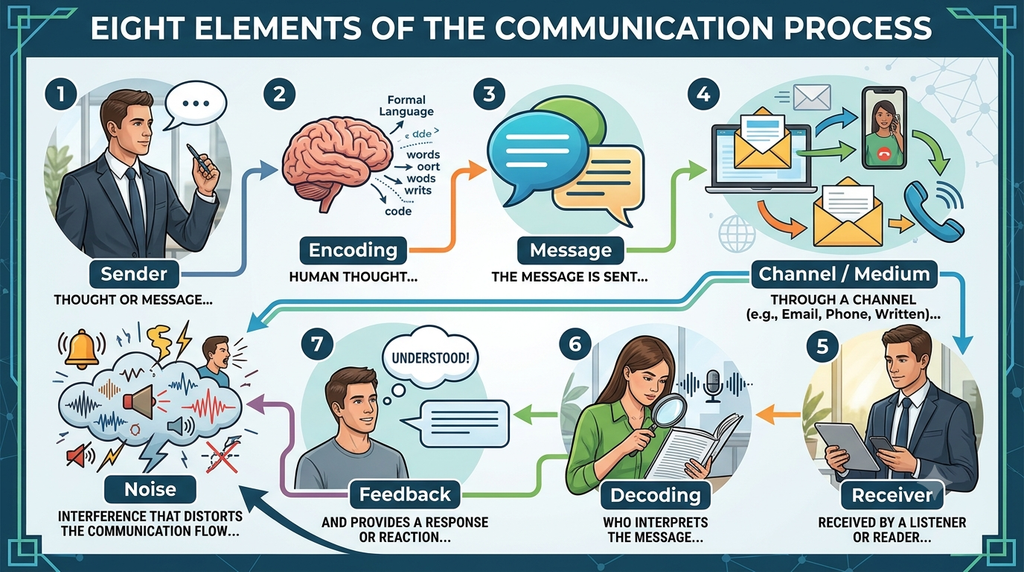
Elements of the Communication Process
1. Sender
The sender is the person who starts the communication process by developing an idea or information to share.
Example: A manager who wants to inform employees about a meeting.
2. Encoding
Encoding means converting thoughts or ideas into words, symbols, signs or gestures so that they can be communicated.
Example: The manager writes the meeting details in an email.
3. Message
The message is the information, idea, or instruction that the sender wants to communicate.
Example: “The sales meeting will be held at 10 AM tomorrow.”
4. Channel or Medium
The channel is the method used to send the message from the sender to the receiver.
Common channels include:
- Telephone
- Letters
- Face-to-face conversation
- Video conferencing
5. Receiver
The receiver is the person for whom the message is intended.
Example: Employees who receive the manager’s email.
6. Decoding
Decoding means interpreting and understanding the message received.
Example: Employees read the email and understand the meeting time and location.
7. Feedback
Feedback is the response given by the receiver to the sender. It helps confirm whether the message has been understood.
Example: An employee replies, “I will attend the meeting.”
8. Noise
Noise refers to anything that disturbs or affects the communication process.
Examples include:
- Loud background sounds
- Poor internet connection
- Unclear language
- Technical problems
- Distractions
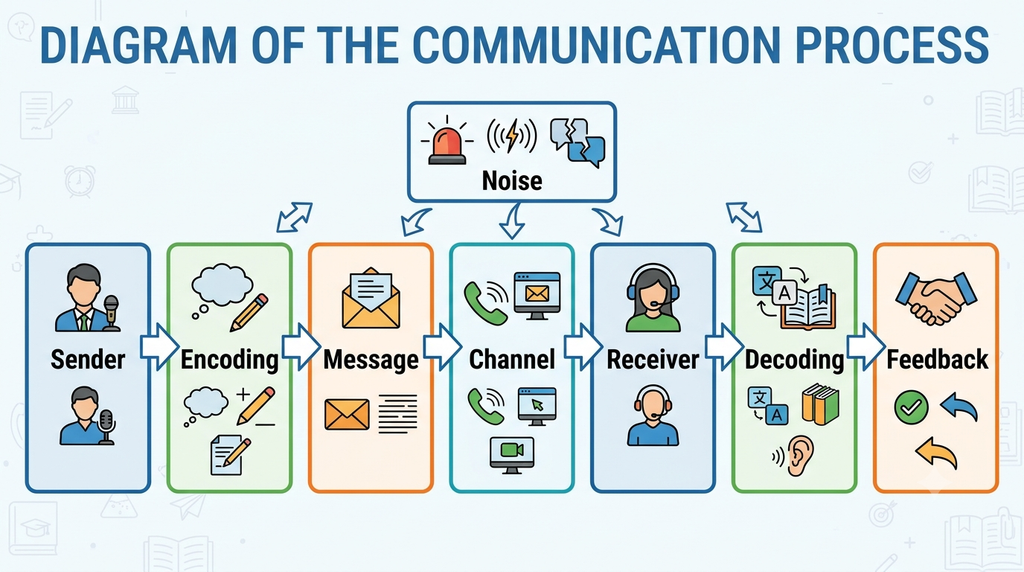
Diagram of the Communication Process
Sender → Encoding → Message → Channel → Receiver → Decoding → Feedback
Noise can affect communication at different stages of this process.
Real-Life Example
A teacher wants to inform students about an examination.
- Sender: The teacher decides to share the examination date.
- Encoding: The teacher writes the date in a message.
- Message: “The examination will begin on Monday.”
- Channel: The teacher sends the message through a class group.
- Receiver: Students receive the message.
- Decoding: Students read and understand the examination date.
- Feedback: Students reply to confirm that they have received the information.
- Noise: A poor internet connection may prevent some students from receiving the message.
Importance of Feedback in Communication
- It confirms whether the message has been understood.
- It helps the sender identify mistakes or misunderstandings.
- It encourages two-way communication.
- It improves the effectiveness of communication.

Conclusion
The communication process consists of different elements that work together to transfer information successfully. A clear message, a suitable communication channel, and proper feedback are necessary for effective communication.