

Introduction Choosing the right form of business organisation is an important decision for every entrepreneur. The choice affects capital, control, liability, continuity, management, and legal compliance. A partnership firm and
Read MoreCategory: Business Studies

Joint Stock Company: Meaning, Characteristics and Types

Introduction When a business requires large amounts of capital, professional management, and long-term continuity, a joint stock company can be a suitable form of organisation. It allows many people to
Read More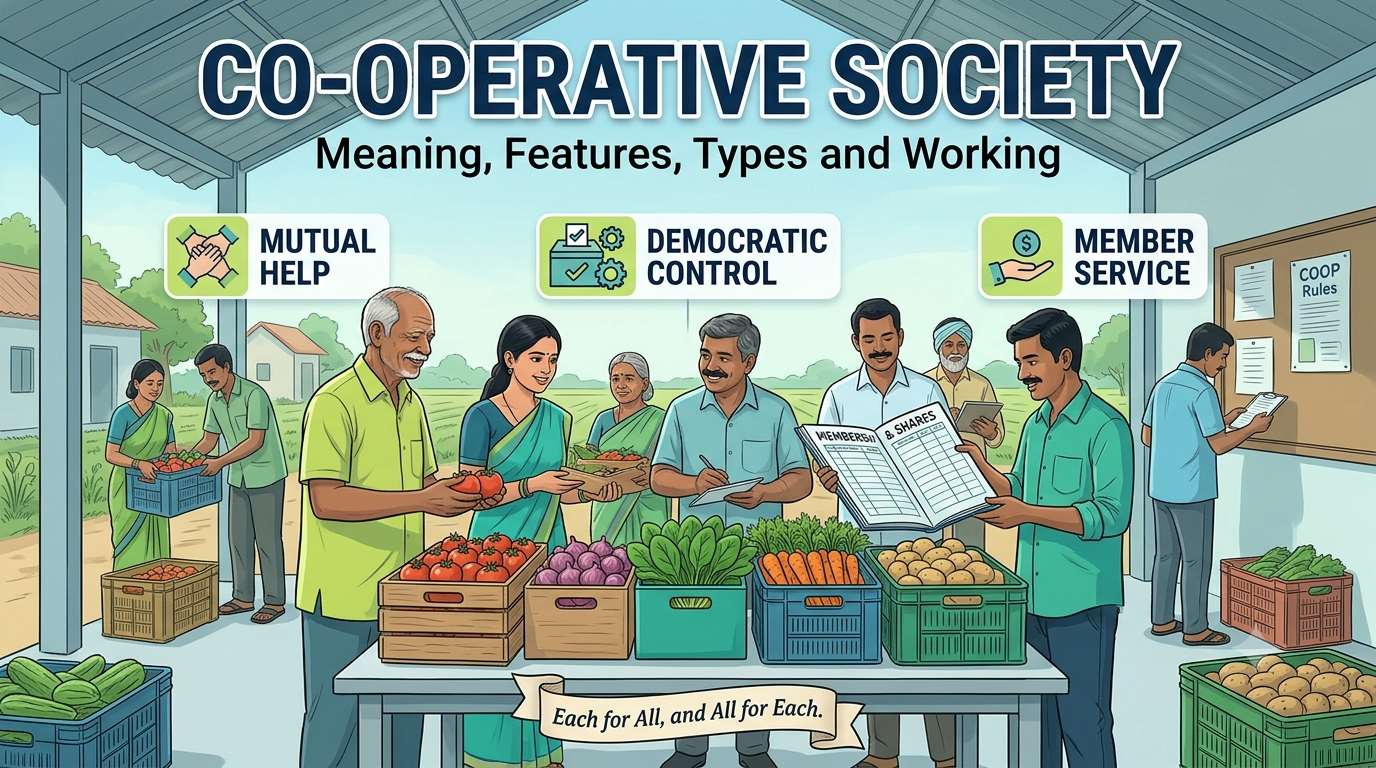
Co-operative Society: Meaning, Features, Types and Working
Introduction Small producers, farmers, consumers, and workers may find it difficult to achieve their economic goals individually. They can improve their position by joining together and working for a common
Read More
Joint Hindu Family Business: Meaning and Key Features
Introduction A Joint Hindu Family (JHF) Business is a traditional form of business organisation found in India. It is associated with a joint Hindu family and is generally carried on
Read More
Partnership: Meaning, Features, Merits, Limitations and Comparison
Introduction When one person does not have enough capital, knowledge, or time to operate a business independently, they may join with other people. This arrangement allows individuals to combine their
Read More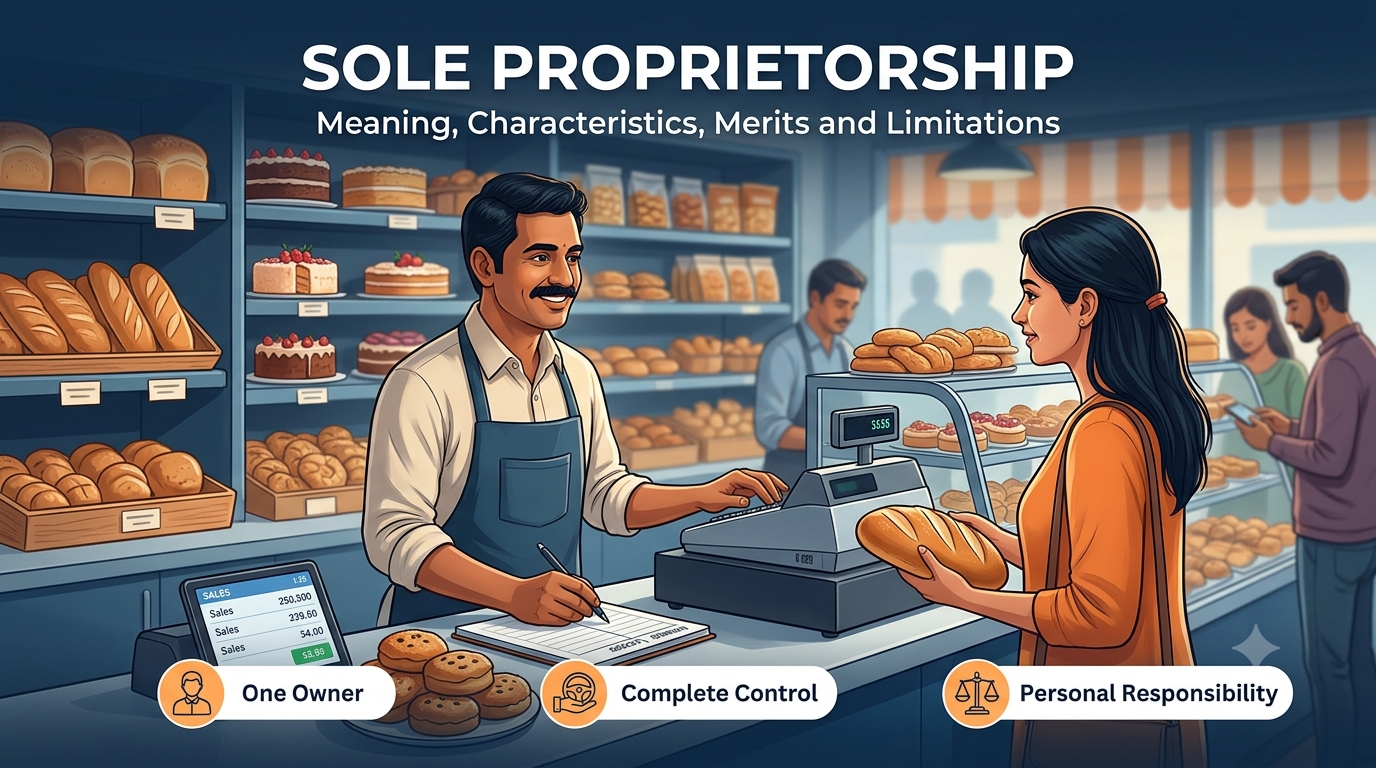
Sole Proprietorship: Meaning, Characteristics, Merits and Limitations
Introduction Sole proprietorship is one of the simplest and most common forms of business organisation. It is particularly suitable for small businesses that require limited capital and direct personal supervision.
Read More
Registration of a Partnership Firm and Consequences of Non-Registration
Introduction A partnership firm is formed when two or more persons agree to carry on a business and share its profits. In India, partnership firms are governed by the Indian
Read More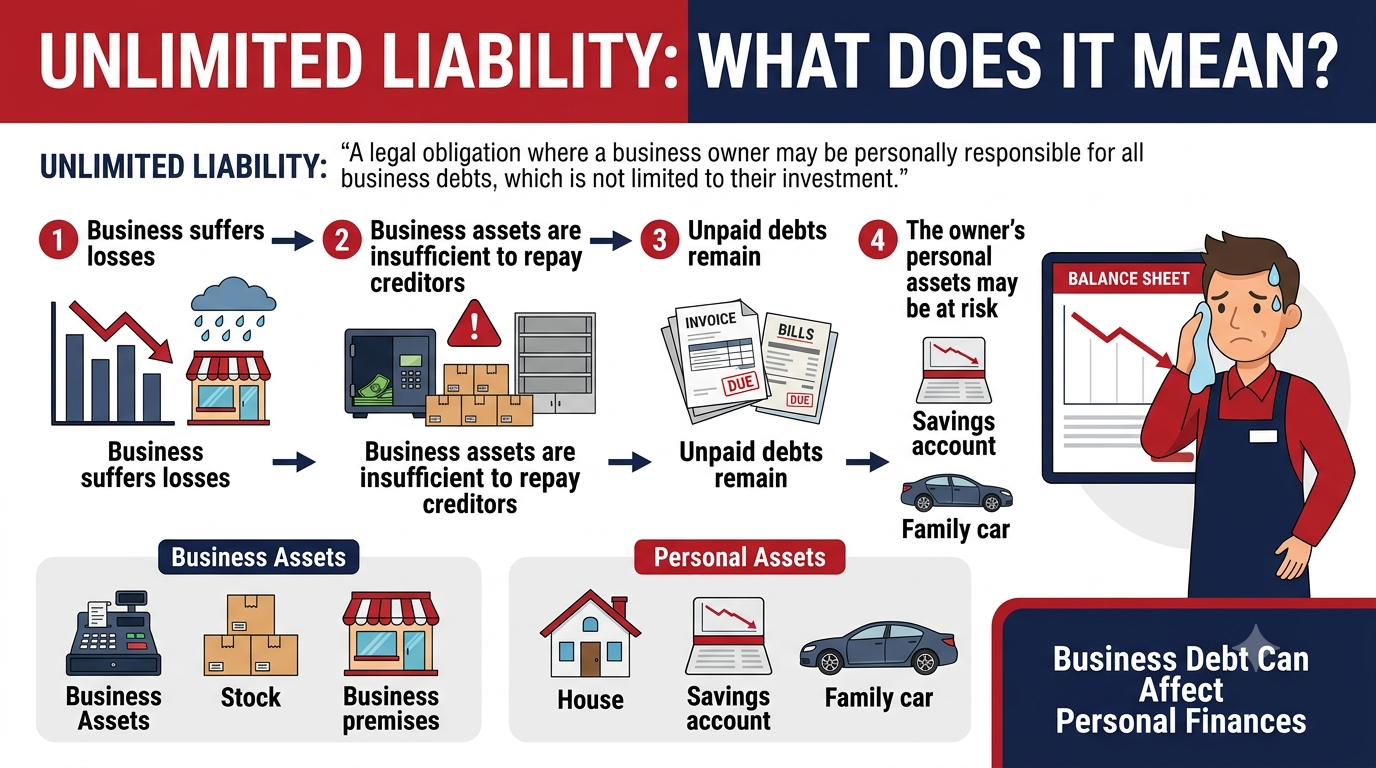
Unlimited Liability: Meaning and Practical Example
Introduction Every business needs money to purchase goods, pay employees, maintain premises, and meet other expenses. Sometimes, a business may suffer losses and become unable to repay its debts. In
Read More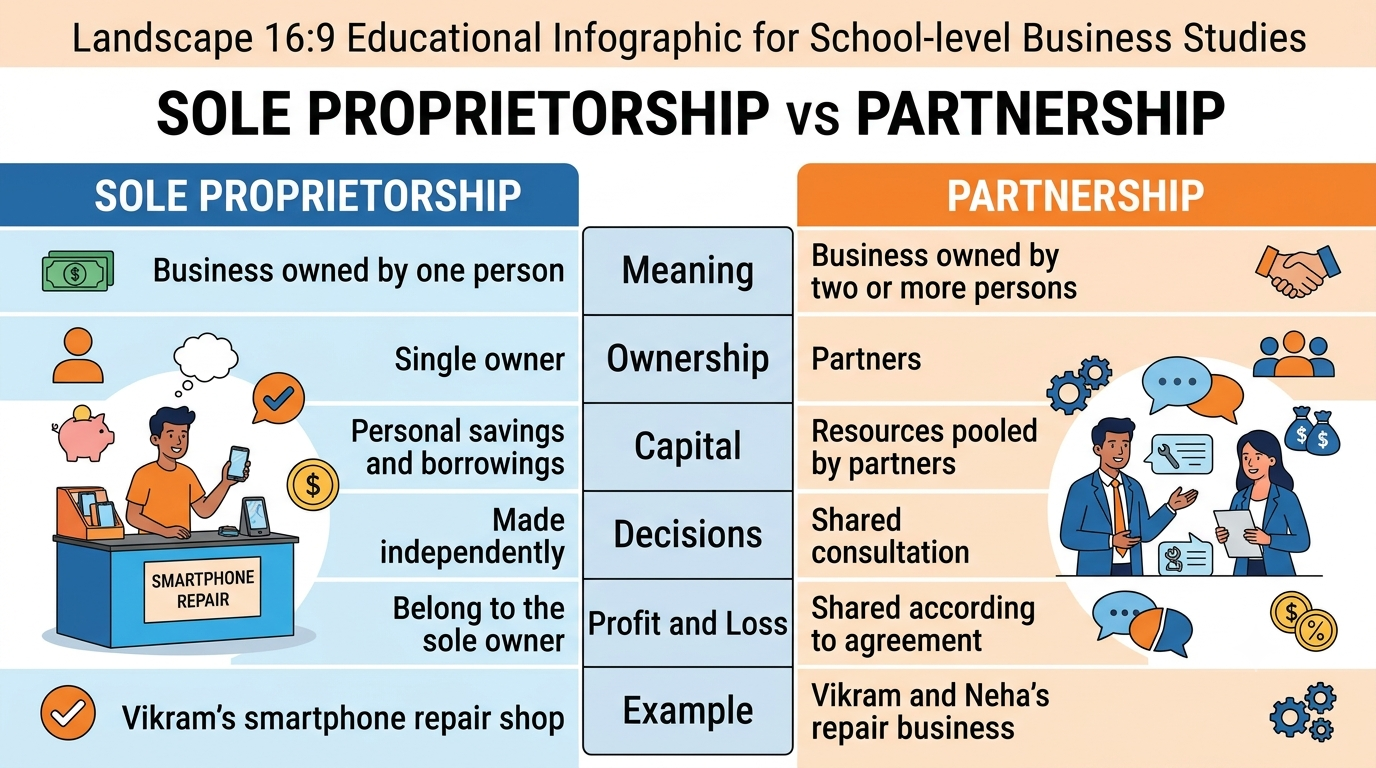
Difference Between Sole Proprietorship and Partnership
Introduction Sole proprietorship and partnership are two common forms of business organisation. The main difference between them is the number of owners. A sole proprietorship is owned and managed by
Read More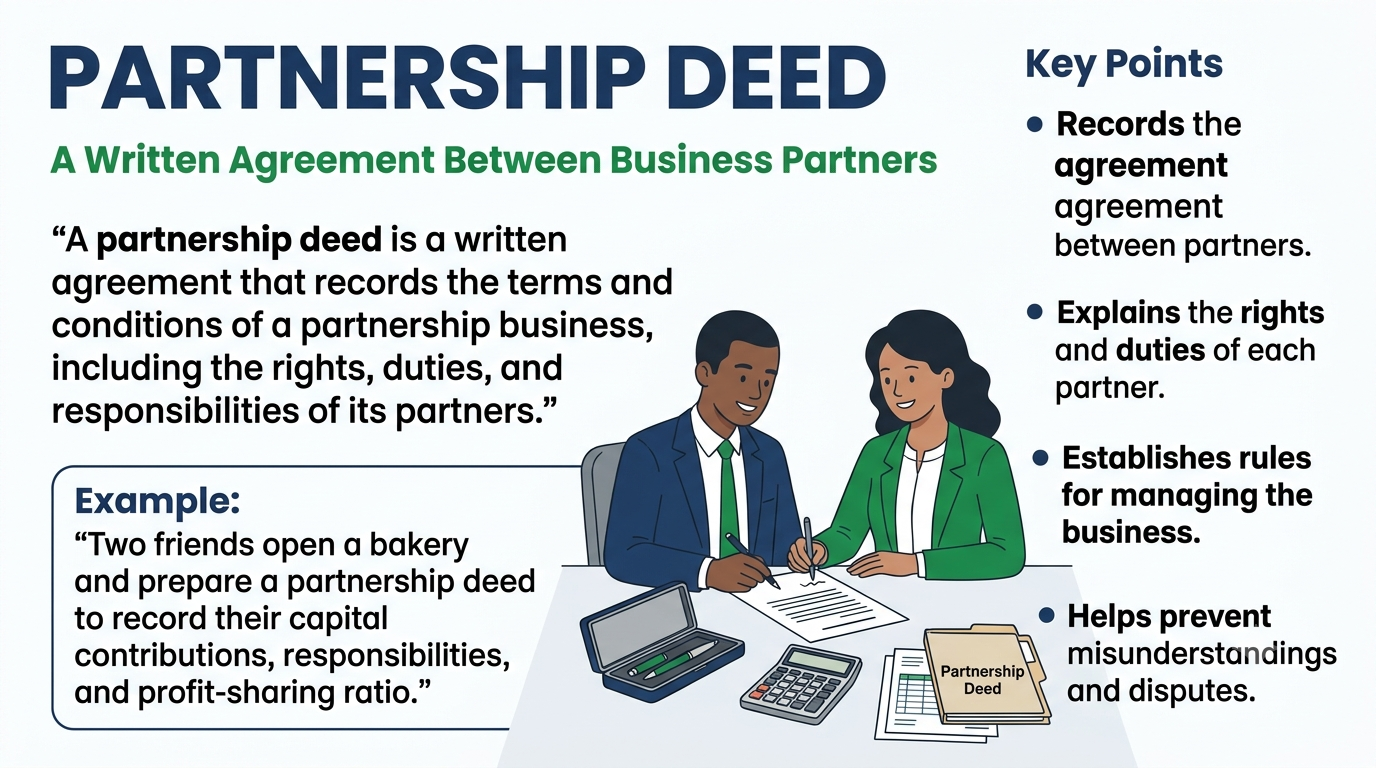
What Is a Partnership Deed? Mention Any Four Contents of a Partnership Deed
Introduction When two or more people start a business together, they need clear rules to manage the business smoothly. They must decide how much money each partner will invest, how
Read More