
Economies around the world are grouped into three major categories based on who owns and controls the factories, land, and resources (the means of production).
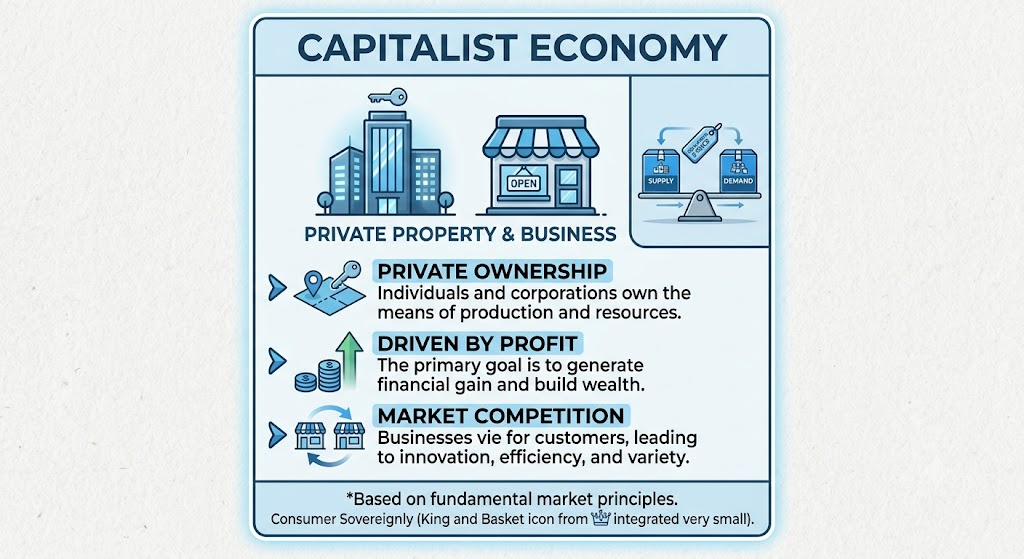
1. Capitalist Economy (Market Economy)
- Who owns resources? Private individuals and businesses.
- Who controls production? Market forces (supply and demand).
- Main Goal: Earning private profits.
- Example: The United States.
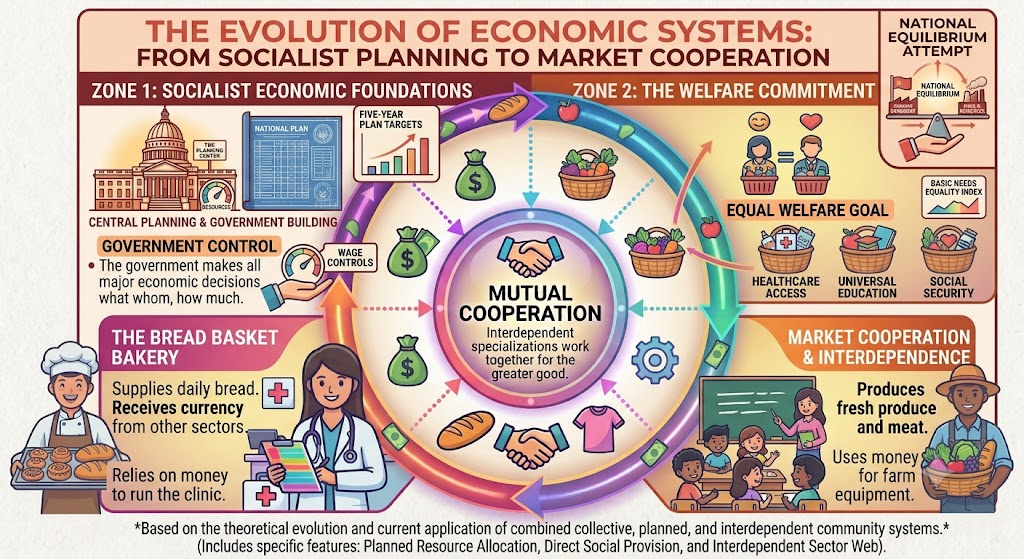
2. Socialist Economy (Planned Economy)
- Who owns resources? The government or the state on behalf of the public.
- Who controls production? Central government planners who decide what to produce and at what price.
- Main Goal: Promoting equal social welfare and meeting society’s basic needs.
- Example: North Korea.
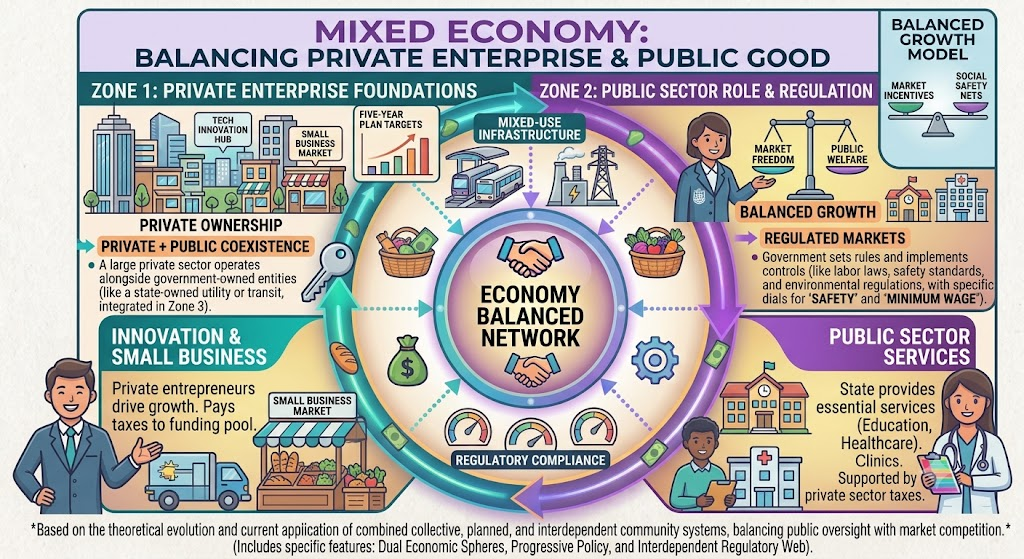
3. Mixed Economy
- Who owns resources? A blend of both private owners and the government.
- Who controls production? Private businesses operate freely in most areas, but the government owns key sectors (like postal services, railways, or military) and creates safety rules.
- Main Goal: Balancing economic growth with social equity.
- Example: India, the United Kingdom, and Canada.
Quick Comparison Table
| Feature | Capitalist Economy | Socialist Economy | Mixed Economy |
| Ownership | Private sector | Government / State | Both private and public |
| Decision Maker | Free market forces | Government planners | Market forces with regulation |
| Primary Focus | Financial profit | Social equality | Growth + Public welfare |
