
Introduction
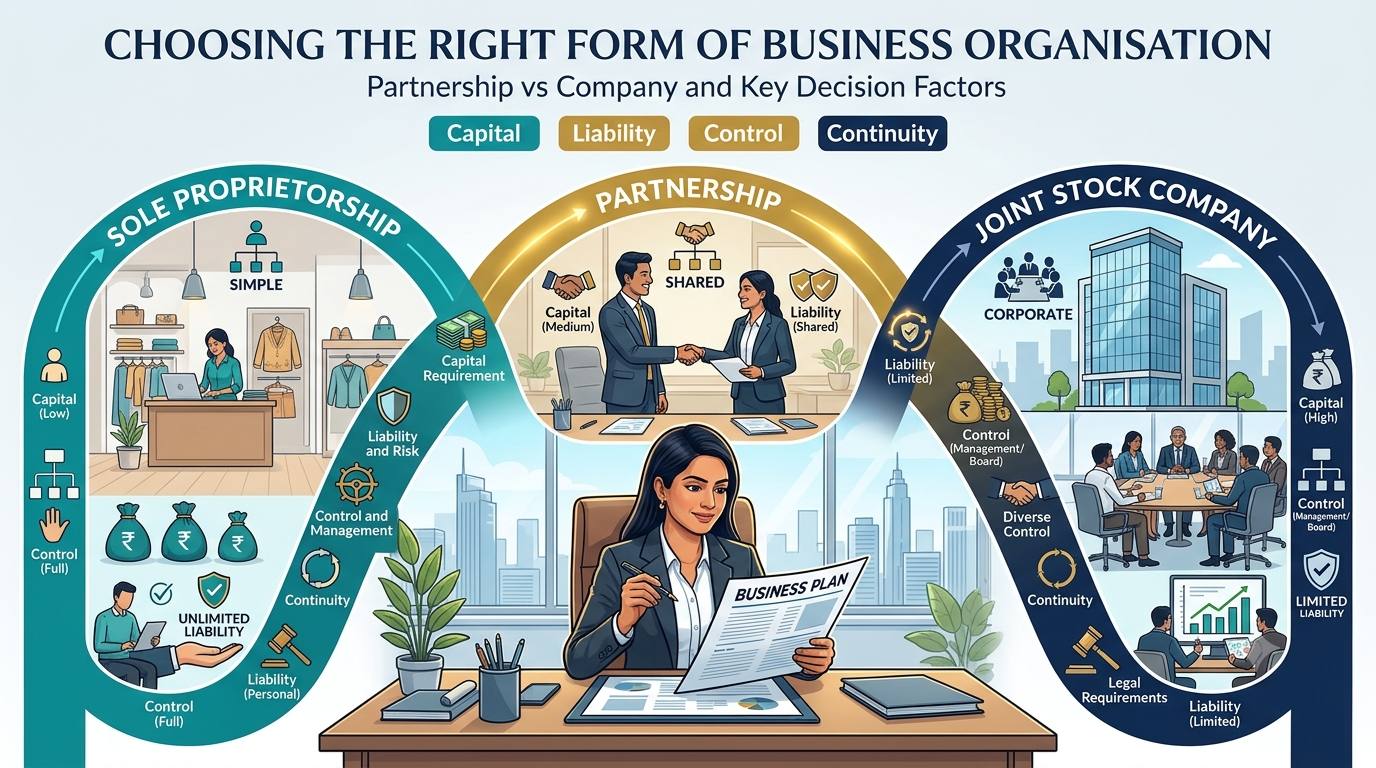
Choosing the right form of business organisation is an important decision for every entrepreneur. The choice affects capital, control, liability, continuity, management, and legal compliance.
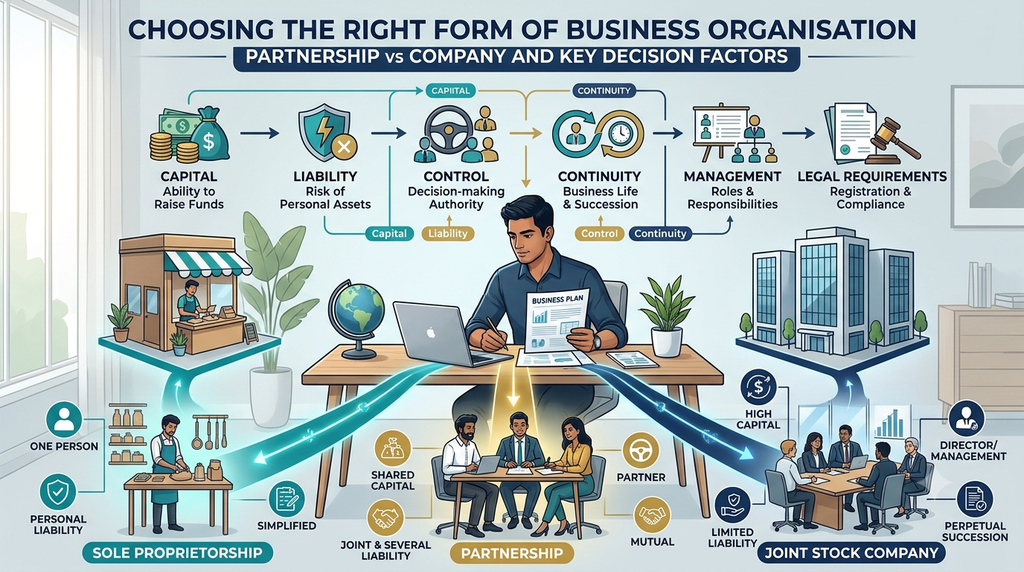
A partnership firm and a joint stock company are two different forms of business organisation. Understanding their differences helps entrepreneurs select a structure that meets their business requirements.
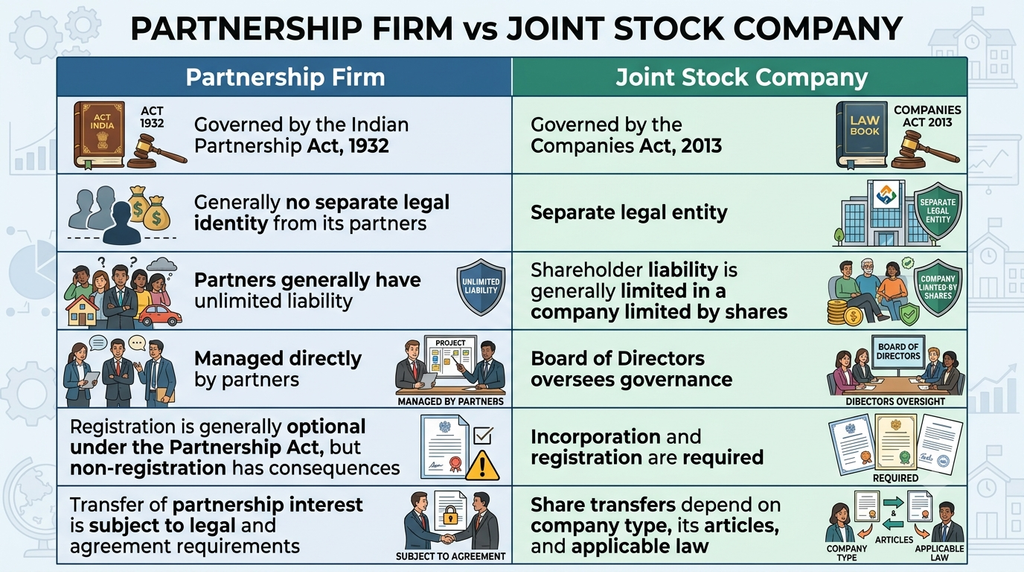
Difference Between Partnership Firm and Joint Stock Company
Practical Comparison
Partnership Firm
Two doctors establish a joint clinic as partners. They contribute capital, share responsibilities, and participate in management. In a traditional partnership, they may face personal liability for the firm’s obligations.
Joint Stock Company
A healthcare business is incorporated as a company. Its directors oversee management, while shareholders invest in the business. If the company is limited by shares, shareholder liability is generally limited to the unpaid amount on their shares, subject to legal exceptions.
These examples demonstrate the differences in ownership, management, liability, and continuity.
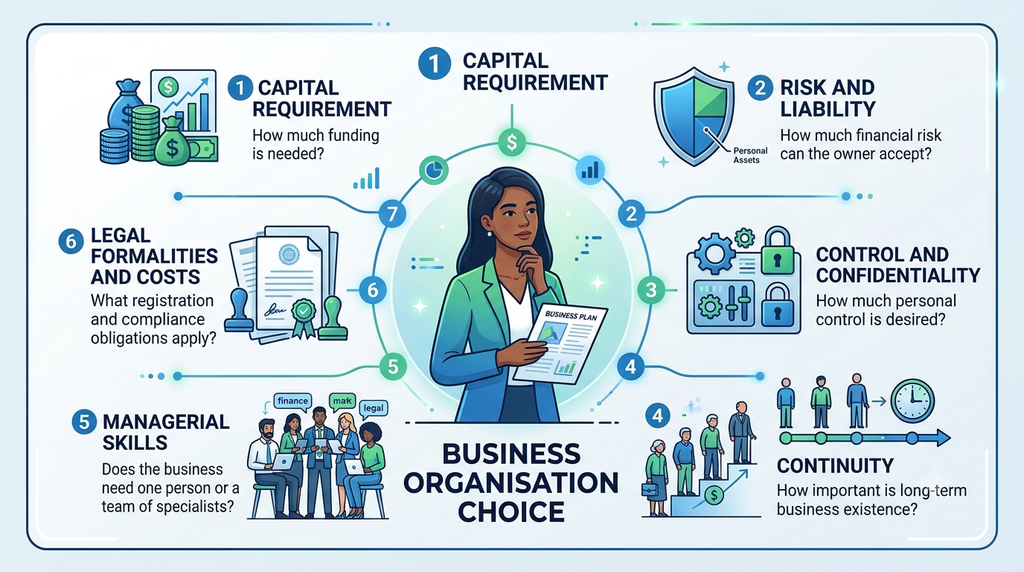
Factors Influencing the Choice of Business Organisation
1. Capital Requirement
The amount of money needed to establish and operate a business is a major factor.
- A small business with limited capital may choose a sole proprietorship.
- A business requiring contributions from several people may choose a partnership.
- A large project requiring substantial investment may choose a company.
2. Degree of Risk and Liability
Entrepreneurs should consider the financial risks associated with their business.
A traditional sole proprietorship and partnership involve unlimited liability. A company limited by shares generally offers shareholders limited liability, subject to applicable legal exceptions.
3. Degree of Control and Confidentiality
Some entrepreneurs prefer to make decisions independently and keep business information confidential.
A sole proprietorship is often suitable for an individual who wants direct control. Companies involve formal governance arrangements and greater reporting obligations.
4. Continuity and Stability
The expected life of the business is also important.
A company offers continuity despite changes in shareholders. A partnership’s continuity depends on its agreement and applicable law, while a sole proprietorship is closely linked to its individual owner.
5. Managerial Skills
Businesses differ in the expertise they require.
- A small shop may be managed by one person.
- A partnership can combine the skills of several individuals.
- A large company can employ specialist managers and establish a formal management structure.
6. Legal Formalities and Costs
The entrepreneur should consider the cost and complexity of establishing and operating the business.
A sole proprietorship generally has fewer formation formalities than a company. Companies must comply with incorporation, reporting, and governance requirements. Partnerships also need to consider registration, agreements, licences, and other applicable legal obligations.
Practical Business Examples
Scenario A: Small Business
Meera wants to start a customised gift-wrapping service with ₹30,000. She wants personal control and a simple business structure. A sole proprietorship may suit her needs.

Scenario B: Large Industrial Project
Vikram plans to establish a semiconductor manufacturing facility requiring very substantial capital, technical expertise, and long-term investment. A company structure may be more suitable because it can raise funds from investors and provide continuity.
Conclusion
There is no single business structure that is best for every entrepreneur. The appropriate choice depends on capital requirements, risk, control, continuity, managerial skills, and legal formalities. Entrepreneurs should evaluate these factors carefully before selecting a form of business organisation.