Have you ever wondered why people today use smartphones, refrigerators, cars, and computers, while people in ancient times lived very differently?
Thousands of years ago, people lived in forests, collected fruits, drank water from streams, and made simple shelters to protect themselves.
Today, people enjoy many different kinds of food, fashionable clothes, beautiful houses, and modern technology.
What changed?
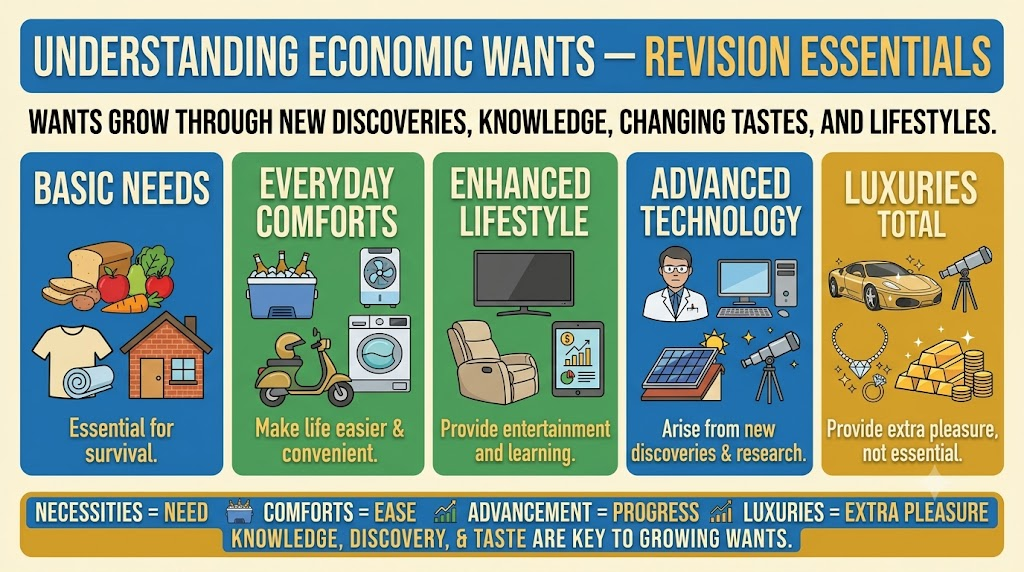
Human wants have grown over time because people’s knowledge, tastes, needs, and lifestyles have changed.
Let’s understand how wants arise and grow, using simple examples from everyday life.
1. How Do Wants Arise?
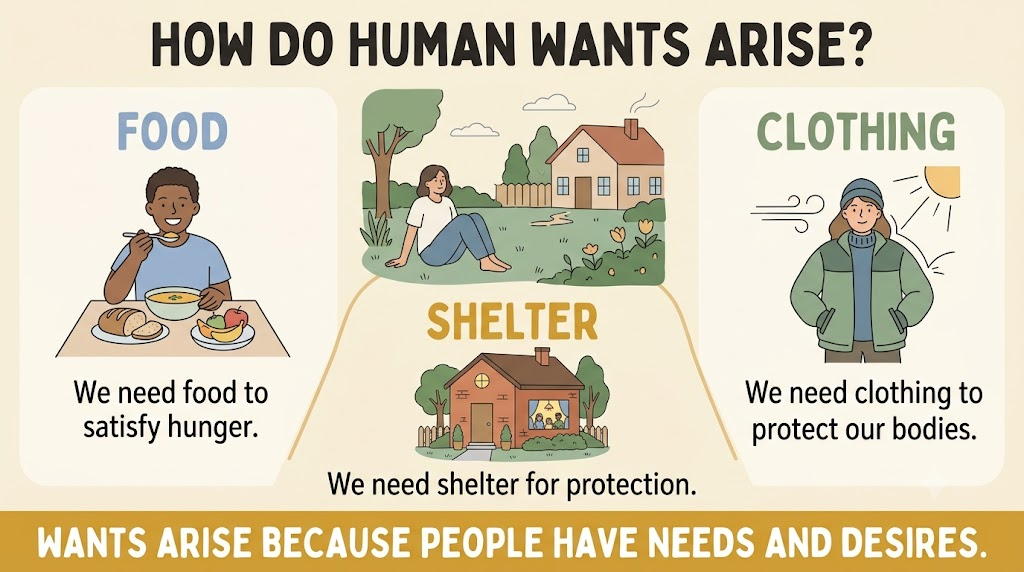
Wants arise because people need and desire different things in their lives.
From the beginning of human life, people have needed food to eat, clothes or other protection for their bodies, and shelter to protect themselves from weather and danger.
These basic needs existed long ago and still exist today.
However, people do not always want the same things. As they learn new skills, discover new things, and experience different lifestyles, their wants also change.
For example, a person may first want simple food to satisfy hunger. Later, they may want different flavours, new dishes, and special meals.
In the same way, people may begin by wanting a simple place to live and later desire a larger house with more facilities.
This is how wants arise and develop throughout human life.
2. How Have Wants Grown Over Time?
Long ago, human beings lived simple lives. They collected fruits, drank water from streams, and hunted animals for food.
Their wants were limited compared with the wide variety of goods and services available today.
Over time, people discovered new ways of living. They learned new skills, developed new tools, and invented new products.
As a result, their wants increased and became more varied.
Let’s understand this through three important examples.
A. How Wants for Food Have Grown
In ancient times, people ate the food they could find or obtain from nature.
Later, people discovered fire and learned to cook food. Cooking introduced new ways to prepare meals and enjoy different tastes.
Over time, people developed farming, cooking methods, and food preservation. They began preparing a much wider variety of dishes.
Today, we can choose from rice dishes, breads, fruits, vegetables, sweets, snacks, and many different cuisines.
People may also want different flavours, colours, shapes, and ways of preparing food.
Simple example: Earlier, a person might have eaten a simple meal to satisfy hunger. Today, that person might also desire a favourite dish, a dessert, or food from a different country.
This shows how knowledge and changing tastes can increase human wants.
B. How Wants for Clothing Have Grown
In ancient times, people used simple materials, such as animal skins and leaves, to cover and protect their bodies.
As people learned to make and improve clothing, they began using different materials and designs.
Over time, people developed fabrics, stitching techniques, and different styles of clothing.
Today, people can choose from shirts, trousers, dresses, jackets, uniforms, traditional clothes, and many other designs.
Fashion, comfort, knowledge, and personal preferences also influence clothing wants.
Simple example: A person may need one basic outfit but later desire different clothes for school, celebrations, sports, and cold weather.
This is another way in which wants grow.
C. How Wants for Housing Have Grown
Long ago, some people lived in caves or made simple shelters from available materials.
Over time, people learned to build huts and stronger houses using materials such as wood, bricks, and other building materials.
As building knowledge improved, houses became more varied and could offer more facilities.
Today, people live in apartments, small houses, large houses, bungalows, and other types of homes.
Some people may also desire better windows, attractive doors, decorative paint, furniture, electricity, and other conveniences.
Simple example: A family may first want a safe place to live. Later, it may desire a larger kitchen, an extra room, or better facilities.
This shows how housing wants have grown over time.

3. Why Do Human Wants Keep Growing?
You might wonder why people continue to develop new wants even after getting the things they need.
There are several simple reasons.
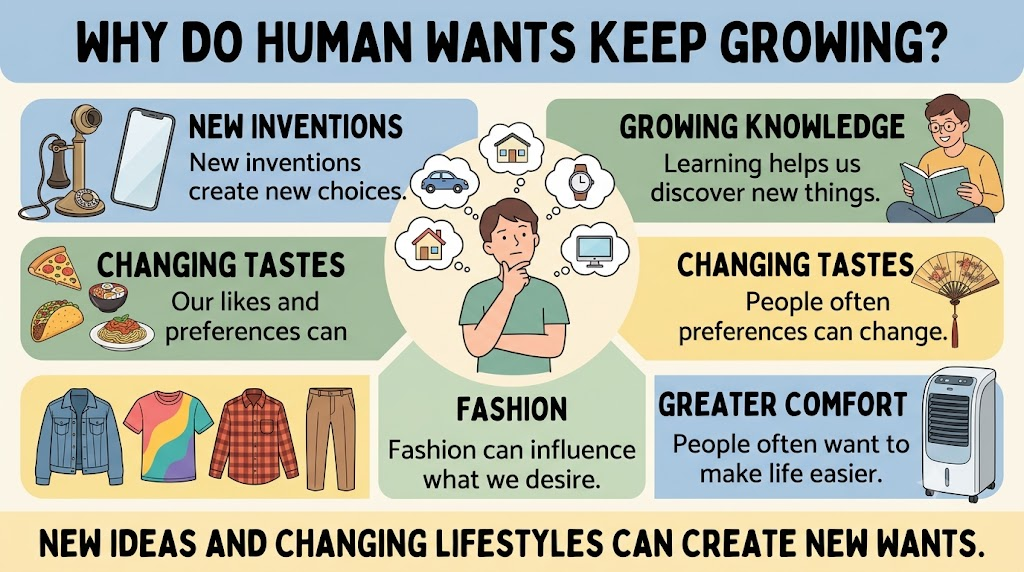
A. New Discoveries and Inventions
When people invent new things, they may begin to desire them.
For example, the invention of smartphones created new ways for people to communicate, take photographs, study, and access information.
As technology develops, people may desire newer devices or additional features.
B. Growing Knowledge
As people learn more about the world, they discover new products, services, and ways of living.
For example, someone who learns about different types of homes may begin to desire better lighting, improved furniture, or other home facilities.
C. Changing Tastes
People’s likes and dislikes can change over time.
A child may enjoy simple food today but develop a taste for different dishes later.
Similarly, a person who likes one clothing style may later prefer another.
D. Fashion and Lifestyle
Fashion and lifestyle can influence what people desire.
For example, someone may want a particular style of shoes or clothes because it is popular or suits their personal taste.
E. The Desire for Greater Comfort
People often look for ways to make everyday life easier.
For example, someone who uses a hand fan on a hot day may later desire a cooler or an air conditioner for greater comfort.
These are some of the reasons why human wants continue to grow.
4. Three Types of Wants: Necessities, Comforts, and Luxuries
Not all wants are equally important.
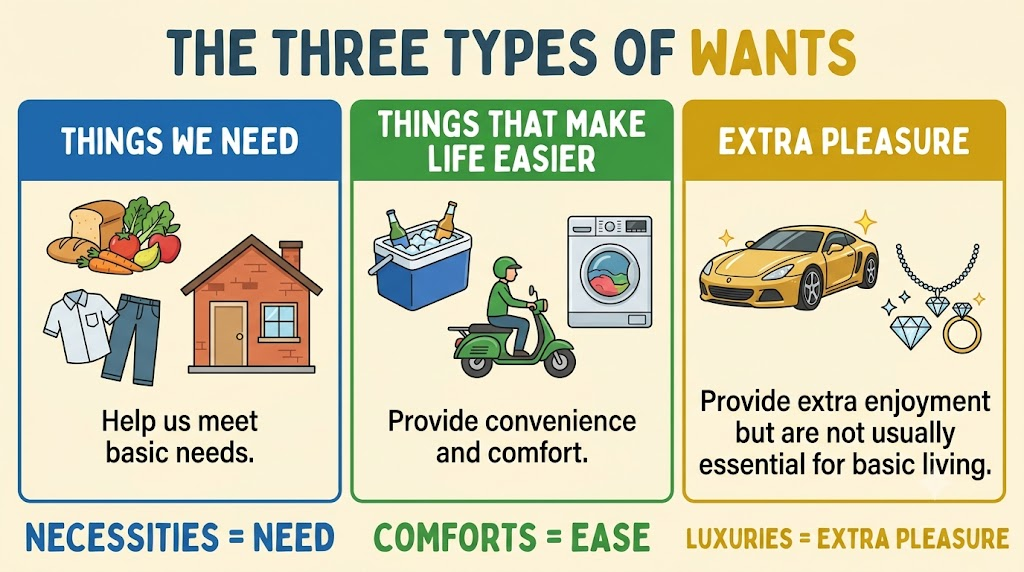
Some goods are essential for everyday life. Other goods make life easier and more comfortable. Some expensive goods provide extra pleasure or luxury.
In this lesson, wants are divided into three categories:
- Necessities
- Comforts
- Luxuries
Let’s understand each one.
A. Necessities: Things We Need for Basic Living
Necessities are goods and services that people need to maintain life and meet basic needs.
Examples include:
- Food
- Basic clothing
- Shelter
Imagine a person who has not eaten for a long time. Food is important because the body needs it to survive.
Similarly, clothing can protect the body, and shelter can provide protection from weather and other dangers.
These are examples of necessities.
Easy memory trick: Necessities are the things we need for basic living.
B. Comforts: Things That Make Life Easier
Comforts are goods and services that make our lives easier, more convenient, or more comfortable.
They may not be essential for survival, but they can improve daily life.
Examples include:
- A cooler during hot weather
- A scooter for convenient travel
- A washing machine to make washing clothes easier
Imagine travelling a long distance on foot. Having a scooter may make the journey easier.
Similarly, a cooler may help make a hot room more comfortable.
These goods provide convenience or comfort.
Easy memory trick: Comforts make life easier.
C. Luxuries: Things That Provide Extra Pleasure
Luxuries are goods that provide extra pleasure, enjoyment, or status but are not generally necessary for basic living.
Examples from the lesson include:
- Luxury cars
- Diamond jewellery
Imagine a person who already has a safe place to live and suitable clothes. That person may desire an expensive luxury car or diamond jewellery.
These items can provide additional enjoyment, but they are not essential for survival.
A product’s classification can depend on a person’s circumstances, income, needs, and the way the product is used. For example, a vehicle may be necessary for one person’s work but a luxury for someone else.
Easy memory trick: Luxuries provide extra pleasure beyond basic needs.
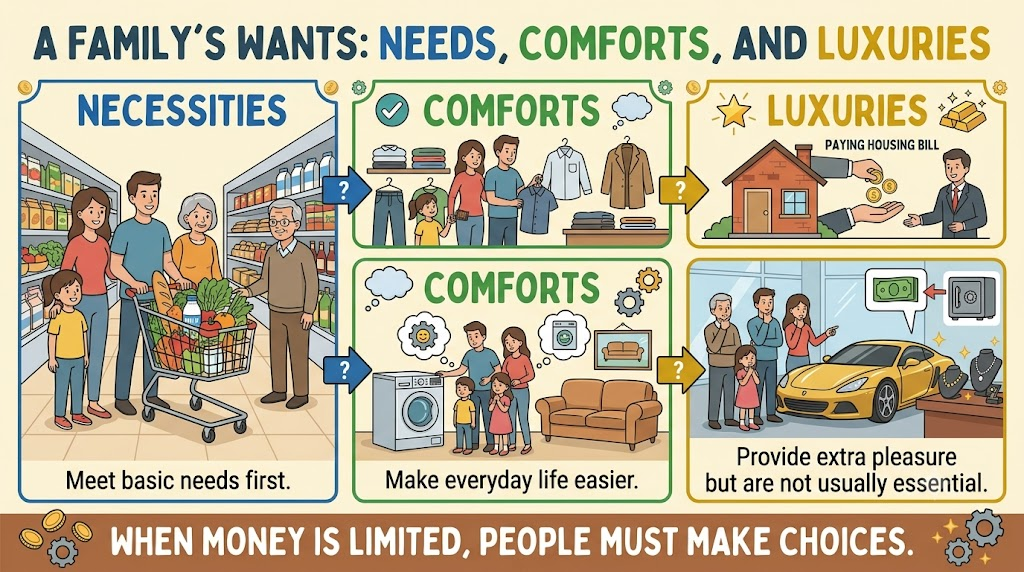
5. Let’s Understand the Three Types with One Family
Imagine a family deciding how to spend its money.
First, the family buys food, suitable clothes, and pays for a safe place to live.
These are examples of necessities because they meet basic needs.
Next, the family decides to buy a washing machine to make washing clothes easier.
This is an example of a comfort because it makes daily work more convenient.
Later, the family considers buying an expensive luxury car even though it already has suitable transport.
In this example, the luxury car is an extra purchase that may provide additional pleasure or status.
This example shows why people need to think carefully about how they use their money.
When money is limited, meeting basic needs is generally more important than buying expensive extras.
6. Quick Revision: How Wants Arise and Grow
Let’s revise the most important points.
How Wants Arise and Grow
- People have wants throughout their lives.
- Early human wants were more limited than the wide variety of wants people have today.
- New discoveries and inventions create new choices.
- Knowledge, tastes, fashion, and lifestyles influence wants.
- Human wants can continue to grow.
Three Types of Wants
- Necessities: Meet basic needs, such as food, clothing, and shelter.
- Comforts: Make life easier, such as a cooler or washing machine.
- Luxuries: Provide extra pleasure, such as a luxury car or diamond jewellery.

Conclusion
Human wants have changed greatly over time.
In ancient times, people had fewer choices and mainly focused on basic needs. As knowledge increased and people discovered new things, their wants expanded to include many varieties of food, clothing, housing, and modern products.
Wants can be divided into three categories: necessities, comforts, and luxuries.
Necessities help us meet basic needs. Comforts make our lives easier. Luxuries provide additional pleasure and enjoyment.
The easiest way to remember the lesson is:
Necessities = Things we need.
Comforts = Things that make life easier.
Luxuries = Things that provide extra pleasure.
Frequently Asked Questions
1. How do wants arise?
Wants arise because people have needs and desires. As people learn new things and their lifestyles change, new wants develop.
2. Why have human wants grown over time?
Human wants have grown because of new discoveries, inventions, greater knowledge, changing tastes, fashion, and the desire for more comfort.
3. What are necessities?
Necessities are goods and services that help people meet their basic needs, such as food, clothing, and shelter.
4. What are comforts?
Comforts are goods and services that make life easier or more convenient, such as a cooler or washing machine.
5. What are luxuries?
Luxuries are goods that provide extra pleasure or enjoyment but are not generally necessary for basic living. Examples include luxury cars and diamond jewellery.
6. What are the three types of wants?
The three types are necessities, comforts, and luxuries.
7. How have wants for food changed over time?
People have developed new ways of cooking and preparing food, creating a greater variety of tastes, dishes, colours, and shapes.
8. How have wants for clothing changed over time?
Clothing has developed from simple coverings to many types of fabrics, designs, and styles influenced by knowledge, comfort, and fashion.
9. How have wants for housing changed over time?
People have moved from caves and simple shelters to different types of houses with improved materials, facilities, and designs.
10. Can the same good be a necessity for one person and a luxury for another?
Yes. People’s circumstances and needs differ. For example, a vehicle may be necessary for one person’s work but an additional luxury for someone else.
Final memory trick: Human wants grow as life changes. Necessities meet basic needs, comforts make life easier, and luxuries provide extra pleasure.