
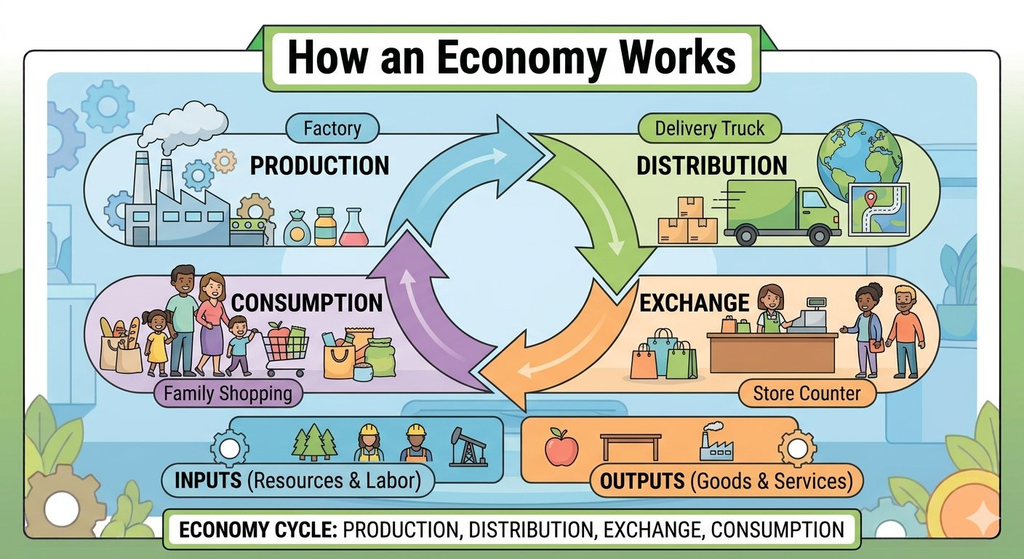
What Is an Economy?
An economy is a large system where people, businesses, and governments work together. In this system, people produce, buy, sell, and use goods and services to fulfill their daily needs and wants.
Simply put, an economy is how a society organizes its work, money, and resources so that everyone can get what they need to live.
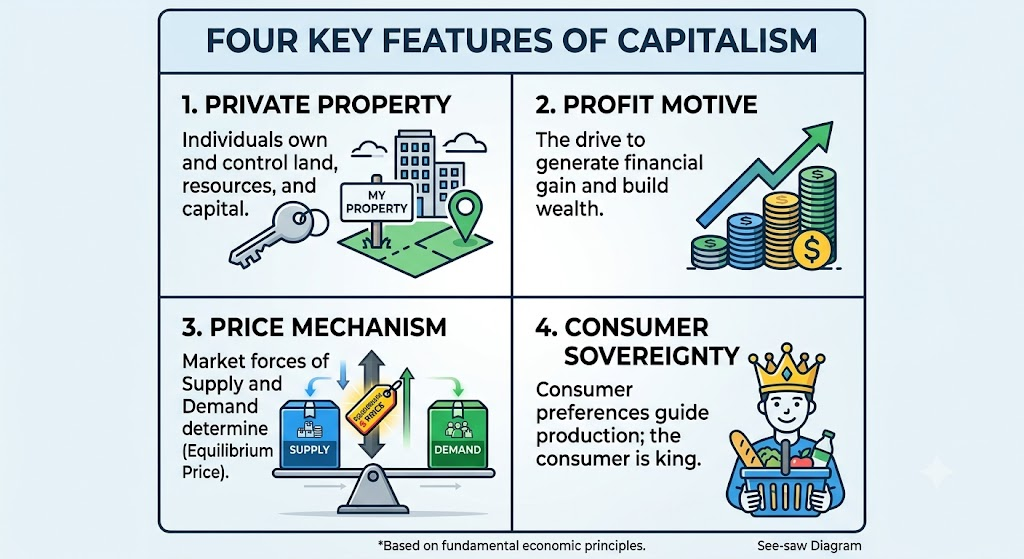
4 Major Features of a Capitalist Economy
A capitalist economy (also called a free-market economy) is a specific type of economic system. Here are its main characteristics:
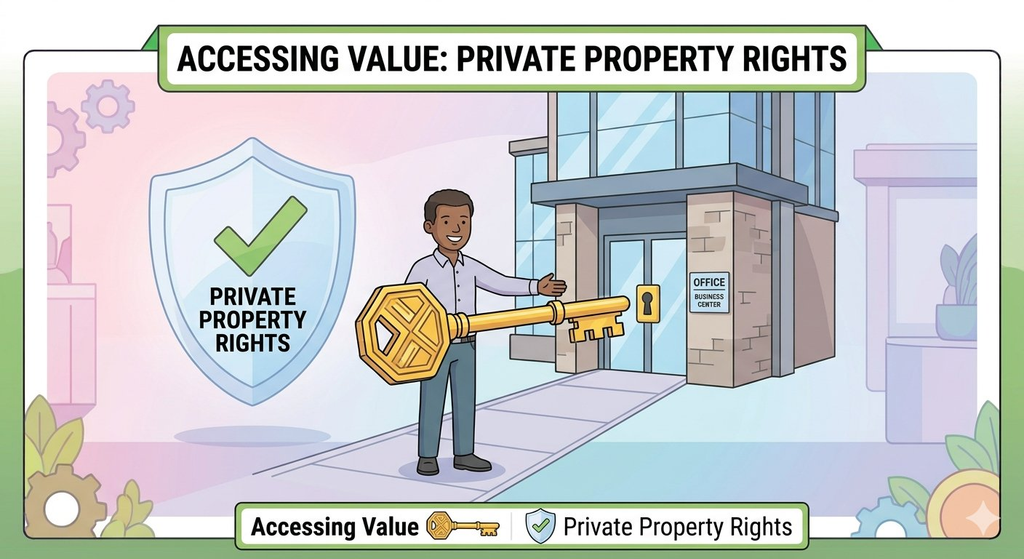
1. Private Property
In a capitalist system, regular individuals and private companies—not the government—own land, buildings, tools, and factories. They have the legal right to use their property however they like.
2. Profit Motive
The main goal of businesses in capitalism is to make profit (earn money). Business owners take risks and innovate primarily to earn a financial reward.
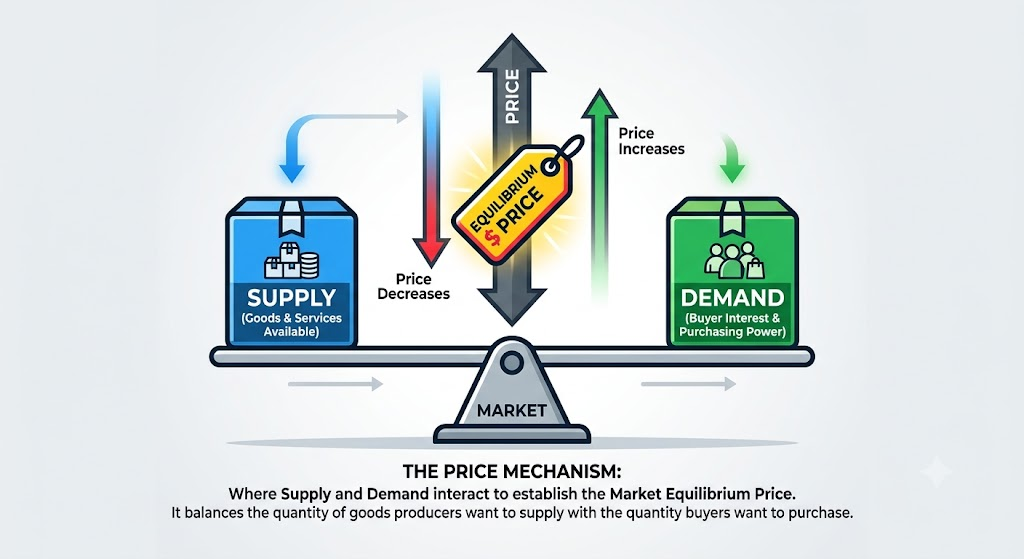
3. Price Mechanism (Supply & Demand)
Prices are not set by the government. Instead, prices go up or down automatically based on demand (how much buyers want something) and supply (how much sellers have available).
4. Consumer Sovereignty
The phrase “the customer is king” describes this feature well. Businesses produce what consumers choose to buy. If buyers stop purchasing an item, companies stop making it.
Summary at a Glance
| Feature | What It Means |
| Private Property | Citizens own factories, land, and tools |
| Profit Motive | Making money drives decisions and innovation |
| Price Mechanism | Supply and demand determine prices freely |
| Consumer Sovereignty | What buyers choose dictates what gets made |