
Introduction
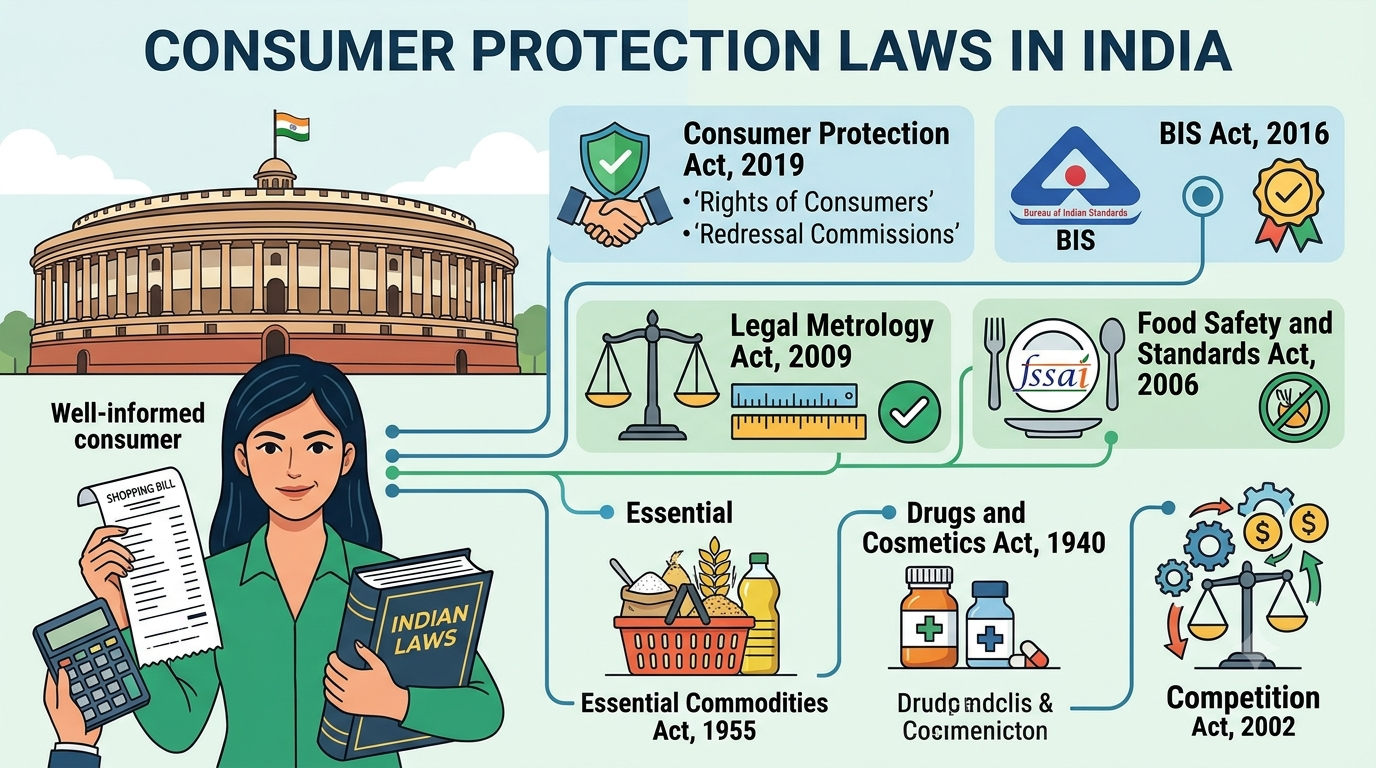
Consumers need protection against defective goods, unsafe products, adulteration, misleading advertisements, overcharging and unfair trade practices.
To protect consumer interests, the Government of India has introduced several laws. These laws regulate the quality, safety, price, measurement and sale of goods and services.
1. Important Acts for the Protection of Consumers
1. Consumer Protection Act, 2019
The Consumer Protection Act, 2019 is the main law dealing with consumer protection in India. It came into effect in July 2020 and replaced the Consumer Protection Act, 1986.
Its main objectives are:
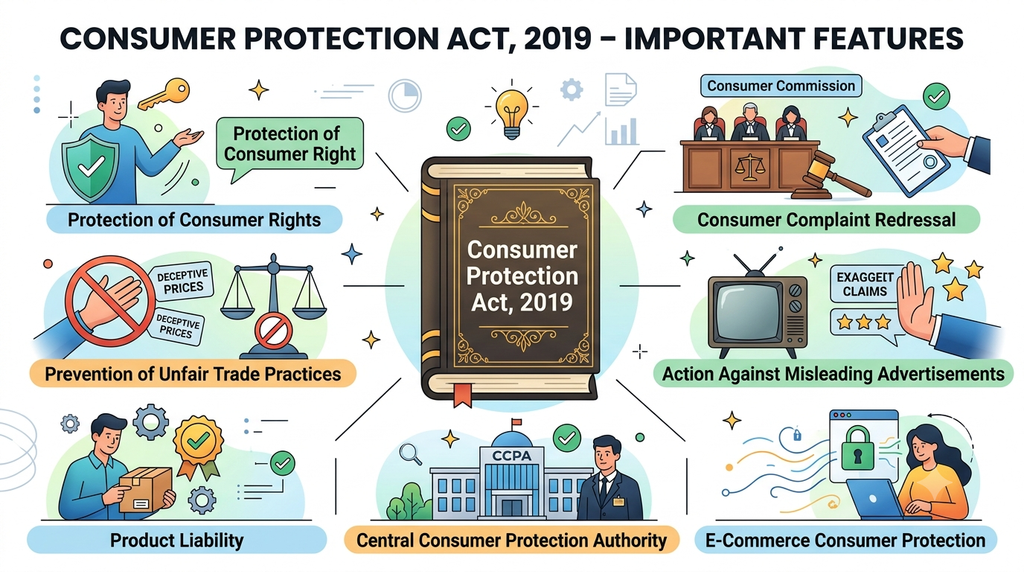
- Protecting consumer rights.
- Providing a system for consumer complaint redressal.
- Preventing unfair trade practices.
- Taking action against misleading advertisements.
- Providing for product liability.
- Establishing the Central Consumer Protection Authority (CCPA).
- Including provisions relating to e-commerce and direct selling.
2. Bureau of Indian Standards Act, 2016
This Act provides for the development and maintenance of standards for goods, products, processes and services.
Its purpose is to promote quality, safety and reliability.
Example: BIS certification helps consumers identify products that conform to applicable Indian Standards.
3. Legal Metrology Act, 2009
This Act regulates weights and measurements used in trade and commerce.
Its purpose is to protect consumers from incorrect weights, measures and quantity declarations.
Example: A shopkeeper should use accurate weighing instruments while selling fruits, vegetables and other goods.
4. Food Safety and Standards Act, 2006
This Act provides for the regulation of food safety and standards in India.
Its purpose is to ensure that food products are safe for human consumption and meet prescribed standards.
Example: Food businesses must follow applicable food safety requirements while manufacturing, storing and selling food products.
5. Essential Commodities Act, 1955
This Act empowers the government to regulate the production, supply and distribution of essential commodities.
Its purpose includes preventing hoarding and black marketing and helping maintain the availability of essential goods.
Example: The government may take regulatory measures to control the supply and distribution of essential commodities.
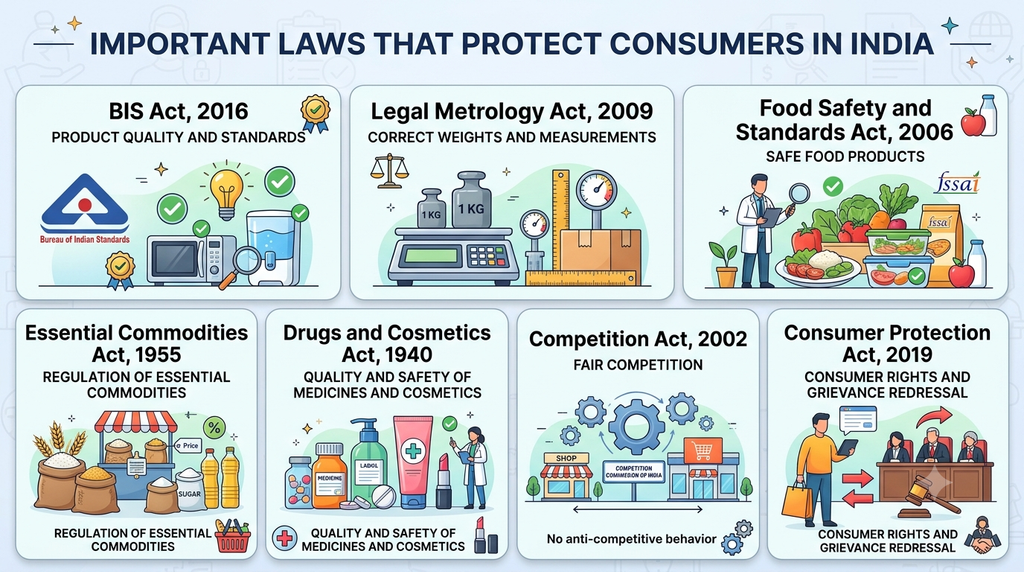
6. Drugs and Cosmetics Act, 1940
This Act regulates the import, manufacture, distribution and sale of drugs and cosmetics.
Its purpose is to ensure that medicines and cosmetics meet prescribed standards of quality and safety.
Example: Medicines must meet applicable quality requirements before being sold to consumers.
7. Competition Act, 2002
This Act aims to promote and sustain competition in markets and protect consumers from practices that harm competition.
It addresses matters such as anti-competitive agreements and abuse of dominant position.
Example: Businesses should not engage in practices that unfairly restrict competition or harm consumers.
8. Copyright and Trade Mark Laws
Intellectual property laws, including the Trade Marks Act, 1999 and Copyright Act, 1957, protect intellectual property and help address unauthorised use of brand identities and creative works.
These laws support consumers by discouraging certain forms of imitation, misrepresentation and counterfeit activity.
2. Importance of Consumer Protection Laws
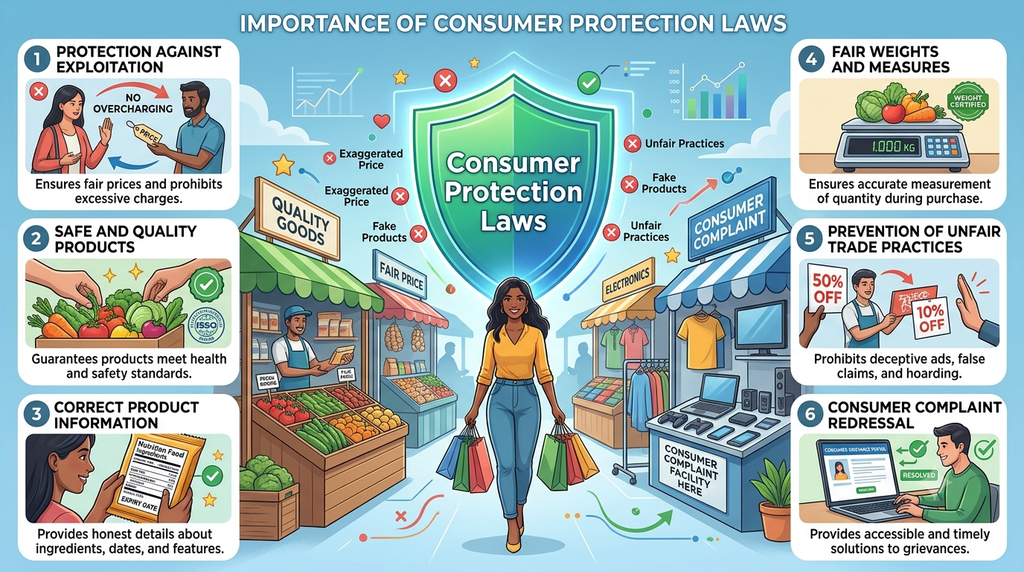
Consumer protection laws are important because they:
- Protect consumers against exploitation.
- Promote the sale of safe and quality products.
- Prevent misleading advertisements and unfair trade practices.
- Ensure correct weights, measures and product information.
- Regulate the quality and safety of food, drugs and other products.
- Provide mechanisms for consumer complaint redressal.
- Encourage businesses to act responsibly.
- Build consumer confidence in the marketplace.
Important Note: Older Laws and Their Current Position
Some older laws may still appear in traditional Business Studies textbooks. Their current position should be understood correctly:
- The Consumer Protection Act, 1986 was replaced by the Consumer Protection Act, 2019.
- The Standards of Weights and Measures Act, 1976 was replaced by the Legal Metrology Act, 2009.
- The Prevention of Food Adulteration Act, 1954 was replaced by the food safety framework under the Food Safety and Standards Act, 2006.
- The Monopolies and Restrictive Trade Practices Act, 1969 was replaced by the Competition Act, 2002.
Conclusion
Consumer protection laws play an important role in safeguarding the interests of consumers. They regulate product quality, food safety, weights and measures, competition and unfair trade practices. Consumers should understand these laws so that they can make informed decisions and seek protection when necessary.