
Introduction
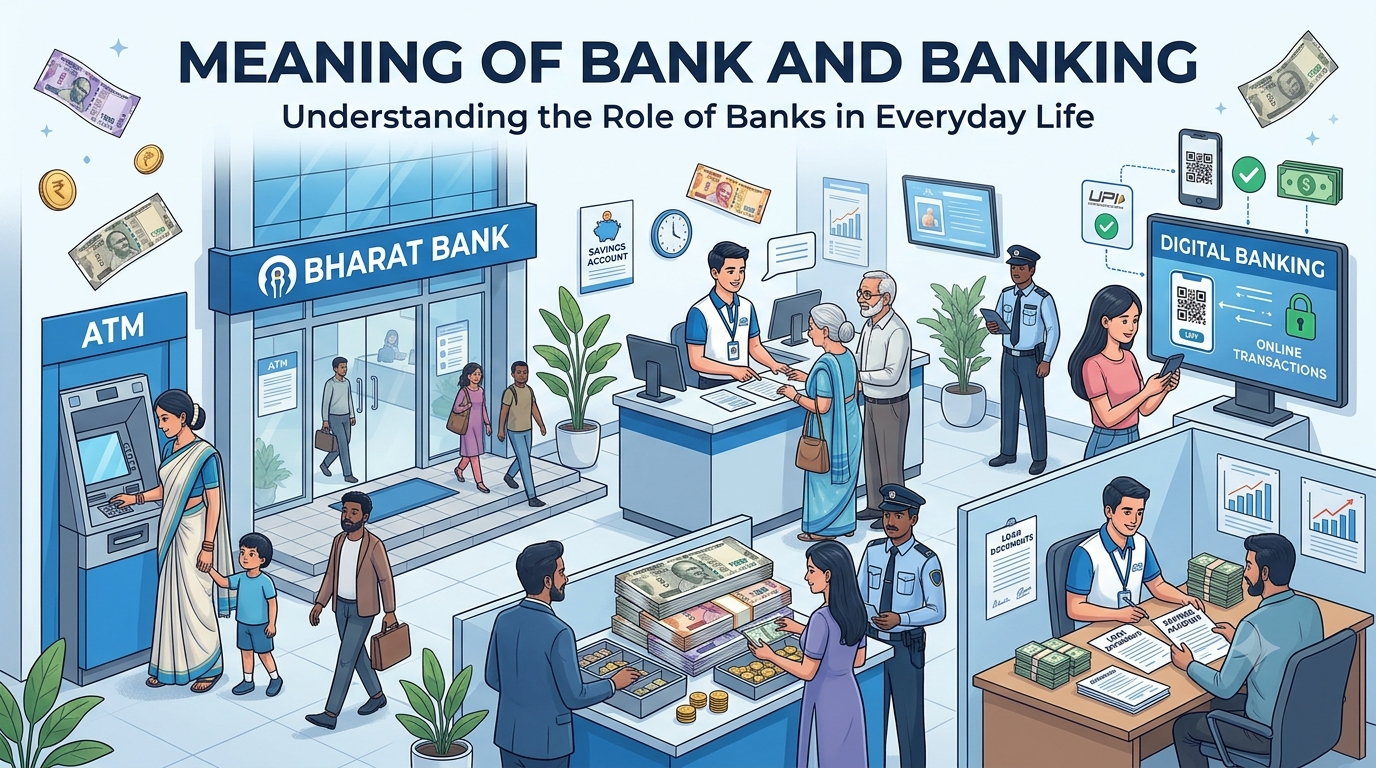
Banks play an important role in the economic development of a country. They accept deposits from people, provide loans to individuals and businesses, and offer several financial services. Banks help people save money and make payments safely and conveniently.
1. Meaning of Bank
A bank is a financial institution that accepts deposits from the public, provides loans, and offers various financial services to its customers.
Banks collect money from people who have surplus funds and lend it to people and businesses that need money.
Example: State Bank of India, HDFC Bank and ICICI Bank.
2. Meaning of Banking
Banking refers to the business of accepting deposits from the public for lending or investment purposes and providing other financial services.
Banking includes activities such as:
- Accepting savings and current deposits.
- Providing loans and advances.
- Transferring money from one account to another.
- Collecting cheques and bills.
- Providing ATM, debit card and internet banking facilities.
3. Role of Banking in the Economy
Banking plays an important role in the development of individuals, businesses and the economy.
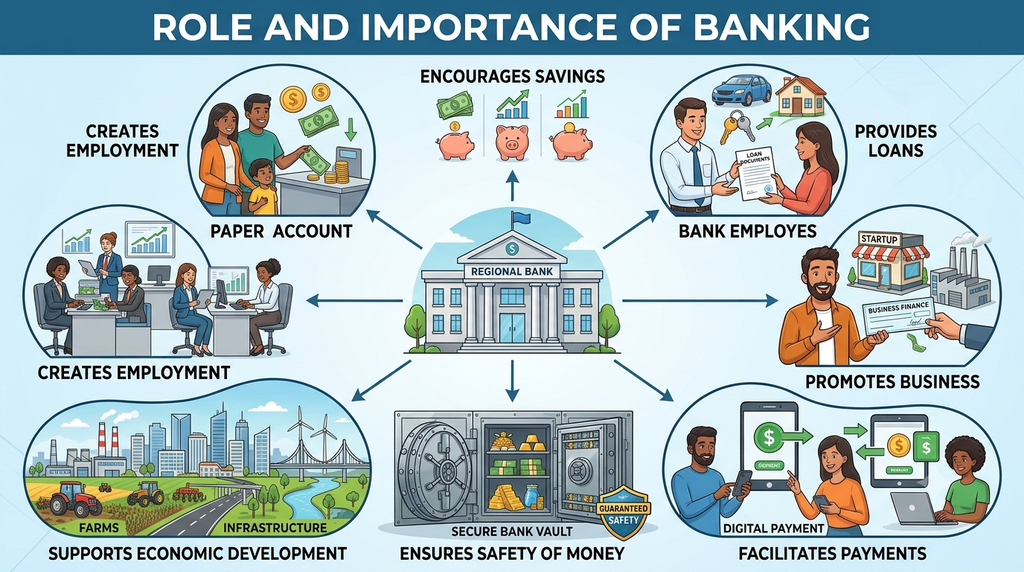
1. Encourages Savings
Banks encourage people to save money by providing different types of deposit accounts.
2. Provides Loans
Banks provide financial assistance to individuals, farmers, traders and industries.
3. Promotes Business Activities
Businesses obtain loans from banks to purchase machinery, raw materials and other resources.
4. Facilitates Payments
Banks make payments easier through cheques, debit cards, credit cards, online transfers and other digital services.
5. Ensures Safety of Money
Banks provide a safer place to keep money compared with keeping large amounts of cash at home.
6. Supports Economic Development
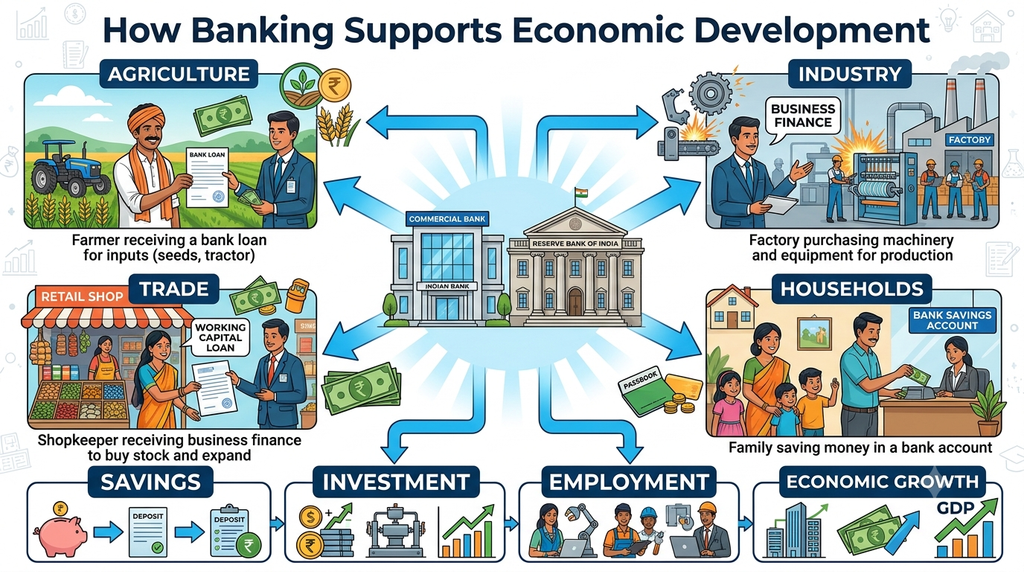
Banks help in the growth of agriculture, industries, trade and other economic activities by providing finance.
7. Creates Employment
Banking activities generate employment opportunities in banking institutions and related financial services.
4. Difference Between a Bank and a Moneylender
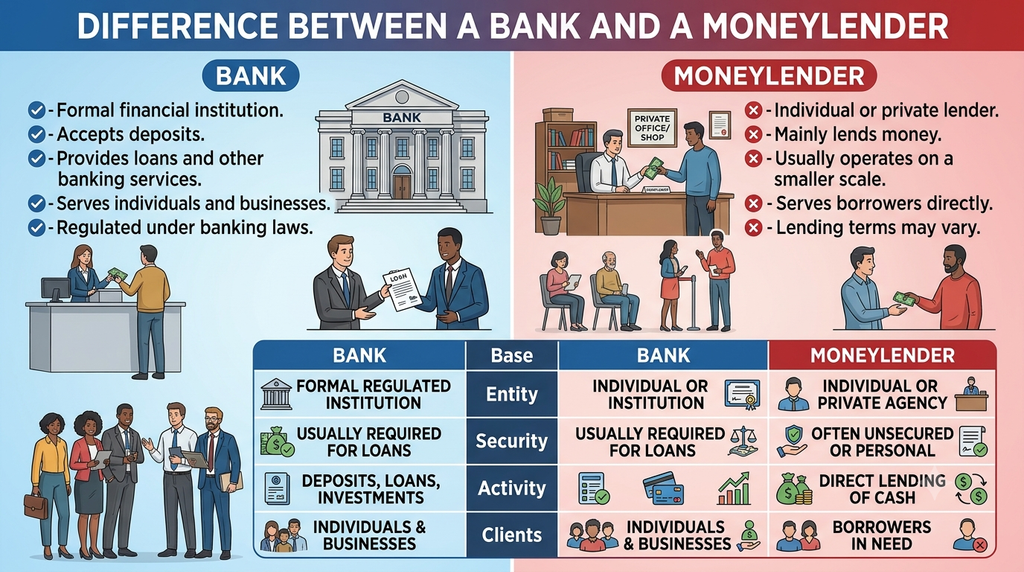
| Basis | Bank | Moneylender |
|---|---|---|
| Entity | A formal financial institution regulated under banking laws. | Generally an individual or private lender. |
| Security | Provides loans according to its rules and security requirements. | May demand personal or physical security depending on the agreement. |
| Activity | Accepts deposits, provides loans and offers other banking services. | Mainly lends money to borrowers. |
| Clients | Serves individuals, businesses, farmers and organisations. | Often serves individuals and small borrowers in a limited area. |
Conclusion
Banks are essential financial institutions that encourage savings, provide loans and support economic development. Banking services make financial transactions safer, faster and more convenient.