
Introduction
Every business spends money to produce goods and services. These expenses are called costs of production.
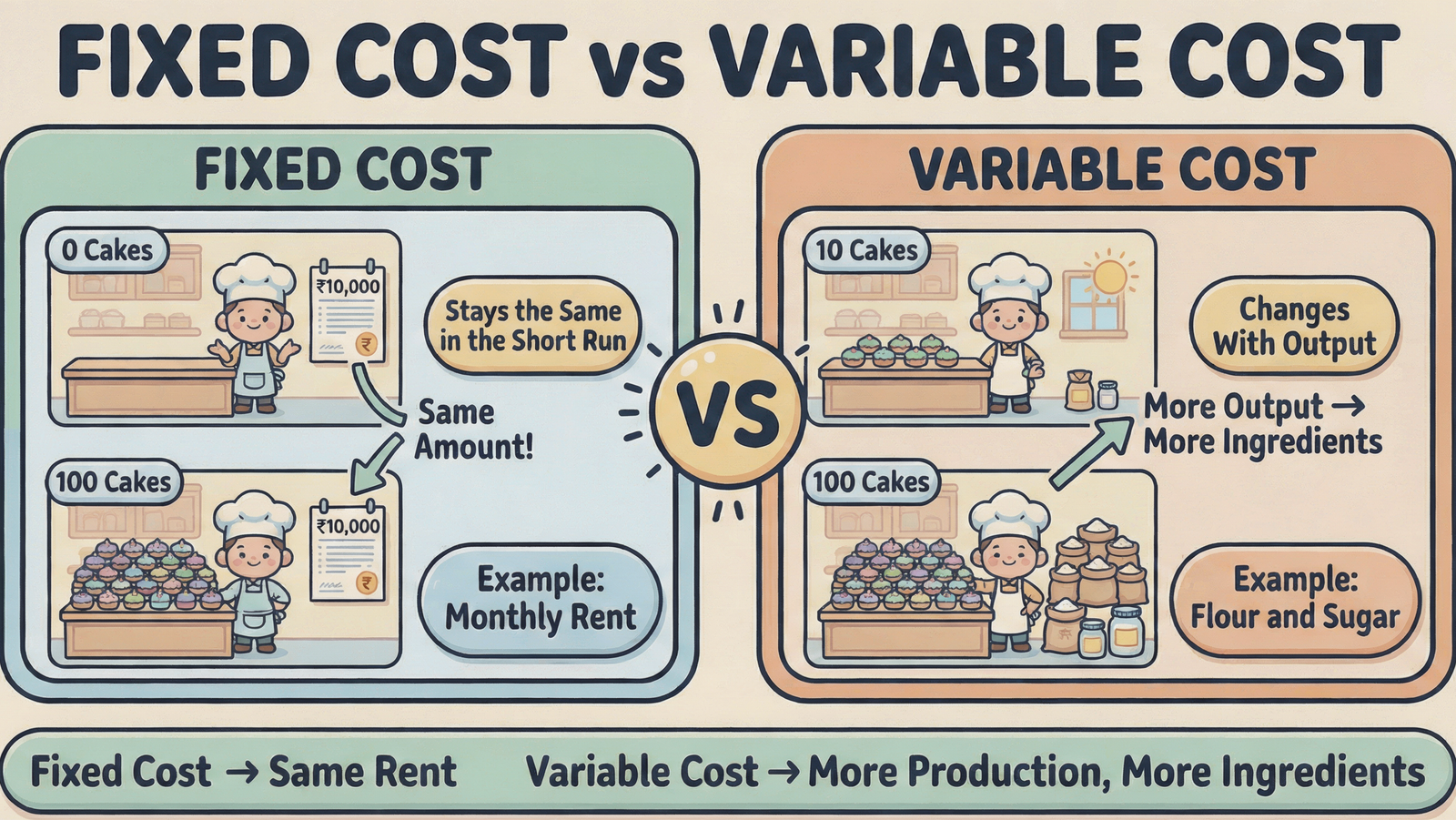
There are two main types of costs: fixed costs and variable costs. The main difference is whether the cost changes when the level of production changes.
1. Fixed Cost
Fixed costs are expenses that remain the same regardless of the level of production in the short run.
A business must pay these costs even if it produces nothing.
Example: A bakery pays ₹10,000 as monthly rent. Whether it bakes 0 cakes or 500 cakes, the monthly rent remains ₹10,000, assuming the rental agreement stays unchanged.

2. Variable Cost
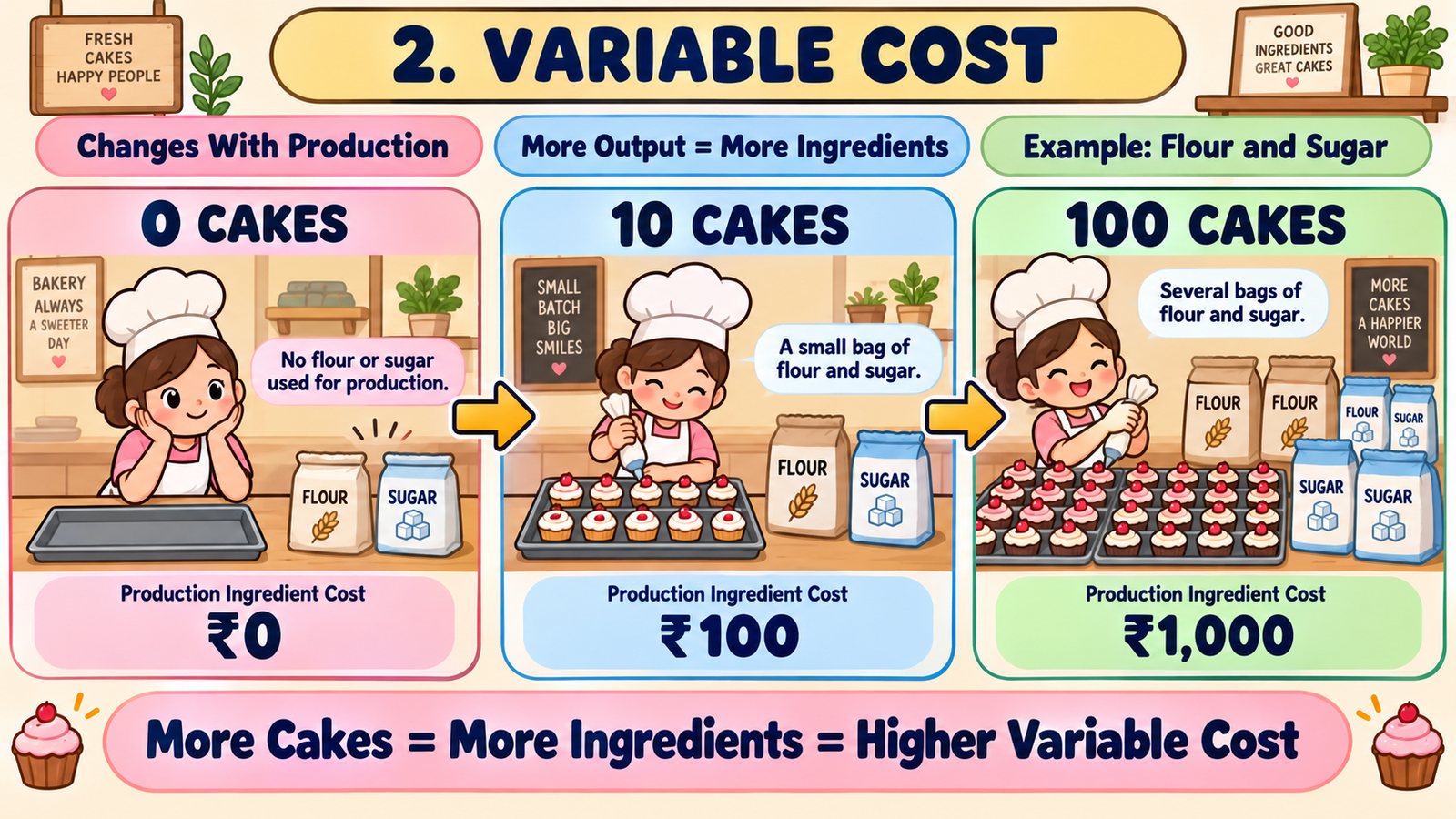
Variable costs are expenses that change with the quantity of goods produced.
When production increases, variable costs generally increase. When production stops, costs directly related to production may fall to zero.
Example: A bakery needs flour, sugar, and other ingredients to bake cakes. The more cakes it makes, the more ingredients it generally needs to buy.
3. Differences Between Fixed Cost and Variable Cost
| Basis | Fixed Cost | Variable Cost |
|---|---|---|
| Meaning | Cost that remains unchanged with output in the short run. | Cost that changes with the level of output. |
| Effect of production | Remains the same even when output changes. | Generally increases or decreases with output. |
| When production is zero | Usually still has to be paid. | Production-related variable costs may be zero. |
| Examples | Rent, insurance, fixed salaries. | Flour, sugar, packaging materials. |
4. Quick Revision
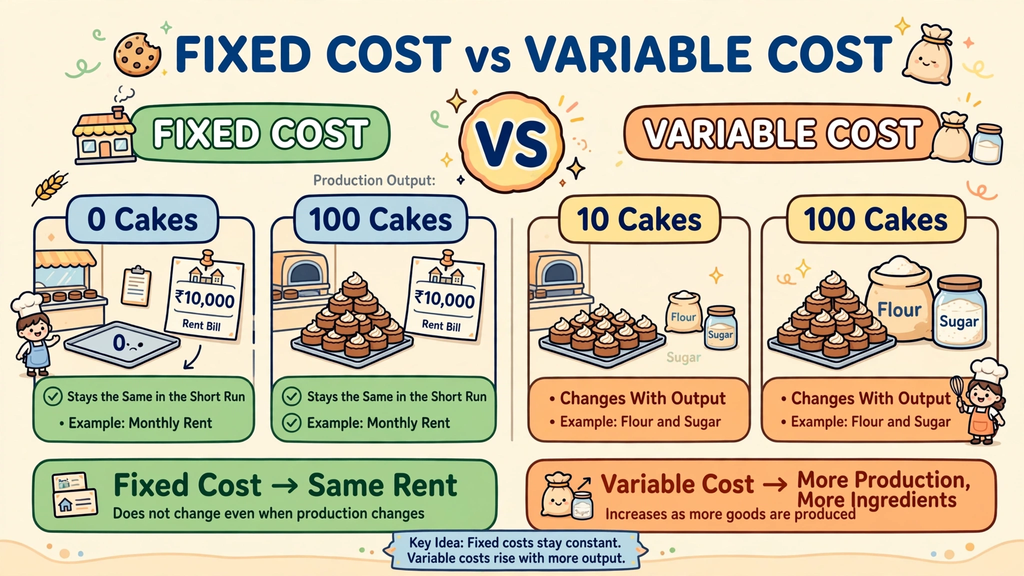
- Fixed cost: Remains the same in the short run, such as monthly rent.
- Variable cost: Changes with production, such as flour and sugar used in a bakery.
Easy way to remember: Fixed cost = same expense; variable cost = expense that varies with output.