

A business doesn’t simply deposit money and withdraw it. Banks may also collect income, pay bills, deduct charges and process transactions automatically. These transactions can create differences between the Cash
Read MoreAuthor: bizniz.online
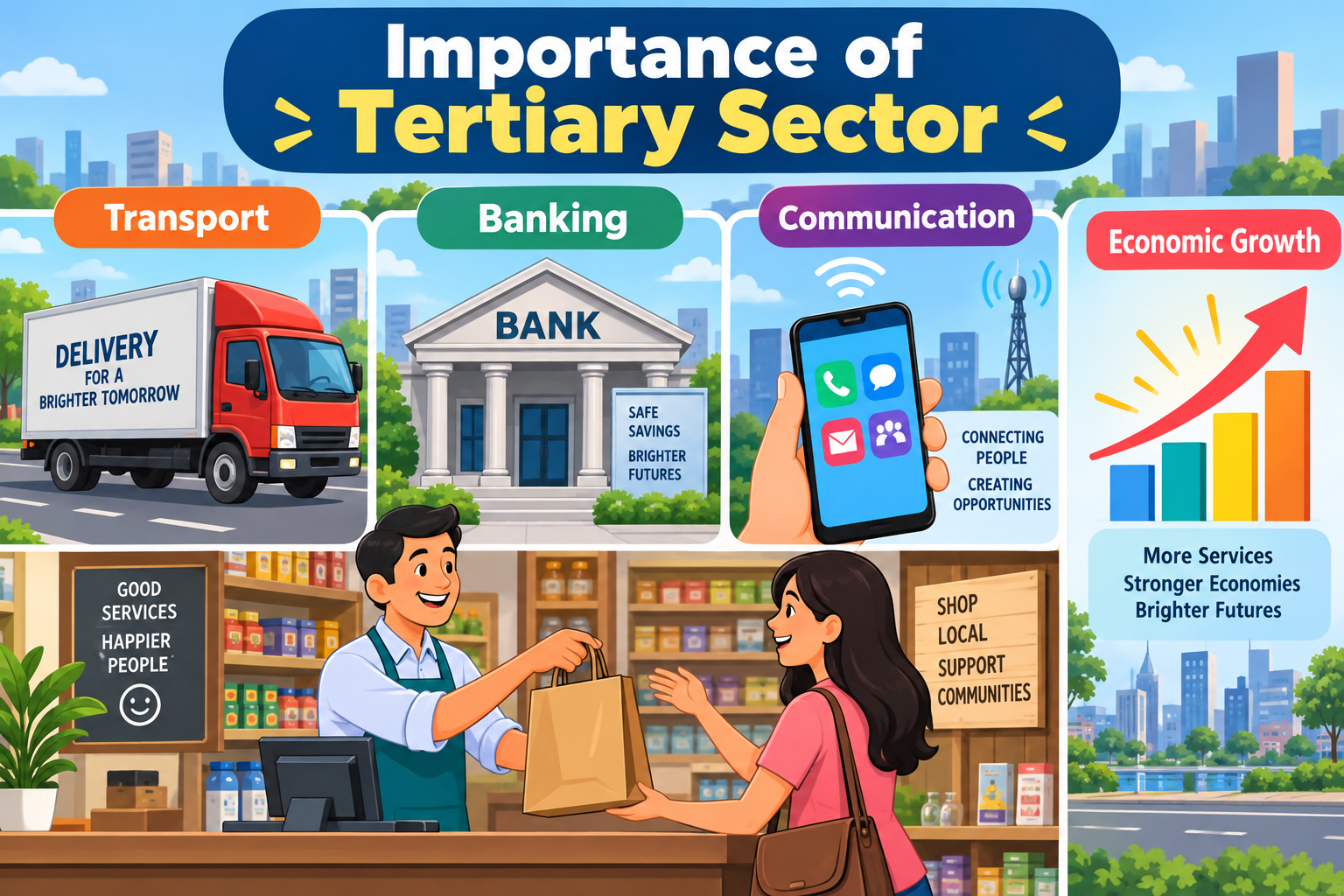
lesson no. 20 Q6. Explain the role and importance of the tertiary sector.

Simple Answer The tertiary sector provides services that help people, businesses and other sectors work smoothly. Importance Real-Life Example: A truck carries clothes from a factory to a shop. A
Read More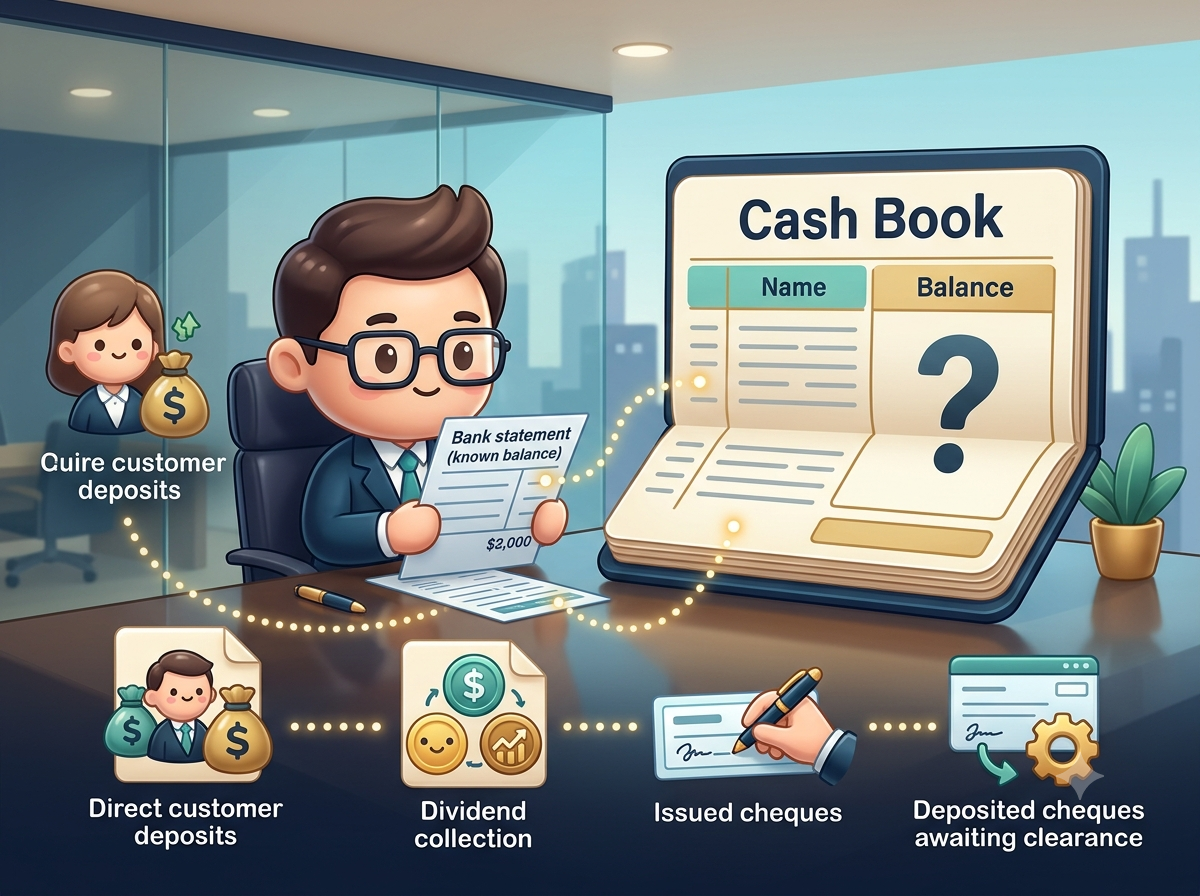
Lesson No. 8: Accountancy: How to Prepare a Bank Reconciliation Statement Starting with the Pass Book Balance
Imagine that your business receives its monthly bank statement. It shows a balance of ₹27,500. However, your Cash Book tells a different story. Which figure should your business report? Before
Read More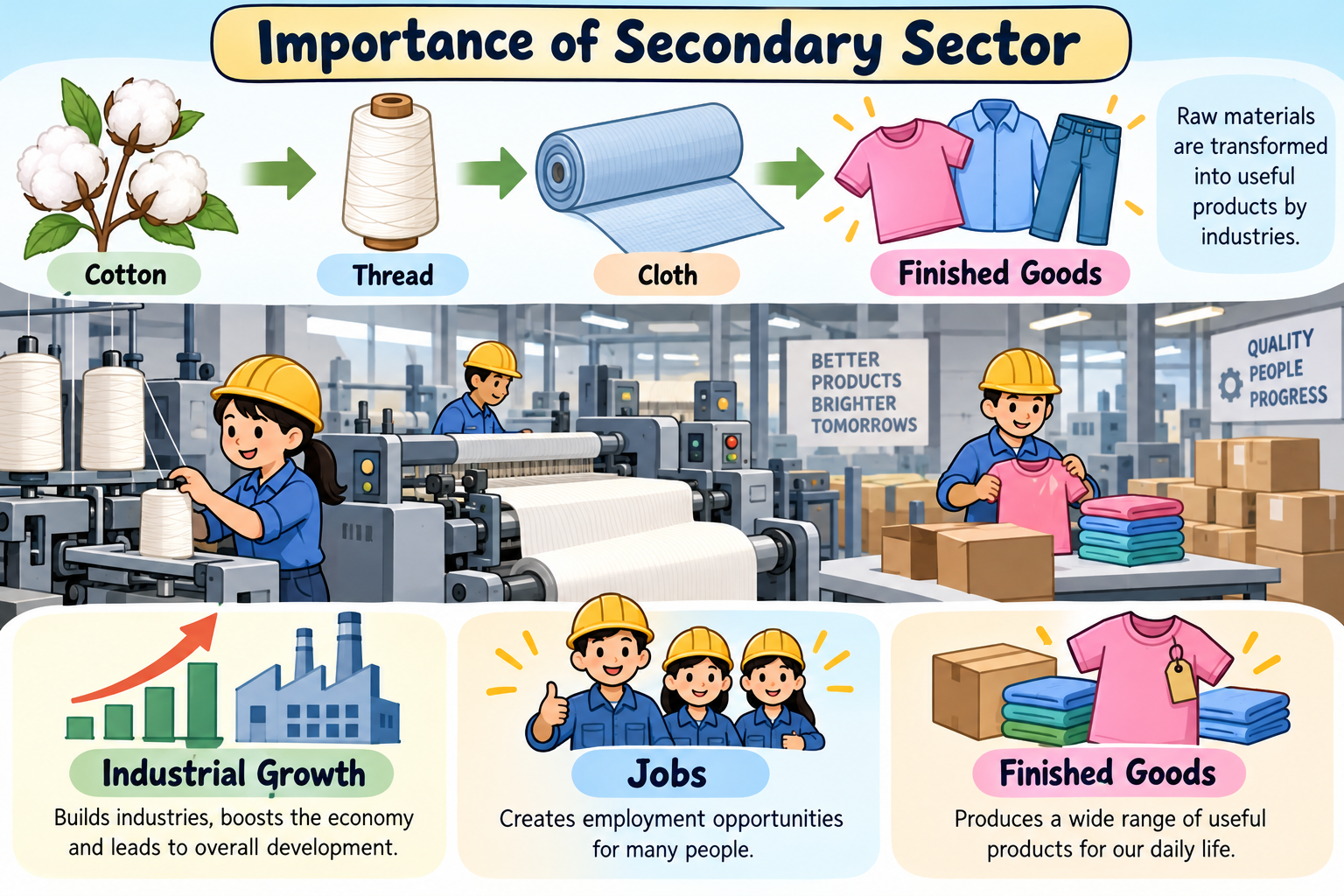
lesson no. 20 Q5. Explain the role and importance of the secondary sector.
Simple Answer The secondary sector converts raw materials into finished goods. It helps industries and the economy grow. Importance Real-Life Example: Cotton is taken from farms. A textile factory changes
Read More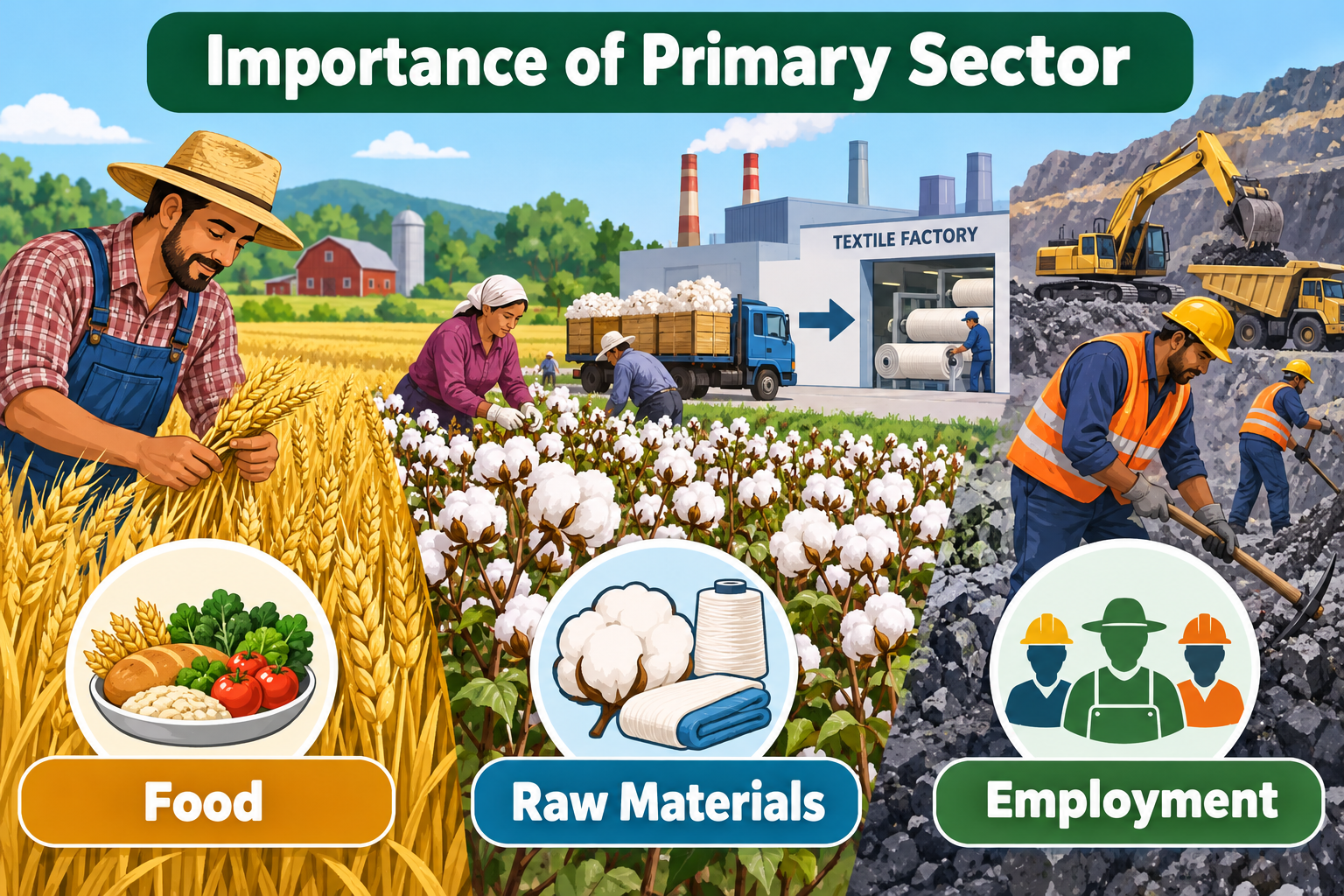
lesson no.20 Q4. Explain the role and importance of the primary sector.
Simple Answer The primary sector is the foundation of the economy because it provides food and raw materials. Importance Real-Life Example: A farmer grows wheat. People use it to make
Read More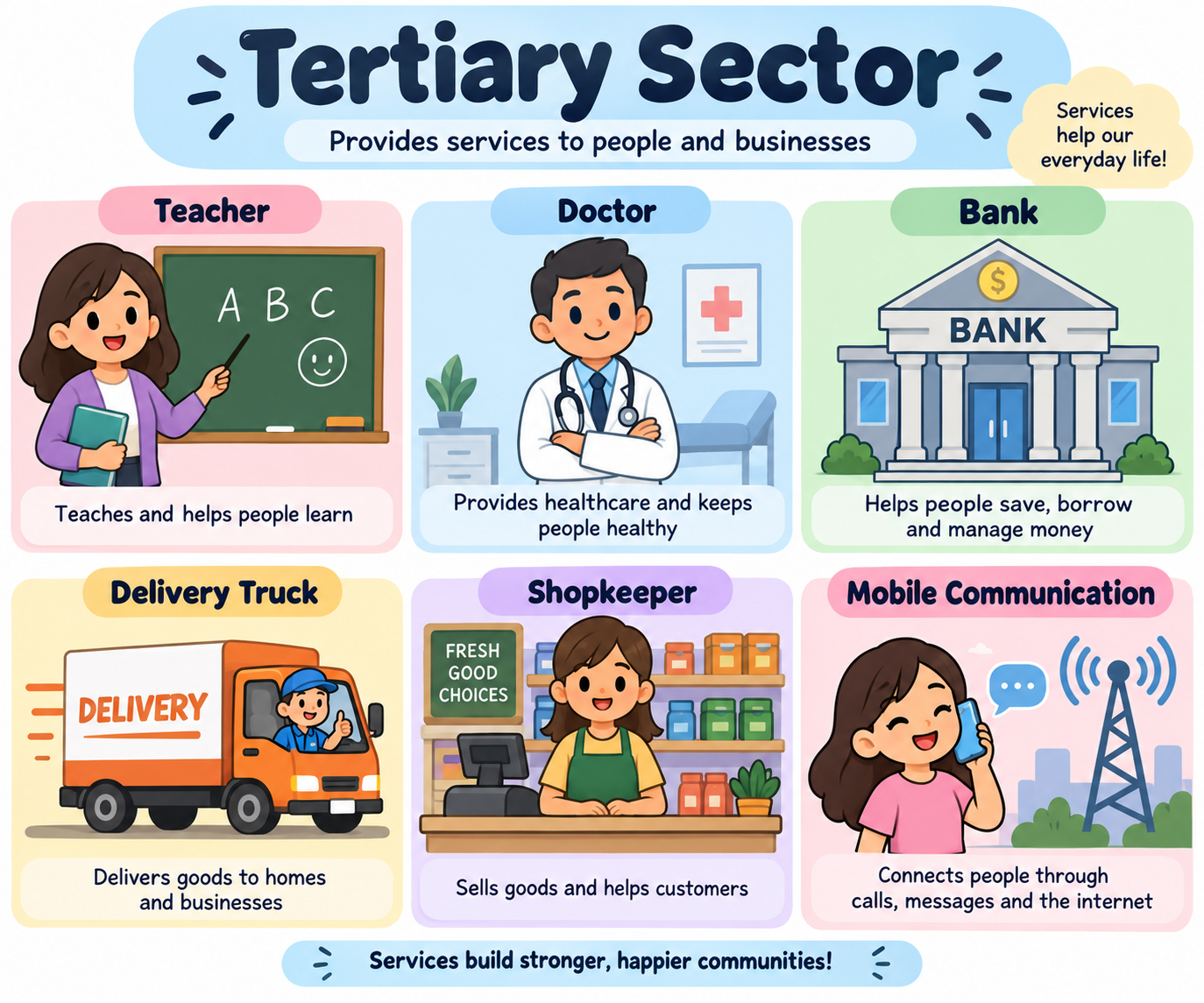
lesson no. 20 Q3. Name the sub-sectors of the tertiary sector.
Simple Answer The tertiary sector provides services to people and businesses. It does not mainly produce physical goods. Its main sub-sectors are: Example: Teachers, doctors, bank workers and shopkeepers work
Read More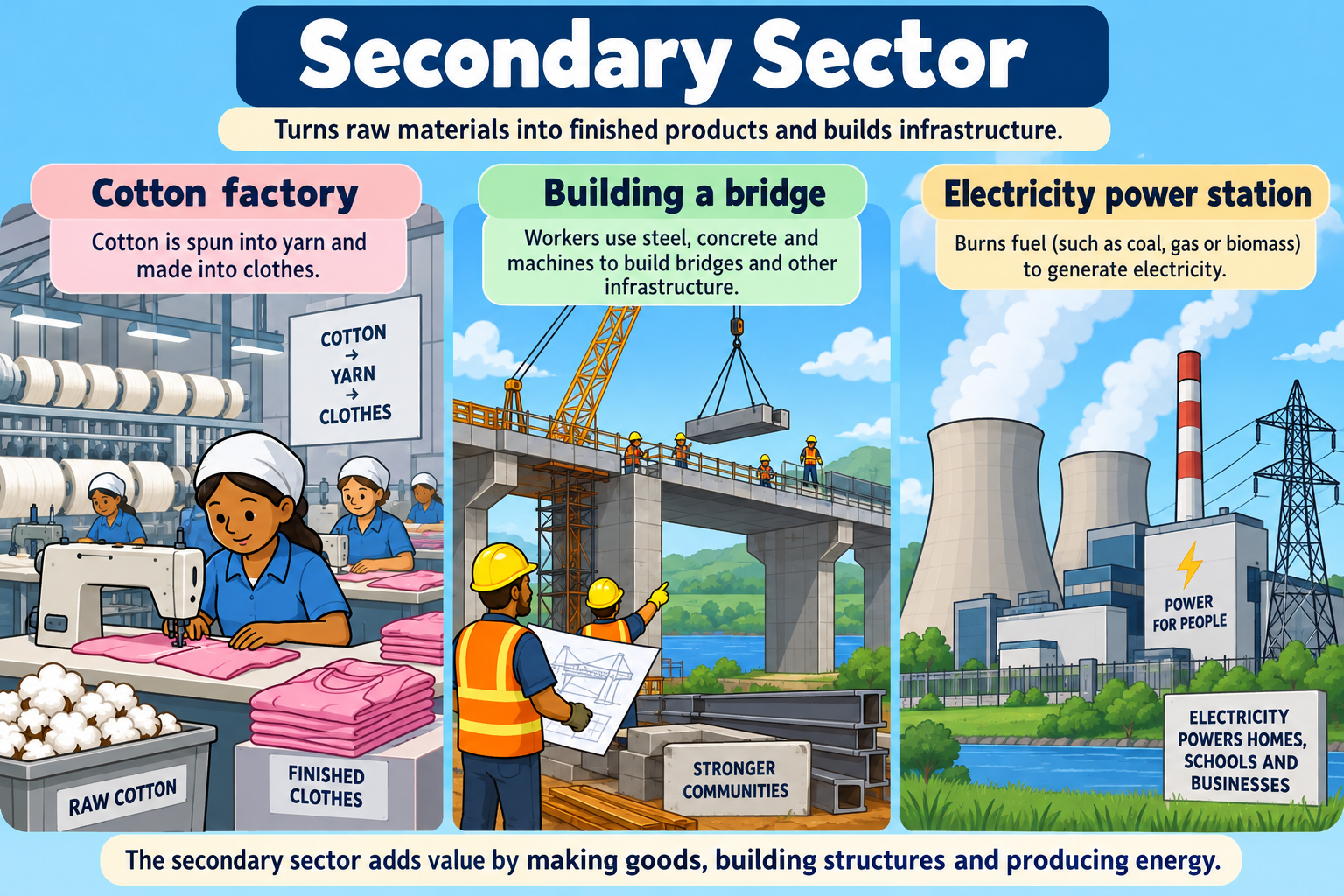
lesson no. 20 Q2. Name the sub-sectors of the secondary sector.
Simple Answer The secondary sector changes raw materials into finished products. Its main sub-sectors are: Example: A factory making shirts from cotton belongs to the secondary sector. Remember: The secondary
Read More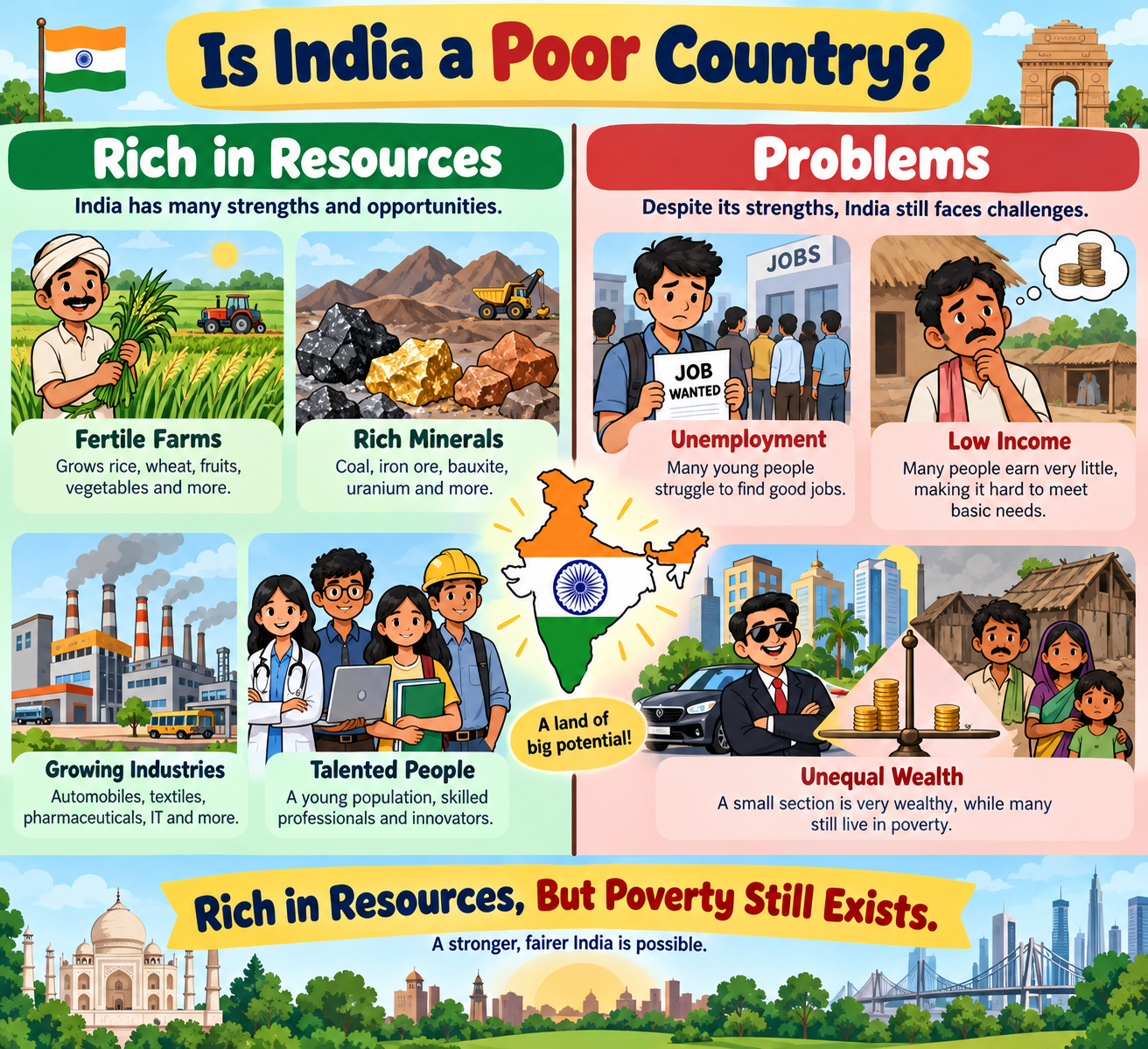
lesson no. 19 Q9. Do you think India is a poor country? Give reasons for your answer.
Simple Answer India is a country with many natural resources, but many people still face poverty. That is why India is sometimes called “A rich country inhabited by poor people.”
Read More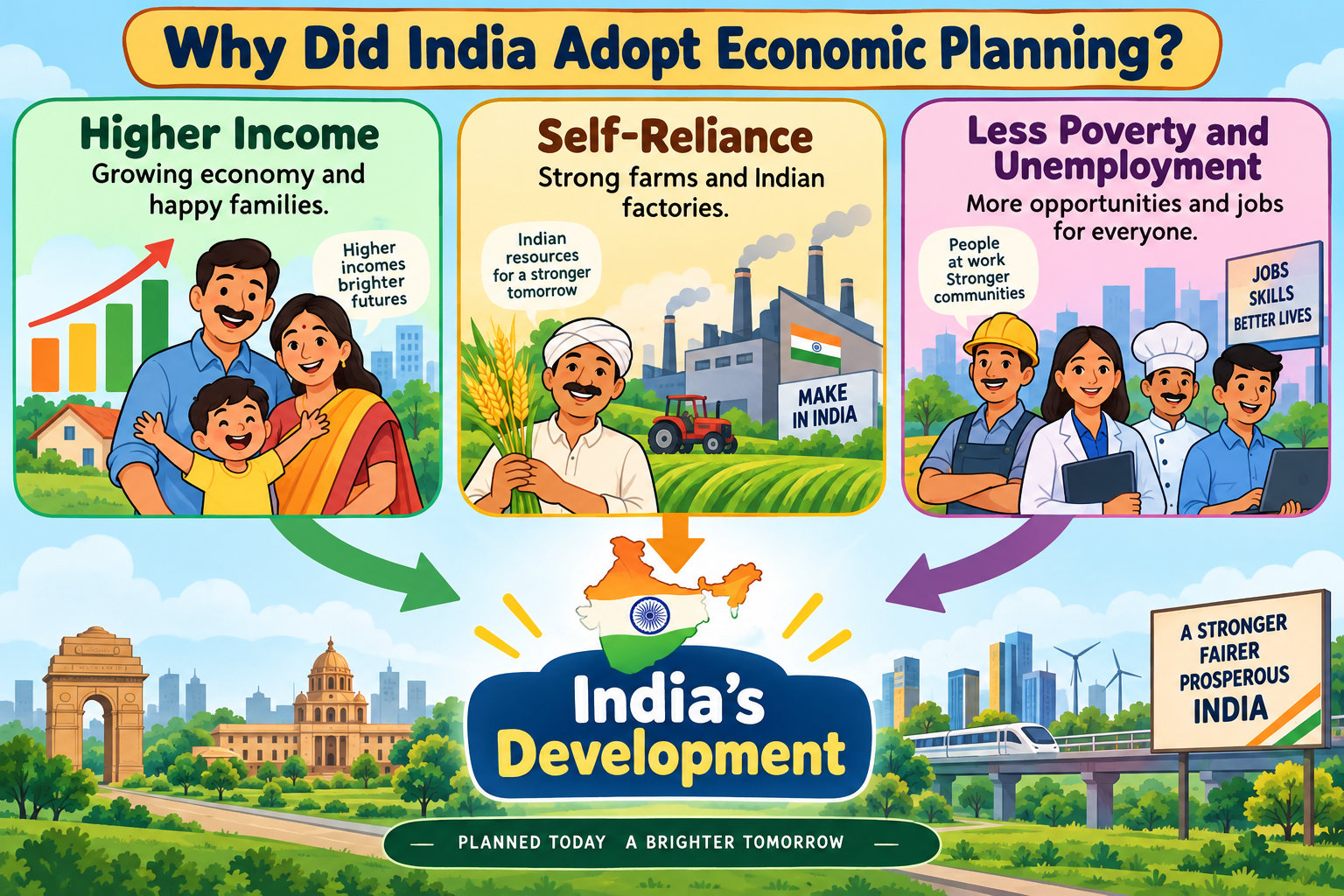
lesson no.19 Q8. Why did the government of India adopt Planning?
Simple Answer After independence in 1947, India faced many economic problems. The government started Five-Year Plans to improve the country’s economy and people’s lives. Main Reasons 1. Increase National Income
Read More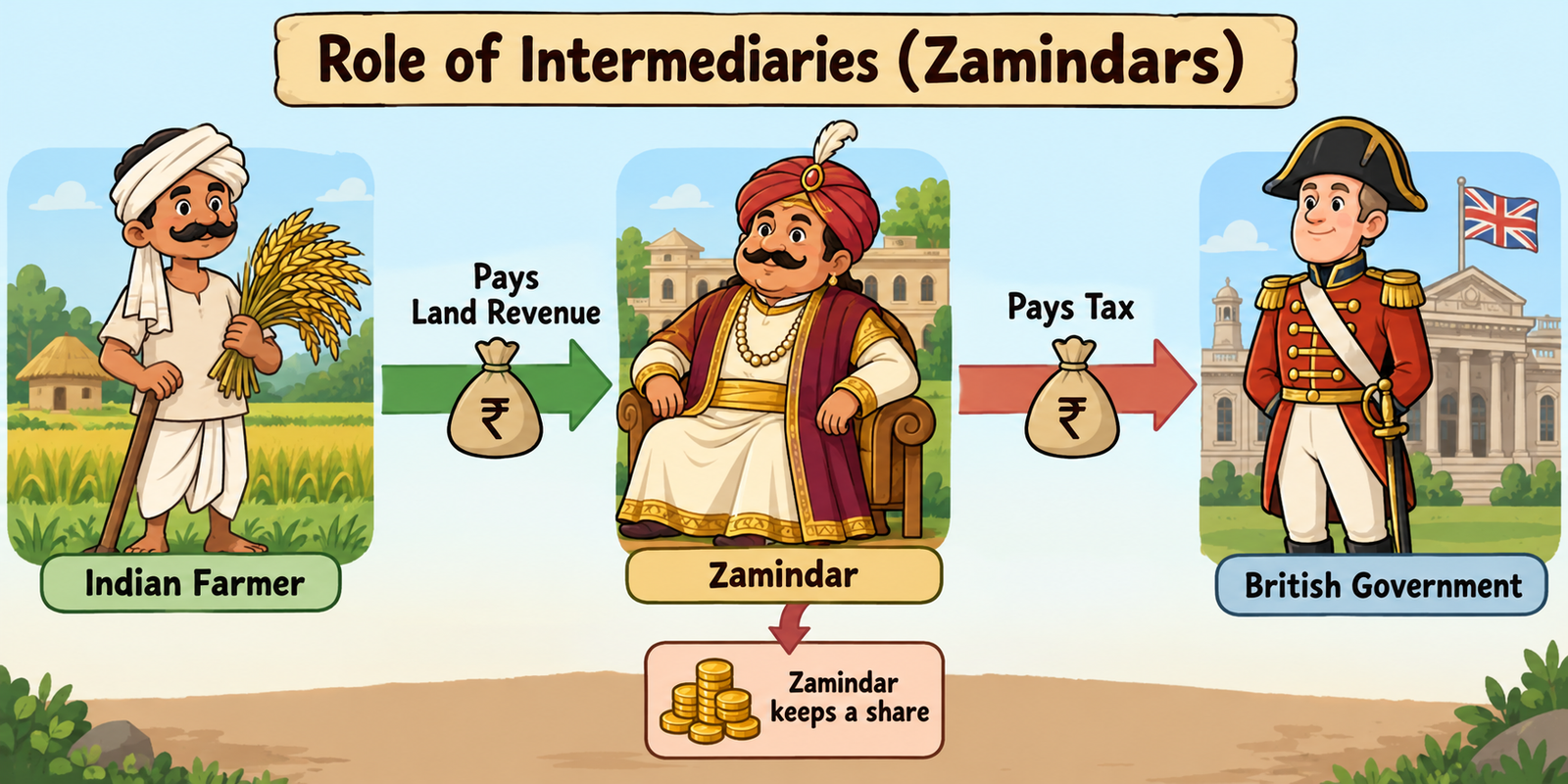
lesson no.19 Q7. Who were the intermediaries? Describe the role played by them?
Simple Answer Intermediaries were middlemen appointed by the British to collect land taxes from Indian farmers. Zamindars were an example of intermediaries. Role of Intermediaries Simple Example Suppose a farmer
Read More