

Meaning
The determinants of individual demand are the factors that affect how much of a product a single person wants and is able to buy.
For example, your demand for coffee may change because of its price, your income, your likes and dislikes, the prices of related products, or what you expect prices to be in the future.
Let us understand the five main determinants with simple examples.
1. Price of the Commodity
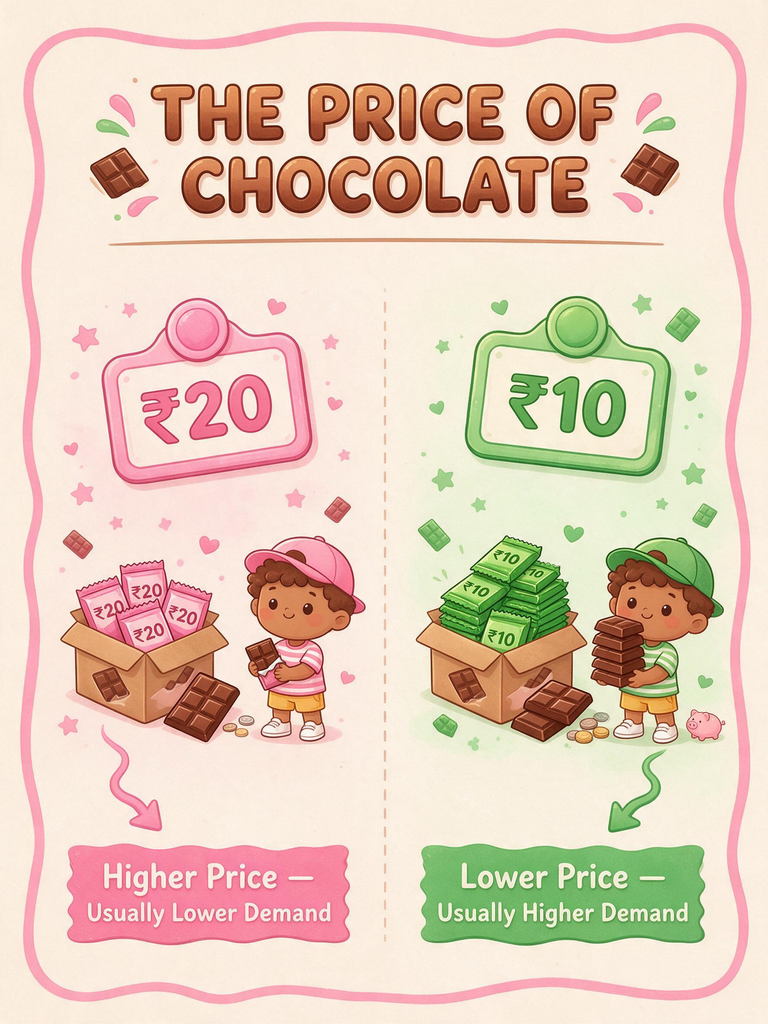
The price of a product is an important factor affecting its demand.
Generally, when the price of a product increases, people buy less of it. When its price decreases, people may buy more of it.
Example: If a chocolate costs ₹20, you may buy two chocolates. If its price falls to ₹10, you may buy four.
2. Income of the Consumer
A person’s income affects how much they can afford to buy.
When income increases, people usually buy more normal goods. When income decreases, they may buy less.
Example: When your pocket money increases, you may be able to buy more books, snacks or clothes.
However, demand for some cheaper alternatives may fall when income increases because people switch to more expensive options.

3. Tastes and Preferences
Tastes and preferences mean what people like, enjoy or prefer.
Fashion, habits, advertising, festivals and personal choices can affect demand. When a product becomes popular, more people may want to buy it.
Example: If colourful sneakers become trendy among students, more students may want to buy them. If the trend fades, demand may decrease.

4. Prices of Related Goods
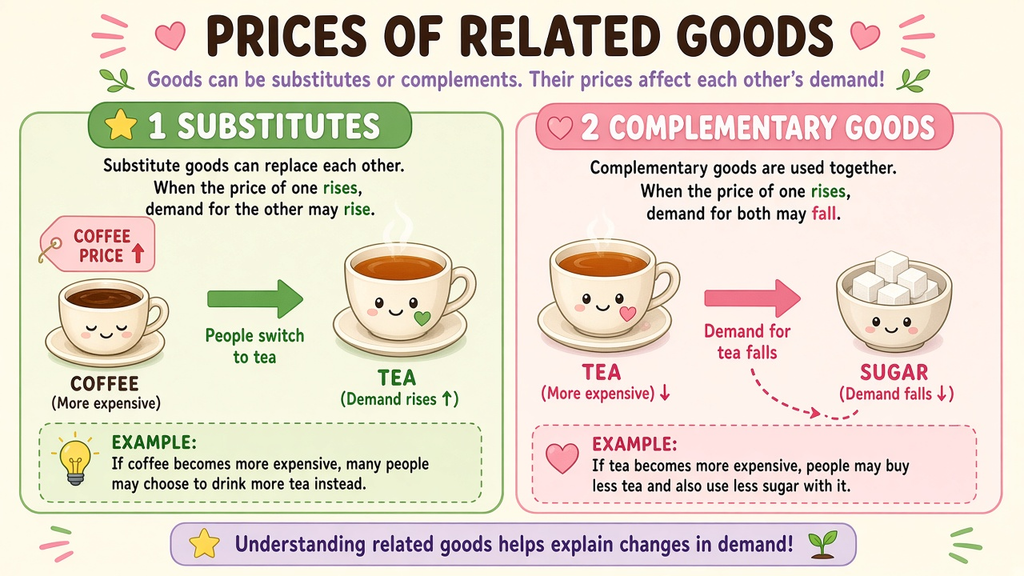
The price of one product can affect the demand for another product. Related goods are of two main types.
A. Substitute goods
Substitutes are products that can be used in place of each other.
Example: Tea and coffee can be substitutes. If coffee becomes more expensive, some people may buy more tea instead.
B. Complementary goods
Complements are products that are used together.
Example: Tea and sugar are complementary goods for people who take sugar in their tea. If tea becomes much more expensive, they may buy less tea and, as a result, less sugar for it.
5. Consumer Expectations
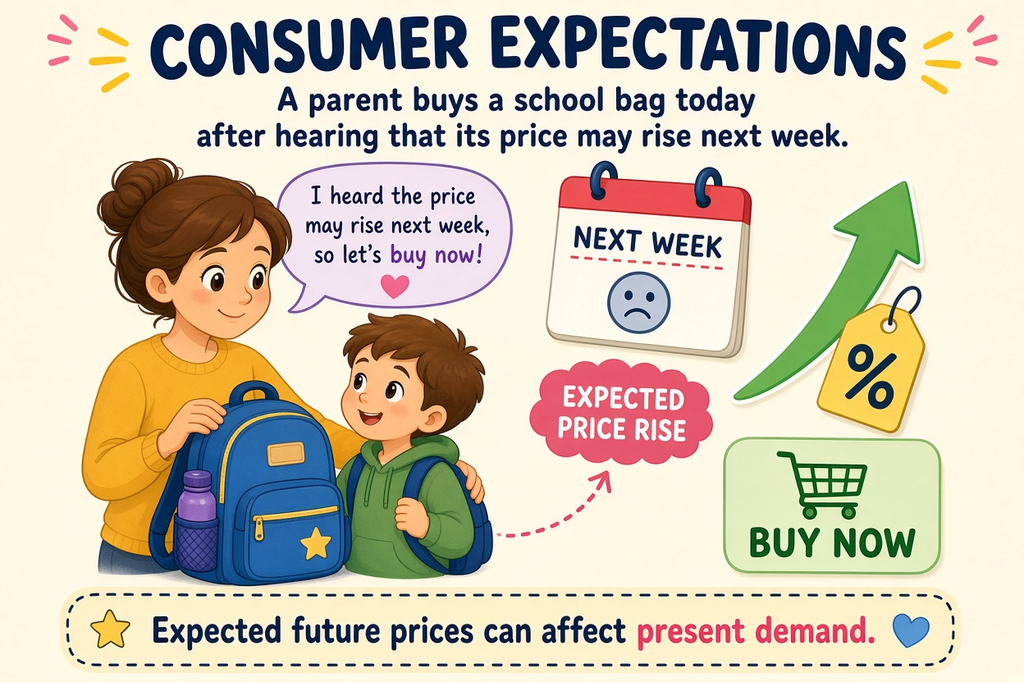
Consumer expectations mean what people think may happen to prices or availability in the future.
If people expect a product’s price to increase soon, they may buy more of it now. If they expect its price to fall, they may wait before buying.
Example: If you expect the price of a school bag to rise next week, you may decide to buy it today.
Quick Revision
| Determinant | Simple meaning |
|---|---|
| Price of the commodity | The product’s own price |
| Income of the consumer | The money a person earns or receives |
| Tastes and preferences | What a person likes or prefers |
| Prices of related goods | Prices of substitutes and complementary goods |
| Consumer expectations | What a person expects to happen in the future |
Conclusion: Individual demand depends on the product’s price, the consumer’s income, personal preferences, the prices of related goods and expectations about the future.
Exam tip: In the exam, briefly explain all five factors and give one simple example for each. This will make your answer clear and complete.