
Introduction
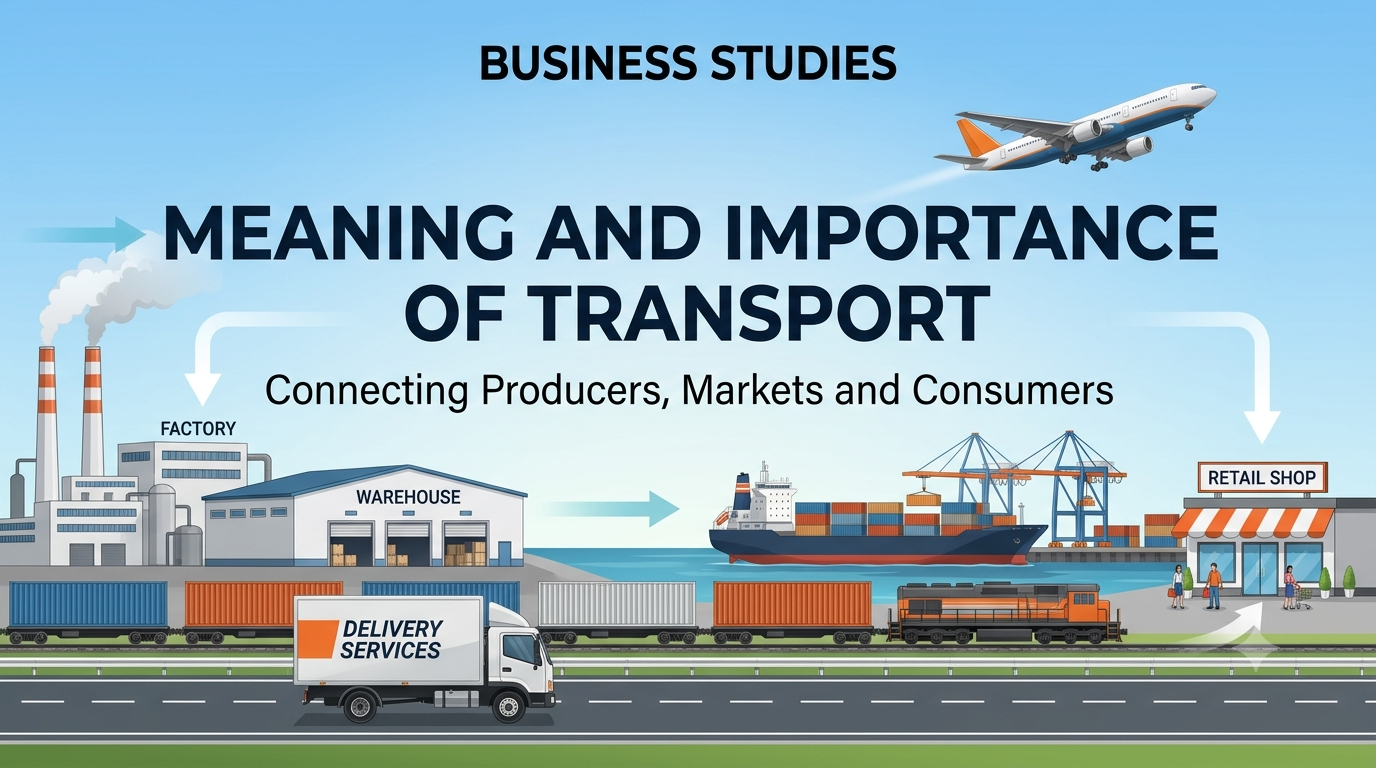
Transport is an essential part of every business. Goods produced in factories and farms must reach wholesalers, retailers, and consumers. Transport makes this movement possible by connecting producers with markets across different locations.
Without an efficient transport system, businesses would find it difficult to obtain raw materials, distribute finished goods, and serve customers in distant markets.
What Is Transport?
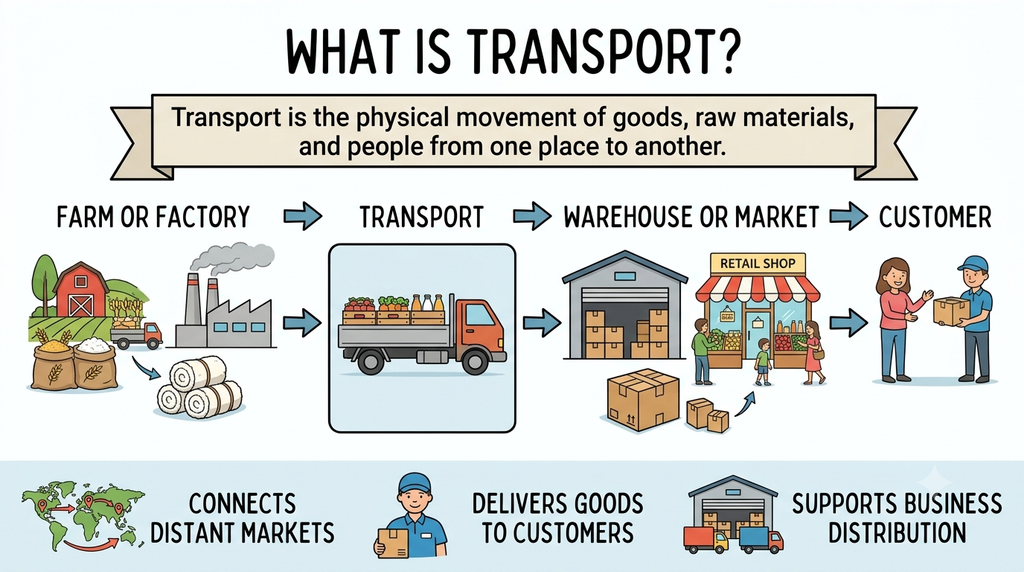
Transport refers to the physical movement of goods, raw materials, animals, and people from one location to another through roads, railways, waterways, airways, and pipelines.
For example, a company may transport raw cotton from farms to textile factories and then deliver finished clothes to retail stores.
Importance of Transport in Business
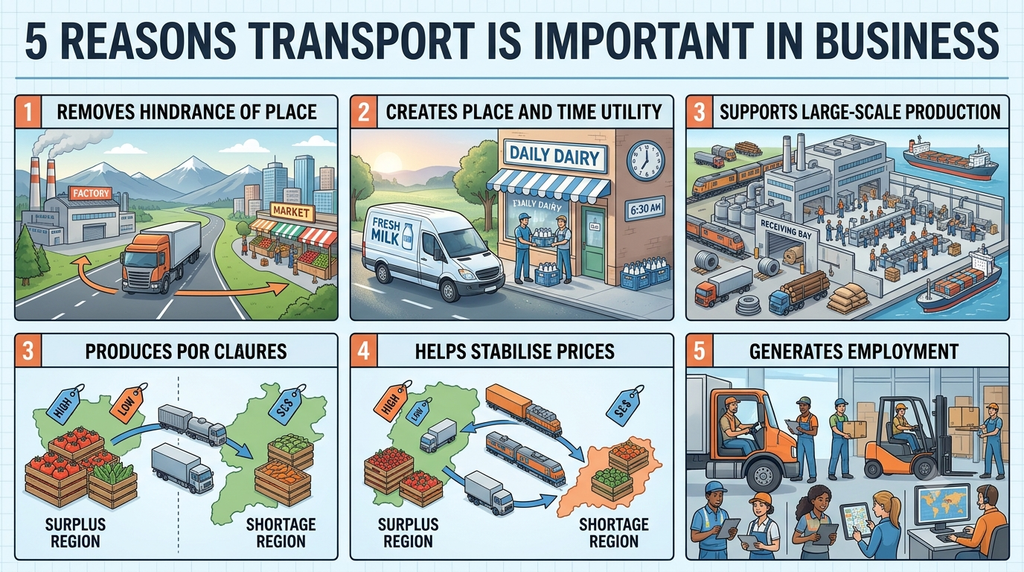
1. Removes the Hindrance of Place
Goods are often produced far away from the places where they are needed. Transport bridges this geographical gap by connecting production centres with consumption markets.
2. Creates Place and Time Utility
Transport makes products available at the right place and, when properly scheduled, at the right time.
For example, refrigerated trucks deliver fresh milk to grocery stores early each morning.
3. Supports Large-Scale Production
Businesses can purchase raw materials from distant suppliers and sell finished products across different regions and countries. This enables them to expand production and reach larger markets.
4. Helps Stabilise Prices
Transport moves goods from areas where they are available in surplus to areas experiencing shortages. This helps reduce regional price differences and prevents wastage of excess stock.
5. Generates Employment
Transport supports employment in logistics, warehousing, shipping, tourism, retail distribution, and other related industries.
Business Example: FreshDairy Ltd.
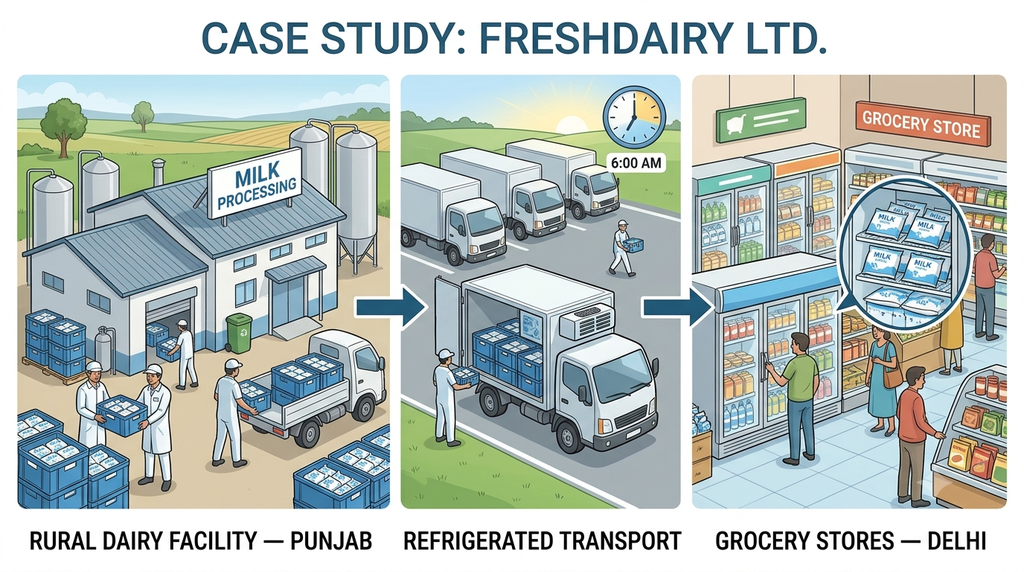
FreshDairy Ltd. processes milk at a central facility in rural Punjab. Refrigerated trucks transport milk packets to grocery stores across Delhi every morning.
Without transport, the company might face excess unsold milk in Punjab while consumers in Delhi experience shortages.
Conclusion
Transport connects production with consumption and supports the smooth functioning of business. It expands markets, improves distribution, supports large-scale production, and contributes to economic growth.