
Introduction
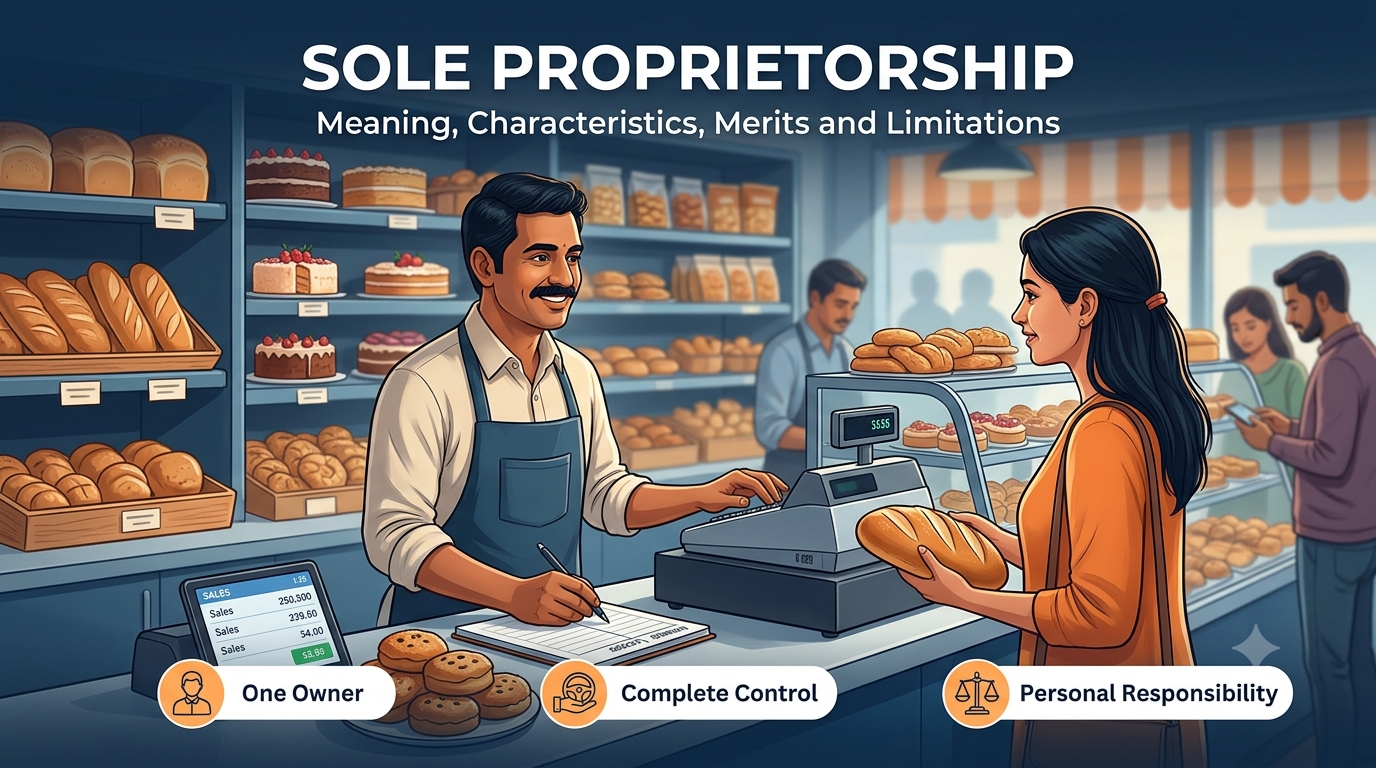
Sole proprietorship is one of the simplest and most common forms of business organisation. It is particularly suitable for small businesses that require limited capital and direct personal supervision. Many neighbourhood shops, bakeries, salons, and repair centres operate under this form of ownership.
Meaning of Sole Proprietorship
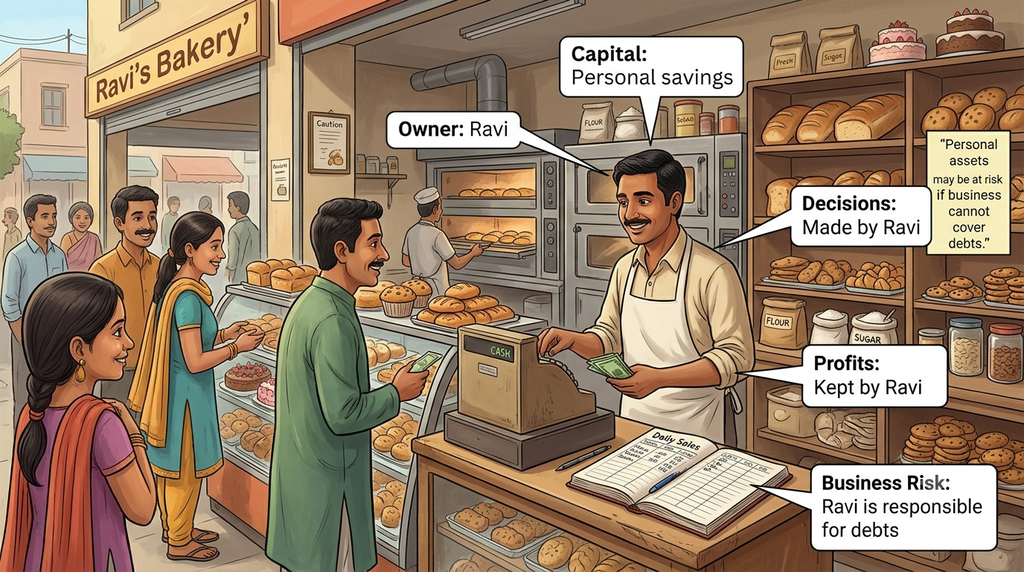
A Sole Proprietorship is a form of business organisation owned, managed, and controlled by a single individual. The owner provides the capital, makes business decisions, bears the business risks, and receives the profits.
The owner of the business is called the sole proprietor.
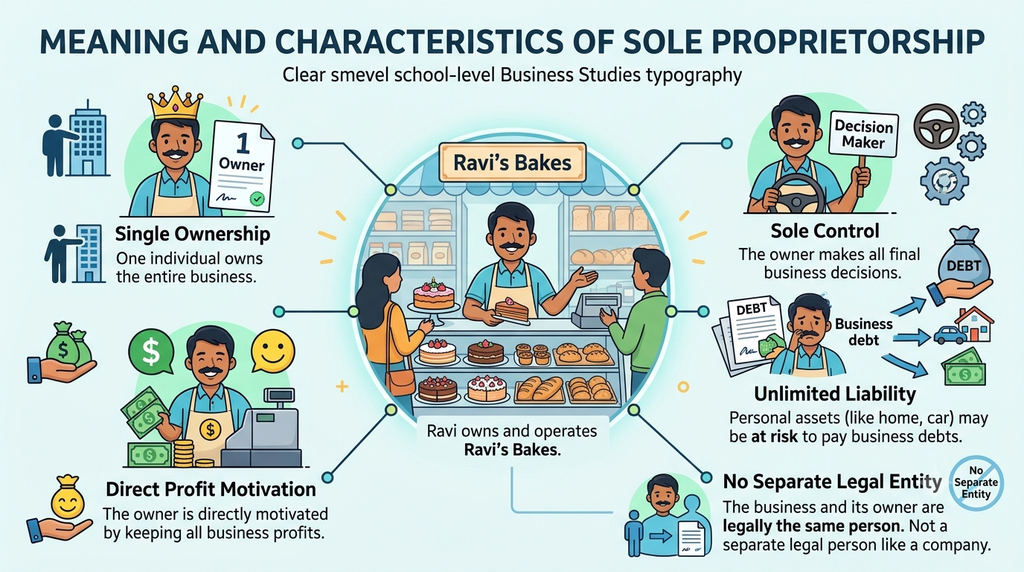
Example: Ravi opens a bakery called Ravi’s Bakes using his personal savings. He buys ingredients, prepares pastries, manages sales, and keeps the business’s profits.
Chief Characteristics of Sole Proprietorship
1. Single Ownership
One individual owns the business. The proprietor provides the funds and has the main ownership rights.
2. Sole Control
The owner independently manages the business and makes decisions about purchasing, pricing, employees, and daily operations.
3. Unlimited Liability
The proprietor may be personally responsible for business debts. If the business assets are insufficient to repay creditors, personal assets may also be at risk under the applicable legal process.
4. No Separate Legal Entity
The business does not have a separate legal identity distinct from its owner in the way a company does.
5. Direct Motivation
The proprietor receives the profits earned by the business after meeting its expenses. This can encourage hard work and careful management.
Merits of Sole Proprietorship
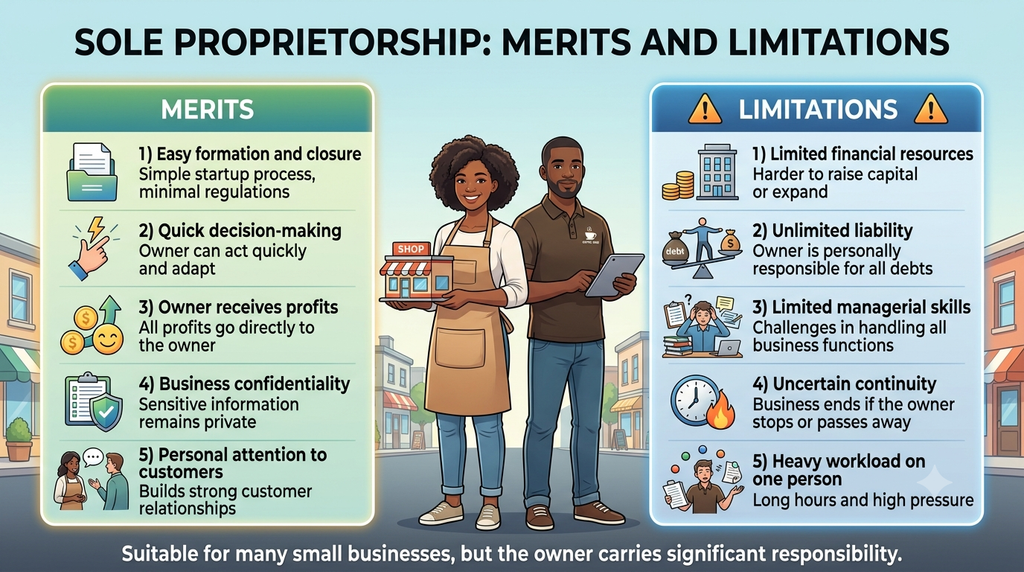
- Easy Formation and Closure: A sole proprietorship can generally be established with fewer formalities than a company, subject to applicable registrations and licences.
- Quick Decision-Making: The owner can respond quickly to customer needs and changes in the market.
- Direct Profit Motivation: The proprietor receives the business profits.
- Business Confidentiality: The owner can keep business plans, financial details, and trade information private.
- Personal Attention: Customers may receive direct service from the owner.
Limitations of Sole Proprietorship
- Limited Financial Resources: Capital generally depends on the owner’s savings and borrowing capacity.
- Unlimited Liability: Business debts may affect the owner’s personal finances.
- Limited Managerial Skills: One person may not possess expertise in every area, such as finance, marketing, production, and technology.
- Uncertain Continuity: Illness, disability, or death of the proprietor can seriously affect the continuation of the business.
- Heavy Workload: The owner may have to manage several business activities personally.
Practical Business Example
Sanjay operates an independent mobile repair shop. When competitors reduce their repair charges, he quickly adjusts his prices without consulting anyone. He keeps the profits and maintains confidentiality about his business plans.
However, Sanjay wants to purchase advanced diagnostic machines costing ₹15,00,000. His personal savings and borrowing capacity are insufficient to finance the purchase. This demonstrates the limited financial resources of a sole proprietorship.
Conclusion
A sole proprietorship is suitable for small businesses that require personal control, quick decisions, and close customer relationships. However, limited capital, dependence on one person, and unlimited liability are important disadvantages that an entrepreneur should consider before choosing this form of business.