
Introduction
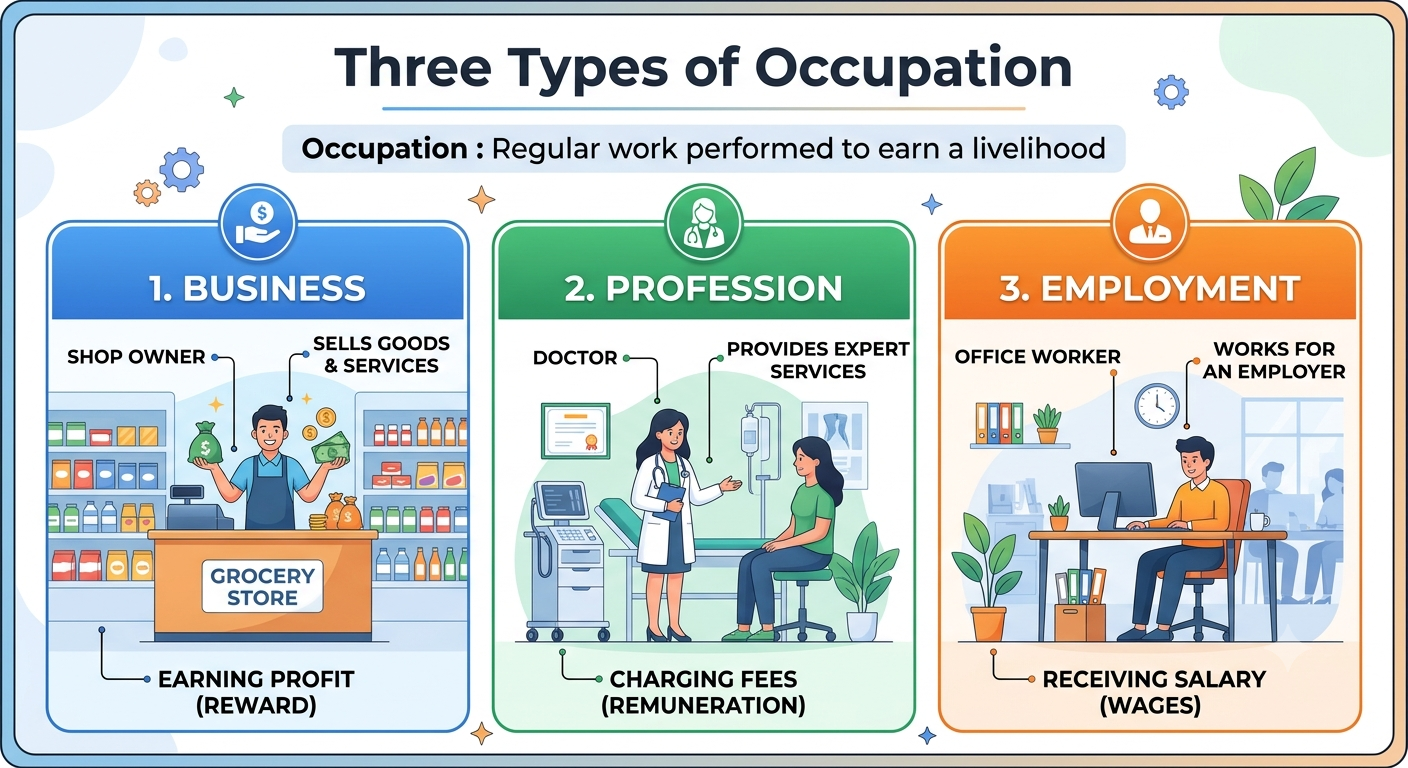
An occupation is a regular activity performed by a person to earn a livelihood. People choose occupations according to their education, skills, interests, and abilities. Occupations are mainly divided into three types: business, profession, and employment.
1. Business
Business is an economic activity that involves the regular production, purchase, or sale of goods and services to earn profit.
Features of Business
- Profit Motive: The main aim is to earn profit.
- Regular Dealings: Business activities are performed continuously.
- Investment: Business owners invest money in their activities.
- Risk: Business owners may earn profit or suffer losses.
- Customer Service: Businesses provide goods and services to customers.

Examples
- Running a grocery shop.
- Manufacturing clothes in a factory.
- Operating a restaurant.
- Buying and selling mobile phones.
- Providing delivery services.
2. Profession
A profession involves providing specialized services based on education, training, knowledge, and skills.
Features of a Profession
- Specialized Knowledge: Professionals need expert knowledge in a particular field.
- Education and Training: Many professions require formal qualifications and practical training.
- Professional Ethics: Professionals must follow ethical standards and applicable rules.
- Fees: Professionals generally receive fees for their services.
- Public Service: Their work often helps meet important social needs.
Examples
- A doctor treating patients.
- A lawyer providing legal advice.
- A chartered accountant preparing financial statements.
- An architect designing buildings.
- An engineer providing technical services.

3. Employment
Employment means working for another person or organization in return for a salary or wages.
Features of Employment
- Employer-Employee Relationship: The employee works under an employer.
- Fixed Payment: The employee receives an agreed salary or wage.
- Employment Agreement: Work is usually performed according to agreed terms.
- Assigned Duties: Employees perform specific tasks.
- Limited Business Risk: Employees generally do not bear the ordinary business losses of their employer.
Examples
- A bank clerk receiving a monthly salary.
- A teacher working in a school.
- A nurse working in a hospital.
- An office assistant working in a company.
- A warehouse worker receiving wages.
4. Main Differences
- Business: Income is mainly earned through profit.
- Profession: Income is generally earned through professional fees.
- Employment: Income is earned through salaries or wages.
- Investment: Business owners usually invest capital in their businesses, while employees generally work with resources provided by their employers.
- Risk: Business owners bear business risks, while employees generally receive agreed payment for their work.
Conclusion
Business, profession, and employment are important forms of occupation. They help people earn income and support their families. Each occupation contributes to the economy by providing goods, services, knowledge, and employment opportunities.