
Economics is not just about money. It is about how people make choices, use limited resources, satisfy their needs, and improve their lives.
Have you ever wondered why your family makes a monthly budget, why the price of vegetables sometimes increases, or why a farmer must decide how much wheat and rice to grow?
All these situations are connected to economics.
Economics is a subject that helps us understand how people, businesses, and governments make decisions. It explains how we use the resources available to us and how those decisions affect our daily lives and the economy as a whole.
However, economics is a very broad subject. It covers many different areas, including wealth, human welfare, scarcity, choice, economic growth, development, and environmental protection.
Over time, economists have explained economics in different ways. Let us understand these ideas one by one using simple language and practical examples.
1. Why Is Economics Difficult to Define?
Economics covers so many aspects of human life that it is difficult to explain its complete meaning in just one sentence.
In earlier times, economists mainly focused on wealth and how people could increase it. Later, they started paying more attention to human welfare, limited resources, and the choices people make.
During the twentieth century, economic growth and development became increasingly important. More recently, economists have also focused on protecting the environment and ensuring that future generations have enough resources.
This shows that the meaning of economics has changed as society has developed and people’s needs have changed.
To understand economics properly, let us explore its five major definitions.
2. Economics as the Science of Wealth
What does this mean?
In the late eighteenth and early nineteenth centuries, many economists believed that economics was the science of wealth.
These economists are known as classical economists or classical thinkers.
They mainly studied wealth, how it was created, how it increased, and how individuals and nations could become wealthier.
In simple words, this definition focused on understanding how people and countries earn, produce, and accumulate wealth.
A simple example
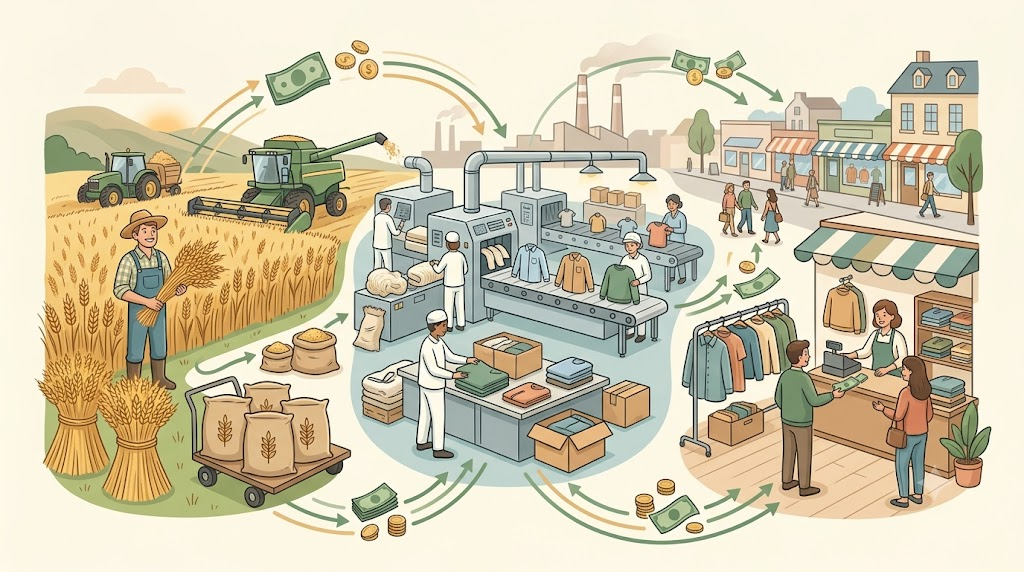
Imagine that a farmer grows wheat and sells it in the market. The farmer earns money from selling the wheat.
Similarly, a factory produces clothes and sells them to customers. The factory earns income through its business activities.
When people produce goods, sell them, and earn income, they contribute to the creation of wealth.
Classical economists were interested in understanding these activities and the reasons why some individuals and nations became wealthier than others.
What was the problem with this definition?
The main problem was that it focused too much on wealth and did not give enough attention to human welfare.
A country might have a large amount of wealth, but that does not automatically mean every citizen enjoys a good standard of living.
For example, a country may produce a large amount of goods and earn substantial income, while some of its citizens may still struggle to afford food, education, and healthcare.
Therefore, economists began to think that economics should study not only wealth but also the well-being of people.
In simple words: The wealth definition focuses on how wealth is created and increased, but wealth alone cannot explain the complete well-being of society.
3. Economics as the Science of Welfare
What does welfare mean?
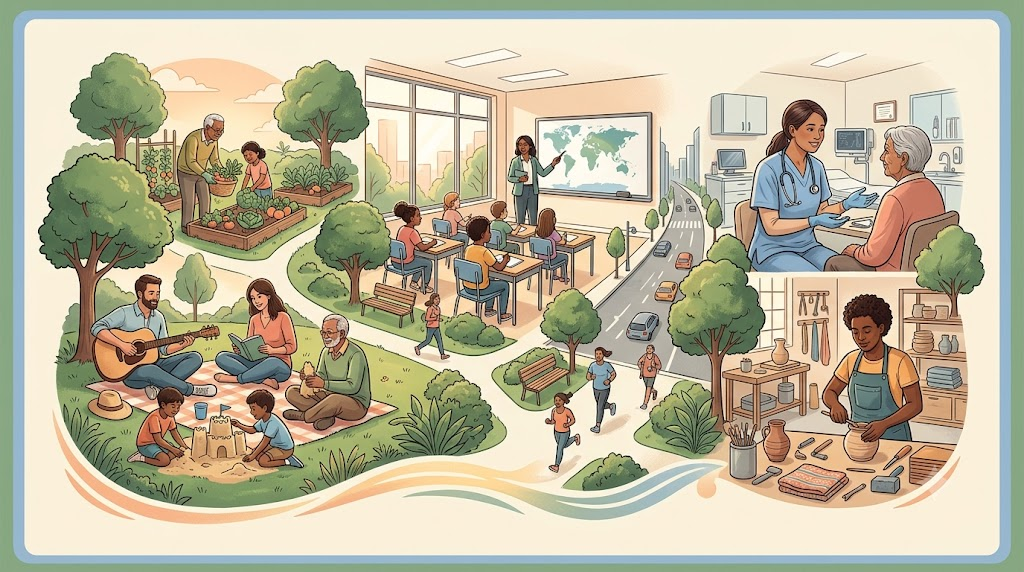
Welfare means the well-being of people. It includes the conditions that help people live better, healthier, safer, and more satisfying lives.
As economists studied society more closely, they realised that economics should not focus only on wealth. It should also consider how wealth and economic activities affect people’s lives.
This led to the definition of economics as the science of welfare.
According to this idea, economics studies how economic activities can improve human well-being.
Two types of welfare
Welfare can be understood through two main aspects: quantitative welfare and qualitative welfare.
A. Quantitative welfare
Quantitative welfare refers to aspects of well-being that can be measured numerically.
For example:
- An increase in a person’s income.
- Better access to food and clothing.
- An increase in the number of people who can afford education.
- Improved availability of essential goods and services.
Suppose a person’s monthly income increases from ₹10,000 to ₹15,000. The increase can be measured in money.
This may help the person afford more necessities and improve their standard of living.
B. Qualitative welfare
Qualitative welfare refers to improvements in the quality of people’s lives that cannot always be measured in money.
For example:
- Living peacefully.
- Having time to relax with family.
- Gaining knowledge and education.
- Feeling safe in the community.
- Enjoying a healthy social environment.
Imagine two people earning the same monthly income. One has enough time to rest, spend time with family, and pursue personal interests. The other works long hours and has very little free time.
Although their incomes are equal, their overall well-being may be different.
This example shows that money is important, but it is not the only factor that affects welfare.
What was the limitation of the welfare definition?
The traditional welfare definition mainly concentrated on material welfare that could be measured in monetary terms.
However, people need both material goods and non-material services.
Material goods include food, clothes, houses, and furniture. Non-material services include education, medical treatment, transportation, and other services that satisfy human needs.
This made economists realise that they also needed to study how people use limited resources to satisfy their many wants.
In simple words: The welfare definition focuses on how economic activities improve people’s lives, rather than looking at wealth alone.
4. Economics as the Science of Scarcity and Choice
This definition helps us understand one of the most important ideas in economics.
What is scarcity?
Scarcity means that resources are limited compared with our wants.
Human wants are many, but the resources available to satisfy them are limited.
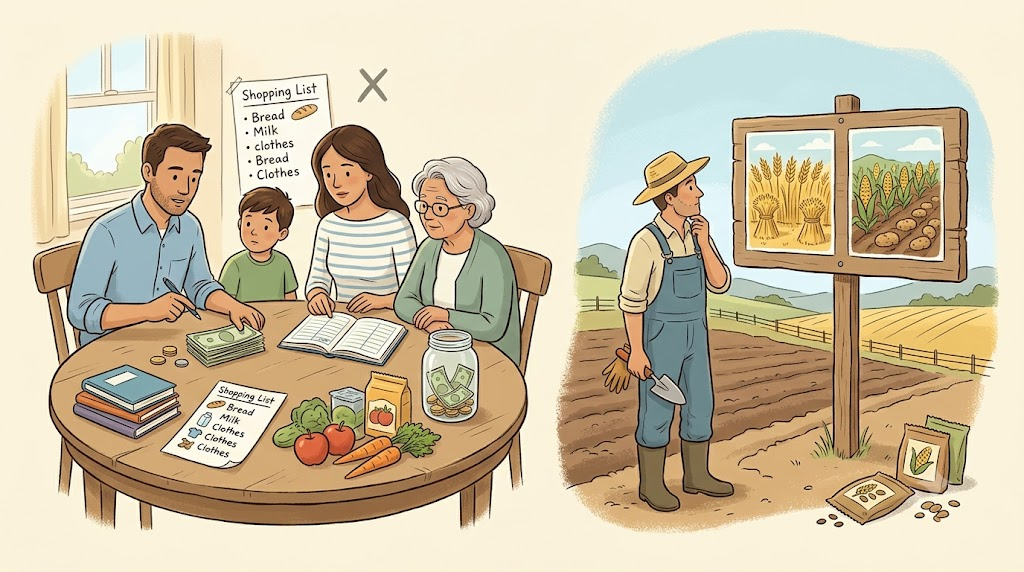
For example, you may want a new phone, new clothes, a bicycle, books, and a holiday. However, your available money may not be enough to buy everything at once.
You must decide which things are most important and how to spend your money.
This is a simple example of scarcity.
Scarcity does not always mean that something is completely unavailable. It means that there is not enough of a resource to satisfy every possible want at the same time.
What is choice?
Choice means selecting one option from the available alternatives.
When resources are limited, people must choose how to use them.
For example, suppose you have ₹1,000 and want to buy both a school bag and a pair of shoes. If buying both is beyond your budget, you must decide which purchase is more important right now.
The same problem occurs in businesses and governments.
A business may have limited money to buy machinery, hire workers, and advertise its products. A government may have a limited budget to build roads, improve hospitals, and support education.
Economics helps us understand how these choices are made.
Understanding ends and means
The scarcity definition explains the relationship between human wants and limited resources.
Two important terms help us understand this definition.
Ends: Ends refer to the wants or goals people wish to satisfy.
Examples include buying food, receiving an education, owning a house, and travelling.
Means: Means refer to the resources available to satisfy those wants.
Examples include money, time, land, labour, raw materials, and machinery.
The problem is that these means are limited and can often be used in different ways.
For example, a piece of land may be used to grow wheat, rice, vegetables, or other crops. The farmer must decide which use is most suitable.
Therefore, economics studies how people use scarce resources with alternative uses to satisfy their wants.
A practical example: A family budget
Imagine a family has ₹20,000 available for its monthly household expenses after considering its income and existing commitments.
The family needs to pay for food, education, transportation, electricity, and other necessities. It may also want to save money for emergencies.
Because the available money is limited, the family must plan its spending carefully.
It cannot spend the same ₹20,000 multiple times. Money used for one purpose is no longer available for another purpose.
Economics helps explain these decisions and the importance of using resources wisely.
Example: Producing wheat and cloth
Let us consider an economy that produces two goods: wheat and cloth.
The economy has limited resources, such as land, workers, water, and machinery.
These resources cannot produce unlimited quantities of both goods.
Suppose people begin demanding more wheat. Producers may need to move some land, workers, and other resources from cloth production to wheat production.
As a result:
- Wheat production may increase.
- Cloth production may decrease.
- The economy must decide how to divide its available resources.
The economy has two possible choices:
- Continue producing the same quantities of wheat and cloth.
- Produce more wheat by using some resources previously allocated to cloth.
The second choice may satisfy the increased demand for wheat, but it may reduce the amount of cloth available.
This is the basic economic problem of allocating limited resources among alternative uses.
What is opportunity cost?
Opportunity cost is the value of the next-best alternative that you give up when you make a choice.
For example, if a farmer uses a field to grow wheat instead of rice, the rice that could have been produced represents an opportunity cost.
Similarly, if you spend your evening watching a movie instead of studying, the study time you give up is an example of opportunity cost.
In simple words: Scarcity means resources are limited, and choice means deciding how to use those resources. Economics studies how people make these decisions.
5. Economics as the Science of Growth and Development
As economies developed during the twentieth century, economists increasingly focused on the growth and development of the entire economy.
They recognised that economics should not study only the decisions of individual people or businesses. It should also examine how a country’s economy performs over time.
This led to the view of economics as the science of economic growth and development.
What is economic growth?
Economic growth generally means an increase in the amount of goods and services an economy produces over time.
For example, if a country produces more food, clothing, machinery, and other goods than it did in an earlier period, its economy may be experiencing economic growth.
Growth can create opportunities for businesses, employment, and income. However, the benefits do not automatically reach everyone equally.
What is economic development?
Economic development is a broader idea. It includes improvements in people’s living conditions and opportunities.
These improvements may include:
- Better access to education.
- Improved healthcare facilities.
- More reliable transportation.
- Greater access to clean drinking water.
- Better employment opportunities.
- Improvements in living standards.
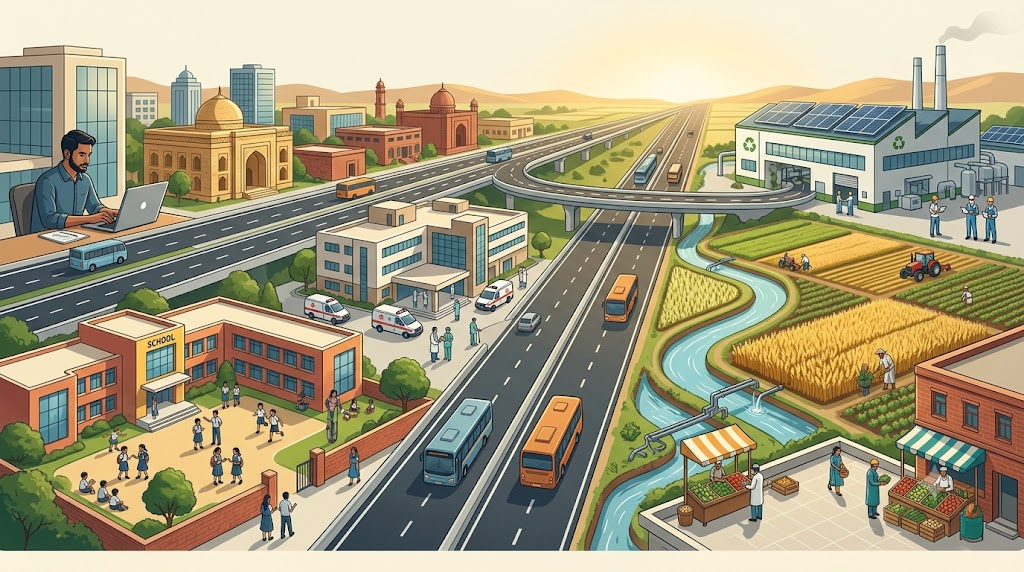
For example, building a new factory may increase production and create jobs. If economic progress also improves access to schools, healthcare, and essential services, it can contribute to wider development.
Economic growth and development are related, but they are not exactly the same.
Growth focuses mainly on increases in economic output, while development considers broader improvements in people’s lives.
Why is the government’s role important?
Governments influence economic growth and development through policies, public services, infrastructure, and the management of public resources.
For example, a government may invest in roads, schools, hospitals, irrigation systems, and public transportation.
These facilities can help people access education, find work, transport goods, and participate in economic activities.
Governments also make decisions about taxation, public spending, and how resources are allocated among different needs.
Economics helps us understand these decisions and examine their possible effects on society.
Developed and developing economies
Countries differ in their levels of income, infrastructure, productivity, and access to essential services.
The terms developed economy and developing economy are used to describe broad differences in economic and social conditions.
Countries such as Japan and the United States are commonly classified as developed economies. India is commonly described as a developing economy, although its different regions and communities experience different levels of economic opportunity.
These labels do not tell the whole story of a country. Economists also examine factors such as income distribution, poverty, education, health, and quality of life.
Why should the economy grow and develop?
A country’s economy needs to use its resources efficiently and increase its ability to produce goods and services.
However, economic progress should also aim to improve people’s lives.
For example, higher production may create more jobs, but the wider benefits depend on factors such as wages, working conditions, public services, and how income and opportunities are distributed.
Economics helps us understand the state of an economy and explore ways to improve its performance.
In simple words: Economics studies how an economy grows, how it develops, and how the benefits of economic progress can improve people’s lives.
6. Economics as the Science of Sustainable Development
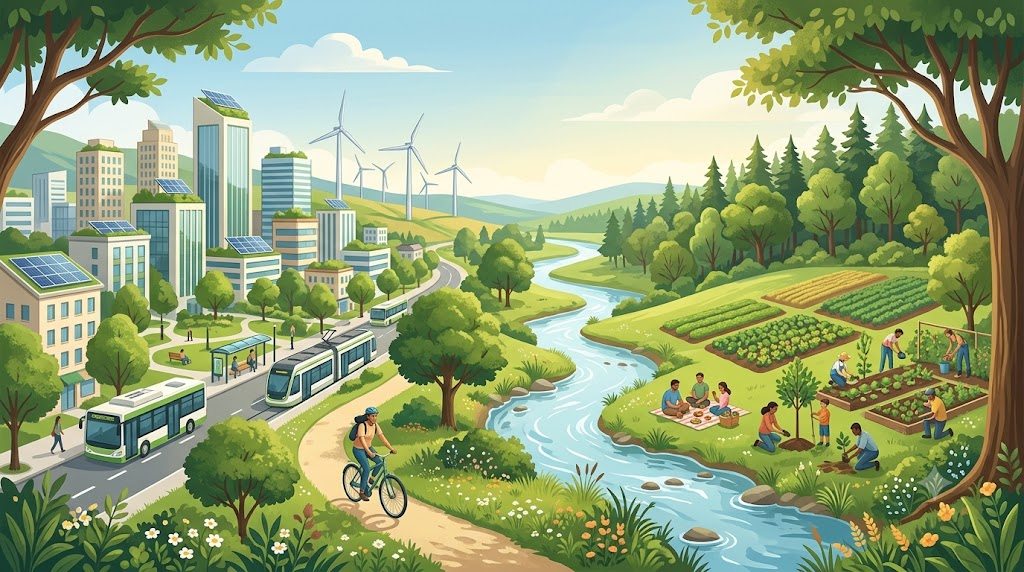
Economic growth is important, but it should not happen at the cost of destroying the environment or exhausting natural resources.
This concern led economists to give greater attention to sustainable development.
What is sustainable development?
Sustainable development means meeting the needs of people today while protecting the ability of future generations to meet their own needs.
In simple words, we should use resources responsibly so that people living in the future can also benefit from them.
Think about the resources we depend on every day:
- Water for drinking and farming.
- Forests for ecological balance and useful materials.
- Minerals for manufacturing and construction.
- Oil and other fuels for energy and transportation.
- Land for agriculture and housing.
Many natural resources are limited, and some take a very long time to replace.
If we use them carelessly, future generations may face greater shortages and environmental problems.
How can economic activities harm the environment?
Economic activities help provide goods, services, jobs, and income. However, some activities can also damage the environment when they are not managed responsibly.
For example, cutting down forests without allowing them to recover can reduce forest cover and damage wildlife habitats.
Excessive use of fossil fuels can increase greenhouse gas emissions. Poor waste management can pollute land and water.
Producing and consuming goods also creates waste. When products are discarded unnecessarily, the materials and energy used to make them may be wasted too.
These problems show why environmental protection must be considered alongside economic progress.
Why should we care about future generations?
Imagine that a community uses most of its available groundwater without allowing it to recover.
People may benefit from having more water available today, but excessive use can make it harder for future residents and farmers to obtain enough water.
A similar problem can occur when forests, minerals, and other resources are used without considering their long-term availability.
We have a responsibility to consider how our choices affect the people who will live after us.
How can we support sustainable development?
Individuals, businesses, and governments can all contribute to sustainability.
Some useful steps include:
1. Use resources carefully. Avoid wasting water, electricity, food, and other essential resources.
2. Reduce unnecessary waste. Reuse suitable items, repair products when practical, and recycle materials where facilities are available.
3. Protect forests and wildlife. Responsible land use and forest conservation help maintain ecosystems.
4. Support cleaner energy. Renewable energy sources, such as solar and wind power, can help reduce dependence on fossil fuels.
5. Improve production methods. Businesses can work to reduce waste, improve energy efficiency, and use materials more responsibly.
6. Plan for the long term. Governments and communities should consider the environmental and social effects of economic decisions, not only their immediate financial benefits.
Sustainable development does not mean that economic growth must stop. It means finding ways for economic progress and environmental protection to work together.
In simple words: Sustainable development means improving life today without taking away the ability of future generations to live well tomorrow.
7. How Has the Meaning of Economics Changed Over Time?
The meaning of economics has developed as economists have gained a broader understanding of human needs and society.
Here is a simple summary of the five major ideas.
| Definition of economics | Main focus | Simple explanation |
|---|---|---|
| Science of wealth | Wealth creation | How people and nations create and increase wealth. |
| Science of welfare | Human well-being | How economic activities affect people’s lives. |
| Science of scarcity and choice | Limited resources | How people choose between competing wants. |
| Science of growth and development | Economic progress | How an economy increases production and improves living conditions. |
| Science of sustainable development | Present and future welfare | How we can improve life today while protecting resources for future generations. |
These definitions do not simply replace one another in everyday economic thinking. Each highlights an important aspect of economics.
For example, creating wealth remains important, but economists also study whether people can access essential goods and services, how resources are allocated, whether living conditions improve, and how economic activity affects the environment.
Together, these ideas help us understand the broad scope of economics.
8. Why Is Economics Important in Everyday Life?
You do not need to run a business or work in a bank to use economics. Its principles appear in ordinary decisions every day.
Managing money: A budget helps you plan spending, savings, and essential expenses.
Making choices: When you cannot have everything you want, economics helps explain how priorities influence decisions.
Understanding prices: Changes in demand, supply, production costs, and other factors can affect the prices of goods and services.
Understanding jobs and income: Economic activity influences employment opportunities, wages, and the income earned by individuals and businesses.
Understanding government decisions: Economics helps explain taxation, public spending, infrastructure, and the provision of public services.
Protecting resources: Economic thinking can help communities decide how to use water, energy, land, and other resources responsibly.
For these reasons, economics is useful not only to economists but also to students, families, business owners, and policymakers.
Conclusion: What Is the Meaning of Economics?
Economics is a broad social science that studies how individuals, businesses, and societies use limited resources to satisfy their wants.
Its meaning has developed over time. Classical thinkers focused on wealth. Later economists gave greater attention to human welfare, scarcity and choice, economic growth and development, and the sustainable use of resources.
All these ideas help explain how economic decisions influence our lives and the world around us.
The central lesson is simple: our wants are many, our resources are limited, and the choices we make matter.
By understanding economics, we can make better-informed decisions, understand how our economy works, and recognise the importance of balancing present needs with the well-being of future generations.
Frequently Asked Questions (FAQs)
1. What is economics in simple words?
Economics is the study of how people use limited resources to satisfy their needs and wants.
2. Why is economics called the science of wealth?
Classical economists called economics the science of wealth because they focused on how wealth is created, increased, and distributed among individuals and nations.
3. What is welfare in economics?
Welfare means people’s well-being. It includes material aspects, such as income and access to goods, as well as broader aspects of life, such as education, peace, leisure, and safety.
4. What is scarcity in economics?
Scarcity means that available resources are limited compared with the many wants people wish to satisfy.
5. What is opportunity cost?
Opportunity cost is the value of the next-best alternative given up when a choice is made.
6. What is the difference between economic growth and economic development?
Economic growth generally means an increase in an economy’s output of goods and services. Economic development is broader and includes improvements in living standards, education, healthcare, and other aspects of well-being.
7. What is sustainable development?
Sustainable development means meeting present needs while protecting the ability of future generations to meet their own needs.
8. Why should students study economics?
Economics helps students understand money, prices, resources, jobs, government decisions, business activities, and the choices people make in everyday life.
products links :