
Introduction
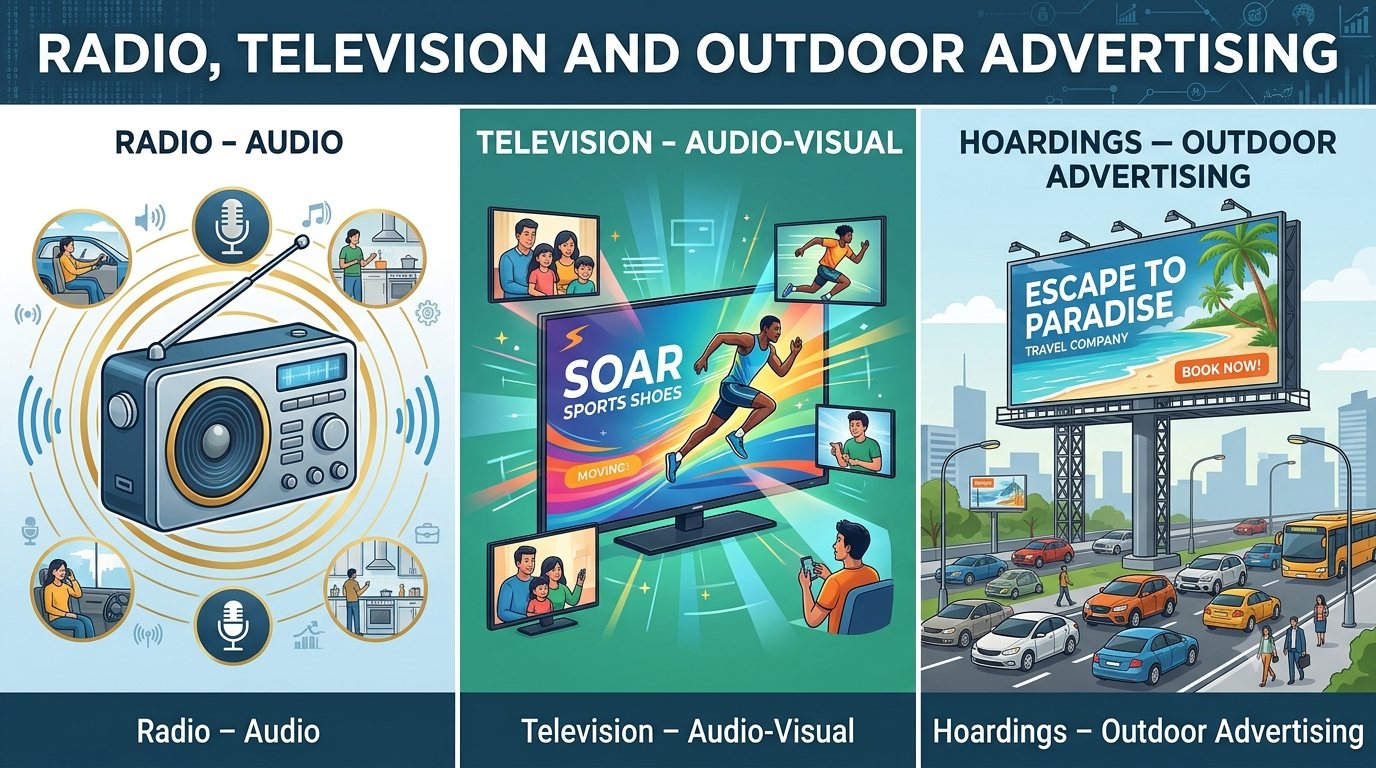
Businesses use different media to advertise their products and services. The choice of advertising medium depends on the nature of the product, target audience, advertising budget and purpose of the advertisement.
Radio, television and hoardings are important advertising media. Each medium has its own features, advantages and limitations.
1. Radio Advertising
Meaning of Radio Advertising
Radio advertising refers to the promotion of products and services through paid audio messages broadcast on radio stations.
It communicates advertising messages through spoken words, music, sound effects and announcements.
Example: A company broadcasting an advertisement for a new soft drink during a radio programme is an example of radio advertising.
Advantages of Radio Advertising
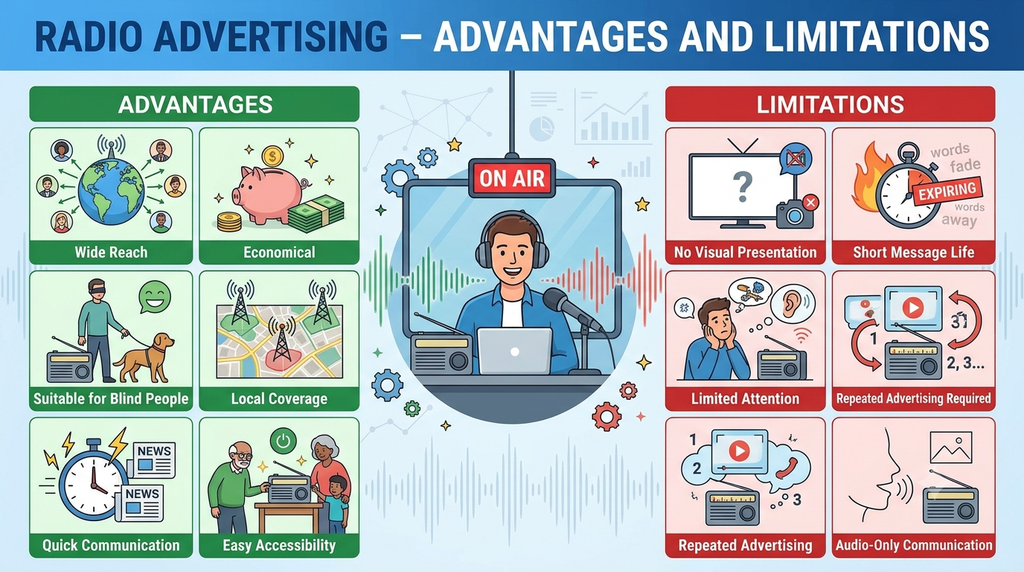
- Wide Reach: Radio can reach a large number of listeners in different areas.
- Economical: Radio advertising can be less expensive than television advertising.
- Suitable for Blind People: Radio is an audio medium. Therefore, blind people can receive advertising messages through listening.
- Local Coverage: Businesses can advertise through local radio stations to reach customers in particular areas.
- Quick Communication: Advertisements can communicate information about products, offers and events quickly.
- Easy Accessibility: People can listen to radio while travelling, working or performing other activities.
Limitations of Radio Advertising
- No Visual Presentation: Radio cannot show pictures, colours or demonstrations of products.
- Short Message Life: Listeners may forget an advertisement if they do not hear it again.
- Limited Attention: People may not concentrate fully on advertisements while performing other activities.
- Repeated Advertising Required: Advertisements may need to be broadcast repeatedly to create a strong impact.
- Audio-Only Communication: Products that require visual demonstration may not be promoted effectively through radio alone.
2. Television Advertising
Meaning of Television Advertising
Television advertising refers to the promotion of products and services through paid advertisements broadcast on television.
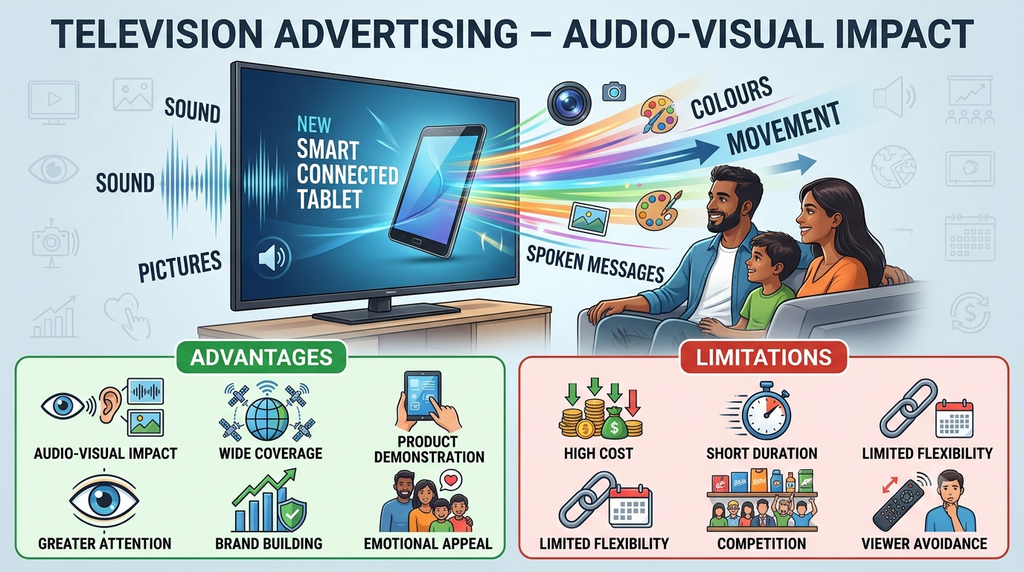
It combines sound, pictures, colours, movement and spoken messages to communicate with viewers.
Example: An advertisement showing the features of a new washing machine on television is an example of television advertising.
Advantages of Television Advertising
- Audio-Visual Impact: Television combines sound and pictures, making advertisements attractive and effective.
- Wide Coverage: Television can reach a large audience across different geographical areas.
- Product Demonstration: Businesses can show how a product works and explain its features.
- Greater Attention: Moving pictures, music and sound effects can attract viewers.
- Brand Building: Repeated television advertisements help businesses develop brand recognition.
- Emotional Appeal: Stories, music and visual presentations can create an emotional connection with viewers.
Limitations of Television Advertising
- High Cost: Producing and broadcasting television advertisements can be expensive.
- Short Duration: Advertisements are generally broadcast for a limited time.
- Limited Flexibility: Making changes to a prepared television advertisement may require additional time and money.
- Competition: Many advertisements are broadcast during television programmes, making it difficult to attract attention.
- Viewer Avoidance: Some viewers may change channels or skip advertisements.
3. Outdoor Advertising – Hoardings
Meaning of Outdoor Advertising
Outdoor advertising refers to the promotion of products and services through advertising displays placed in public locations.
Hoardings, billboards, posters and banners are common examples of outdoor advertising.
Example: A large billboard displaying an advertisement for a new residential project near a busy road is an example of outdoor advertising.
Advantages of Outdoor Advertising
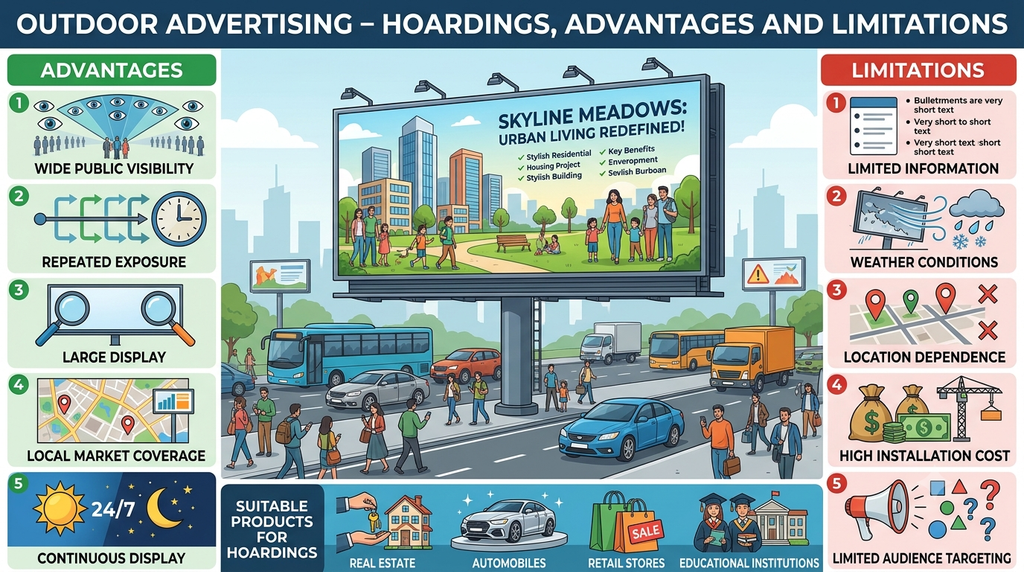
- Wide Public Visibility: Hoardings can be seen by many people passing through busy roads and public places.
- Repeated Exposure: People travelling through the same location may see the advertisement repeatedly.
- Large Display: Hoardings provide space for large pictures, attractive designs and short messages.
- Local Market Coverage: Businesses can place advertisements in areas where their target customers are likely to visit.
- Continuous Display: Outdoor advertisements can remain visible throughout the day and night, depending on their location and lighting.
Limitations of Outdoor Advertising
- Limited Information: Hoardings generally contain short messages because people have limited time to read them.
- Weather Conditions: Rain, sunlight, wind and dust may affect outdoor advertisements.
- Location Dependence: The effectiveness of an advertisement depends heavily on its placement.
- High Installation Cost: Large hoardings in popular locations may involve significant expenses.
- Limited Audience Targeting: Outdoor advertisements may be seen by many people who are not part of the intended customer group.
Comparison of Advertising Media
| Advertising Medium | Main Feature | Suitable Audience |
|---|---|---|
| Newspaper | Printed information and advertisements | Newspaper readers |
| Magazine | Attractive and detailed printed advertisements | Specific groups of readers |
| Radio | Audio messages | Radio listeners, including blind people |
| Television | Sound and moving pictures | Television viewers |
| Hoardings | Large outdoor displays | People in public places |
Products Suitable for Magazines, Television and Hoardings
A. Products Suitable for Magazines
- Fashion clothing and accessories.
- Cosmetics and beauty products.
- Watches and jewellery.
- Travel and lifestyle services.
B. Products Suitable for Television
- Electronic goods and home appliances.
- Food and beverages.
- Cars and two-wheelers.
- Personal care products.
C. Products Suitable for Hoardings
- Real estate and housing projects.
- Automobiles.
- Retail stores and shopping malls.
- Educational institutions and local events.
Important Questions and Answers
1. Which medium of advertising has an audio-visual impact?
Television advertising has an audio-visual impact because it combines sound and pictures.
2. Which medium of advertising is preferred by blind people?
Radio advertising is suitable for blind people because it communicates through sound and spoken messages.
3. What is radio advertising?
Radio advertising is the promotion of products and services through paid audio messages broadcast on radio stations.
Conclusion
Radio, television and outdoor advertising are important promotional media. Radio is useful for audio communication and reaches blind listeners, television provides an audio-visual impact, and hoardings attract public attention through large displays. Businesses should select the most suitable medium according to their products, customers and advertising objectives.