
Introduction
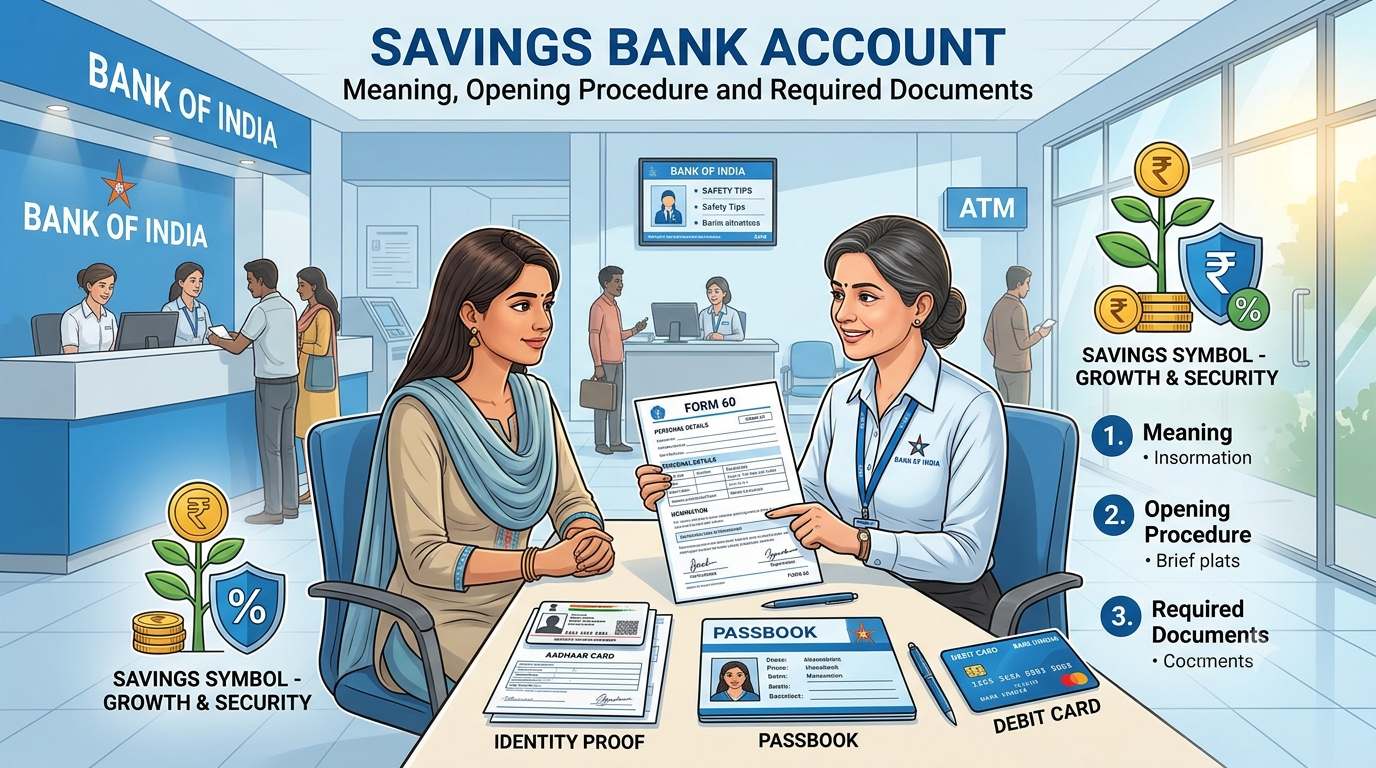
A savings bank account is one of the most common types of bank accounts. It is mainly designed to encourage individuals to save money while allowing them to withdraw funds when required, subject to the bank’s rules.
Opening a savings account is usually the first step towards using formal banking services.
1. Meaning of a Savings Bank Account
A savings bank account is a deposit account maintained with a bank to encourage individuals to save money and earn interest on their deposits.
Customers can deposit and withdraw money according to the account’s terms and conditions.
2. Procedure for Opening a Savings Bank Account
The following steps are generally followed to open a savings bank account.
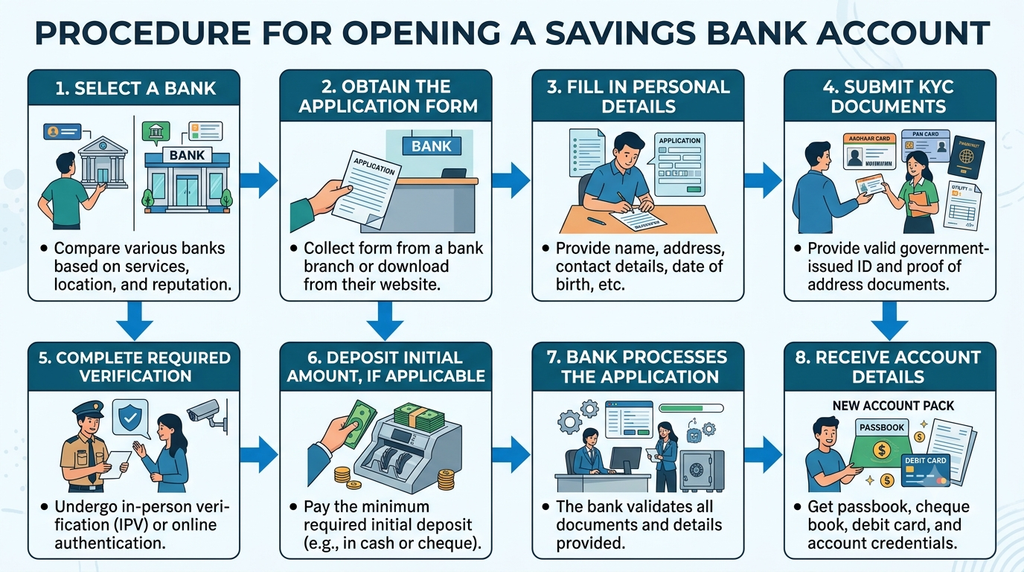
Step 1: Select a Bank
Choose a bank that provides suitable services, convenient branches and accessible digital banking facilities.
Step 2: Obtain the Application Form
Collect the account-opening form from the bank branch or use the bank’s official online account-opening facility, where available.
Step 3: Fill in the Application Form
Enter the required personal and contact details carefully.
Step 4: Submit KYC Documents
Submit the required identity and address documents according to the bank’s Know Your Customer (KYC) requirements.
Step 5: Arrange Introduction, If Required
Some account-opening procedures or account types may require an introduction or additional verification. The bank carries out identity checks according to applicable rules.
Step 6: Complete Verification
The bank verifies the application and documents. It may ask for additional information if required.
Step 7: Deposit the Initial Amount, If Applicable
Deposit the required initial amount if the selected account has such a requirement.
Step 8: Receive Account Details
After approval, the bank provides the account number and applicable banking facilities, such as a passbook, cheque book or debit card, according to the account type.
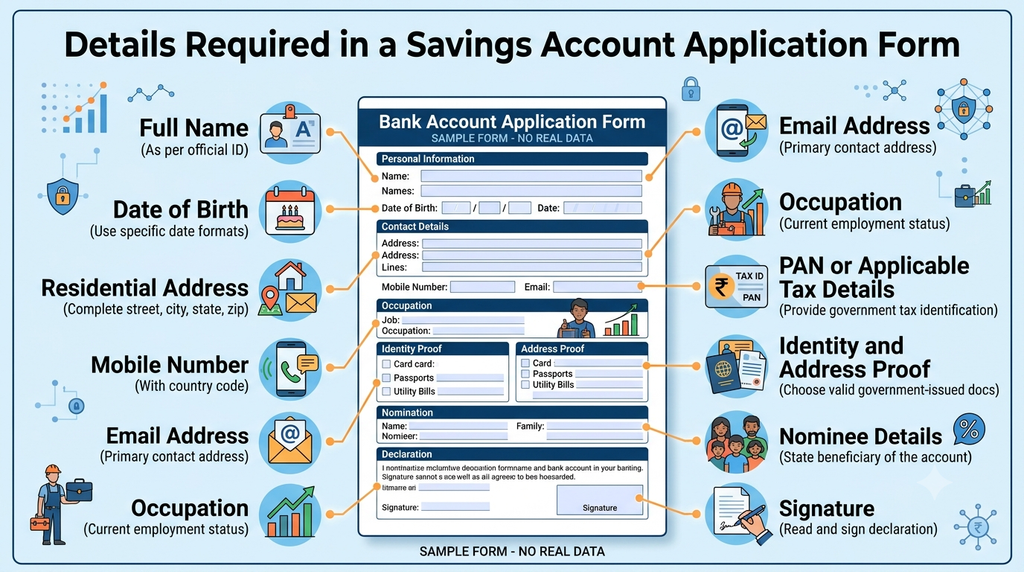
3. Particulars to Be Filled in the Application Form
The account-opening form generally asks for the following details:
- Full name of the applicant.
- Date of birth.
- Father’s, mother’s or spouse’s name, where required.
- Residential address.
- Mobile number.
- Email address, if available.
- Occupation.
- PAN details or other permitted tax identification details, as applicable.
- Identity and address proof details.
- Nominee details, where applicable.
- Specimen signature or other approved authentication.
- Type of account selected.
The exact information required may vary from one bank to another.
4. Importance of Introduction and Verification
An introduction by an existing bank customer was traditionally used in some account-opening procedures.
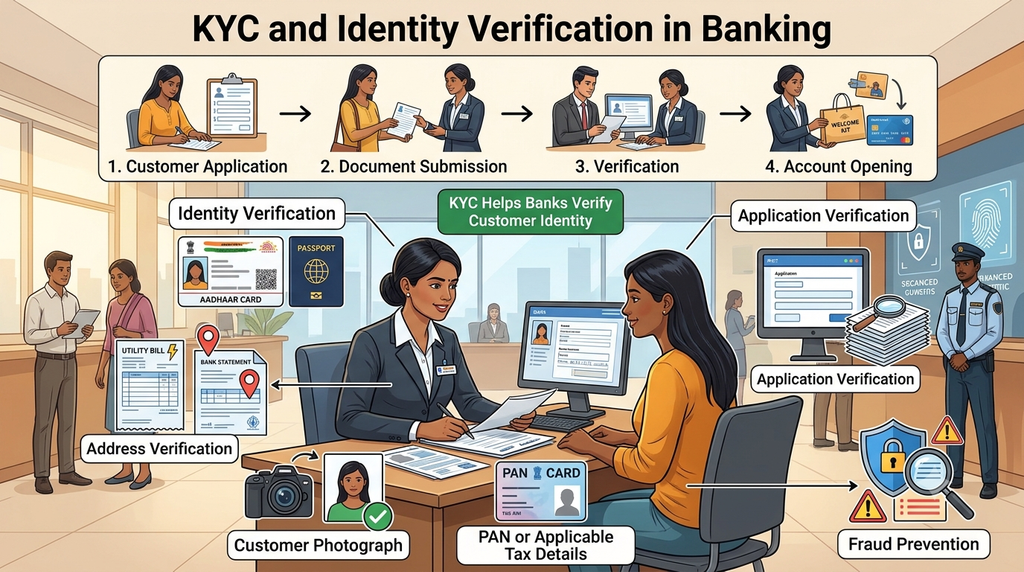
Today, banks generally rely on formal KYC and identity-verification procedures. An introduction is not a universal requirement for opening a savings account.
Identity verification helps banks:
- Confirm the applicant’s identity.
- Reduce the risk of fraudulent accounts.
- Prevent misuse of banking services.
- Meet legal and regulatory requirements.
5. Documents Required for Opening a Savings Account
Depending on the applicable KYC rules and the account type, banks may ask for:
- An officially valid identity document.
- Address proof, where required.
- PAN or Form 60, as applicable.
- Recent photograph, where required.
- Additional documents for special account categories.
6. Benefits of a Savings Bank Account
- Encourages regular savings.
- Provides a safe place to keep money.
- May earn interest on the balance.
- Allows deposits and withdrawals.
- Provides access to ATM and debit card services, where applicable.
- Supports digital payments and fund transfers.
- Helps customers maintain a record of financial transactions.
Conclusion
A savings bank account helps individuals save money and access essential banking services. The account-opening process involves selecting a bank, completing the application, submitting KYC details and undergoing verification.