Why Does the Same Amount of Money Buy Less Than Before?
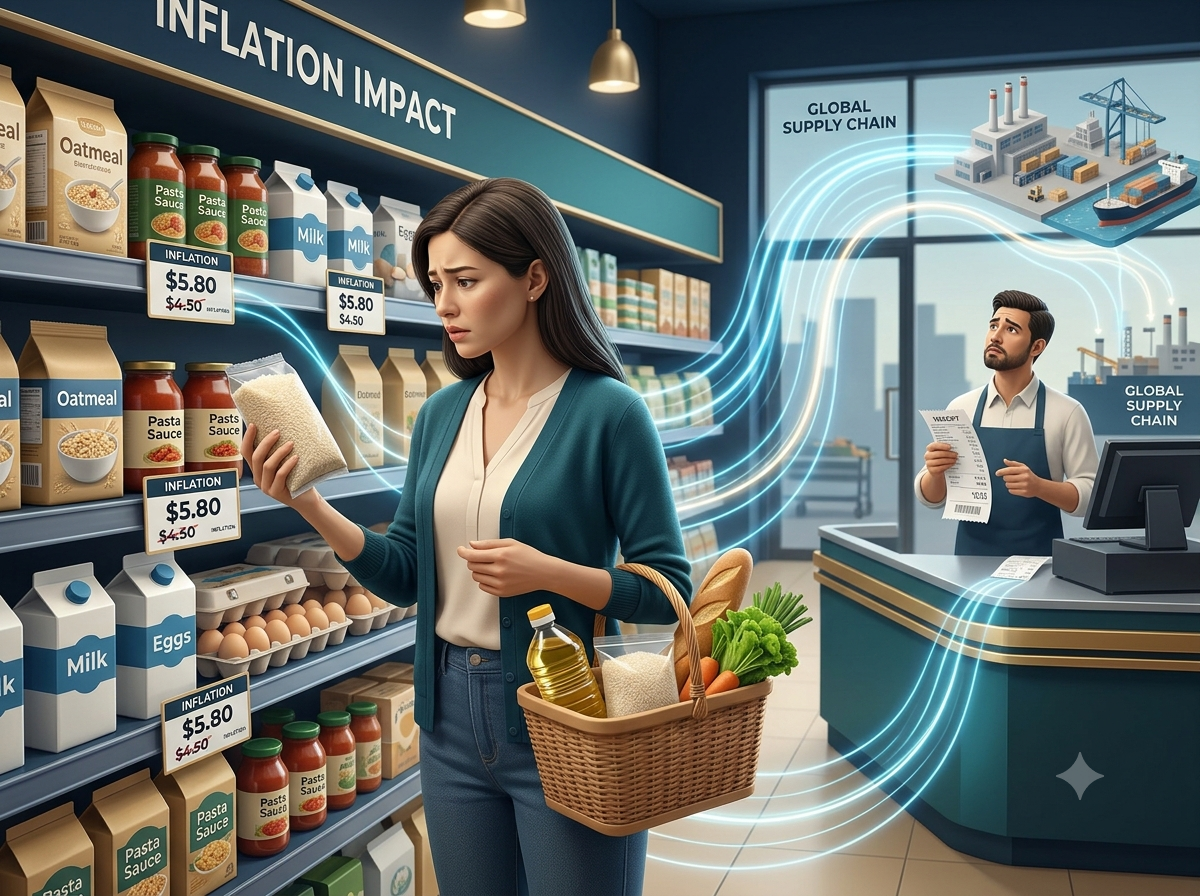
Imagine visiting a grocery shop with a fixed amount of money.
Last year, you could purchase rice, vegetables, cooking oil, and other household necessities with that amount.
Today, the same shopping basket costs more.
You have not necessarily purchased additional products. Instead, the general price level has increased.
This economic situation is known as inflation.
What Is Inflation?
Inflation refers to a sustained increase in the general price level of goods and services over a period of time.
When inflation occurs, the purchasing power of money decreases.
In simple words, the same amount of money buys fewer goods and services than before.
For households, this can make it more difficult to afford essential commodities and maintain their usual standard of living.
How Can Governments Control Inflation?
Governments and central banks use different measures to control inflation.
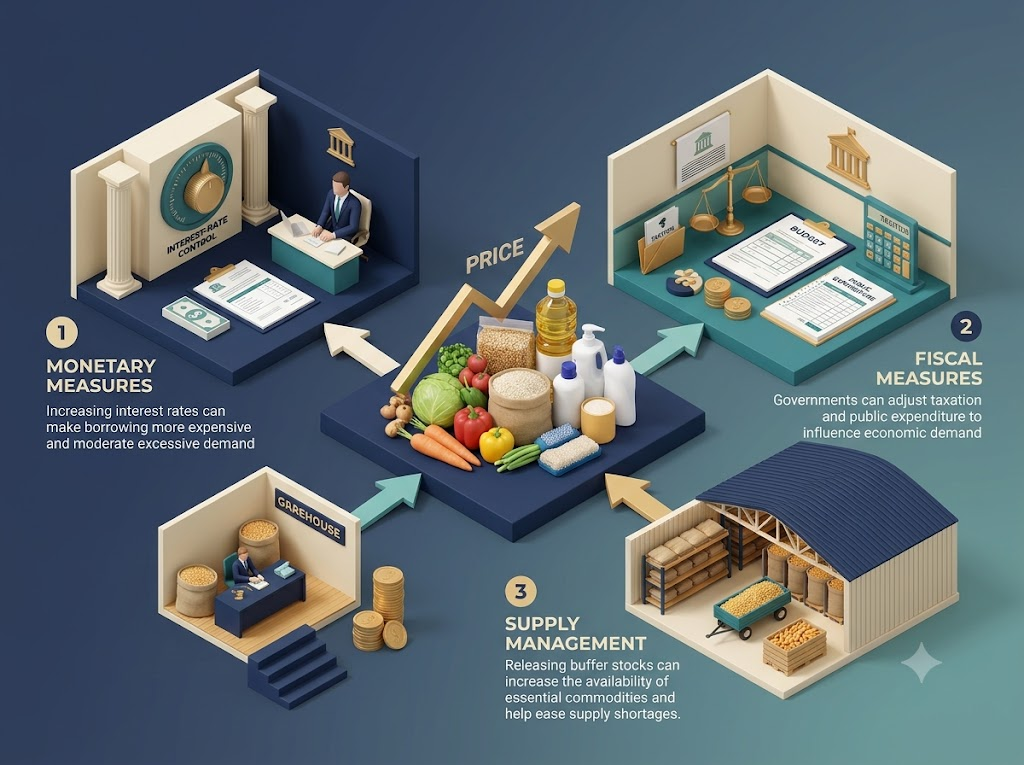
These measures can be divided into three major categories:
- Monetary measures.
- Fiscal measures.
- Supply management measures.
Let’s understand each one.
1. Monetary Measures
Monetary measures are actions taken by a country’s central bank to influence the supply of money, credit, and interest rates in the economy.
In India, the Reserve Bank of India (RBI) conducts monetary policy.
One important measure is increasing interest rates.
How Does Increasing Interest Rates Help?
When the central bank raises interest rates, borrowing generally becomes more expensive.
This can discourage excessive borrowing and spending.
For example:
- Consumers may postpone certain purchases.
- Businesses may reduce borrowing.
- Overall demand may gradually decrease.
When excessive demand is contributing to inflation, reducing demand can help moderate price increases.
However, higher interest rates cannot directly solve problems such as shortages caused by poor agricultural production.
2. Fiscal Measures
Fiscal measures involve changes in government taxation and public expenditure.
The government can use these measures to influence economic activity and the demand for goods and services.
Important fiscal measures include:
A. Reducing Unnecessary Government Expenditure
The government can control unnecessary spending to moderate excessive demand in the economy.
B. Reducing Taxes on Essential Commodities
Reducing certain taxes on essential commodities can lower their final prices, provided the reduction is passed on to consumers.
This can make essential goods more affordable.
C. Controlling Hoarding and Black Marketing
Hoarding occurs when traders or individuals stockpile goods, potentially restricting their availability in the market.
Black marketing involves the illegal sale of goods, often at unfairly high prices.
The government can take action against such practices to protect consumers and improve the availability of essential commodities.
3. Supply Management Measures
Inflation can also occur when the supply of essential goods is insufficient to meet demand.
For example, poor rainfall may reduce agricultural production, resulting in shortages of certain food items.
In such situations, increasing the availability of goods becomes important.
Releasing Buffer Stocks
Buffer stocks are reserves of essential commodities maintained by the government to help manage shortages and stabilise supplies.
For example, if there is a shortage of wheat or rice, the government can release part of its stored stocks into the market.
This increases the available supply and can help reduce upward pressure on prices.
Understanding the Three Measures Together
| Measure | Main authority | Important action |
|---|---|---|
| Monetary | Central bank | Increasing interest rates |
| Fiscal | Government | Adjusting taxes and public expenditure |
| Supply management | Government | Releasing buffer stocks and improving availability |
Why Is Controlling Inflation Important?
Inflation affects individuals, businesses,s and the entire economy.
When essential goods become expensive, families with limited incomes may struggle to afford their necessities.
Businesses may also face higher production costs, which can affect their operations and investment decisions.
Controlling inflation helps protect purchasing power and maintain economic stability.
However, different causes of inflation require different responses. Higher interest rates may help control excessive demand, while supply shortages may require measures that increase the availability of essential goods.
The Final Takeaway
Inflation can be controlled through monetary measures, fiscal policies, and supply management.
Remember: Monetary measures influence money and credit, fiscal measures influence government spending and taxes, and supply management increases the availability of goods.