
Introduction
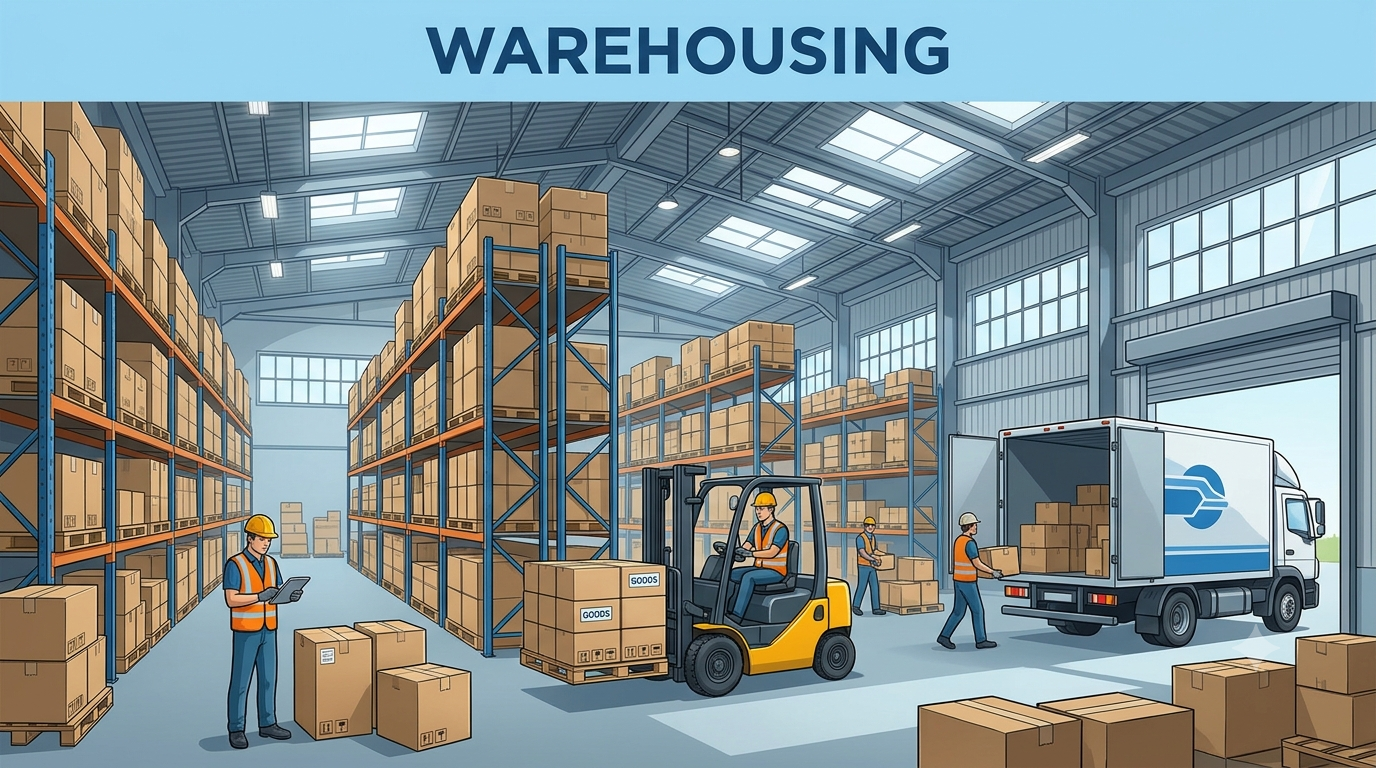
In business, goods are not always sold immediately after they are produced. Sometimes, products need to be stored until customers demand them. For this purpose, businesses use warehouses.
Warehousing plays an important role in business by providing safe storage and ensuring that goods are available whenever they are needed.
Meaning of Warehousing
Warehousing refers to the process of storing goods safely in warehouses until they are sold, distributed, or used.
A warehouse is a place where goods are kept under proper conditions to protect them from damage, theft, and other risks.
Example: A biscuit company may store its products in a warehouse before distributing them to shops.
Nature and Characteristics of Warehousing
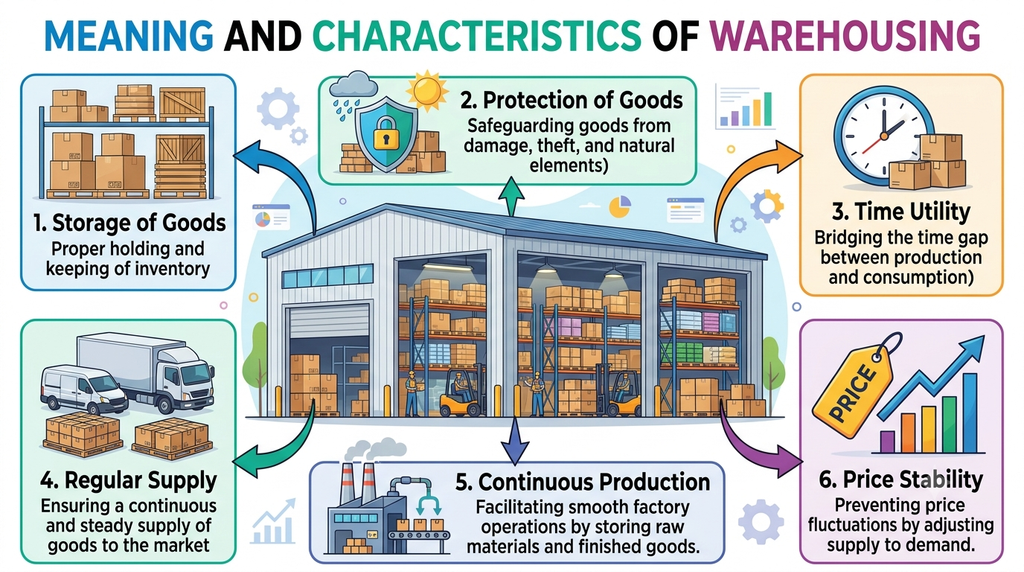
- Storage of Goods: Warehousing provides a safe place to store raw materials, finished products and other goods until they are required.
- Protection of Goods: Warehouses protect goods from damage, theft, rain, sunlight, dust, and other risks.
- Time Utility: Warehousing creates time utility by making goods available when customers need them, even if they were produced earlier.
- Continuous Production: Manufacturers can store raw materials in warehouses and use them whenever required. This helps maintain continuous production.
- Regular Supply: Warehousing ensures that goods are available in the market even when production or transportation is temporarily interrupted.
- Price Stability: By storing goods during periods of excess supply and releasing them when demand increases, warehousing can help reduce sudden price fluctuations.
- Support to Distribution: Warehouses help businesses store products near markets and distribute them efficiently to retailers and customers.
Objectives of Warehousing
The main objectives of warehousing are:
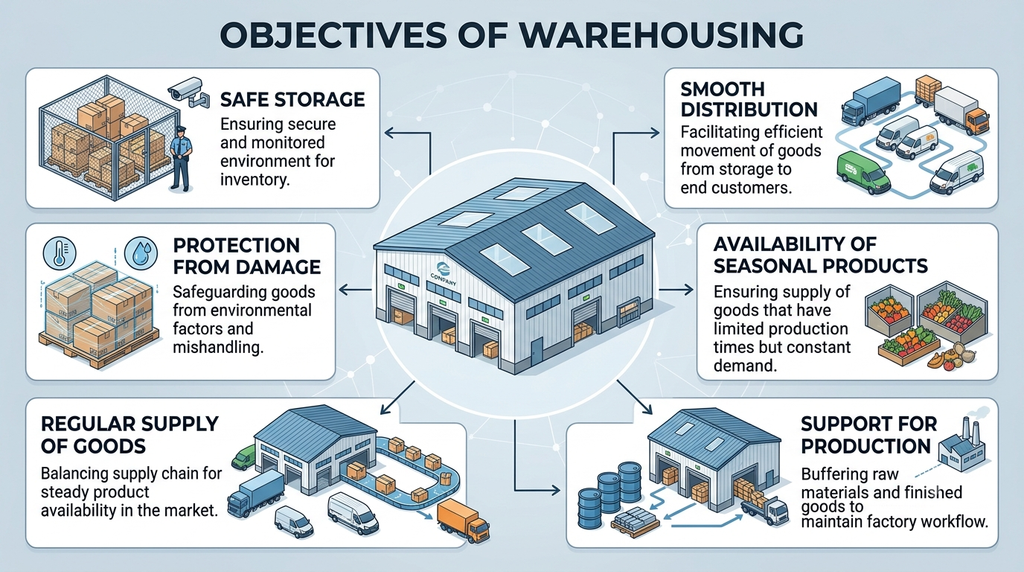
- To provide safe storage for goods.
- To protect products from damage and loss.
- To maintain a regular supply of goods.
- To support continuous production.
- To make seasonal products available year-round.
- To reduce the risk of shortages in the market.
- To support smooth transportation and distribution.
Importance of Warehousing
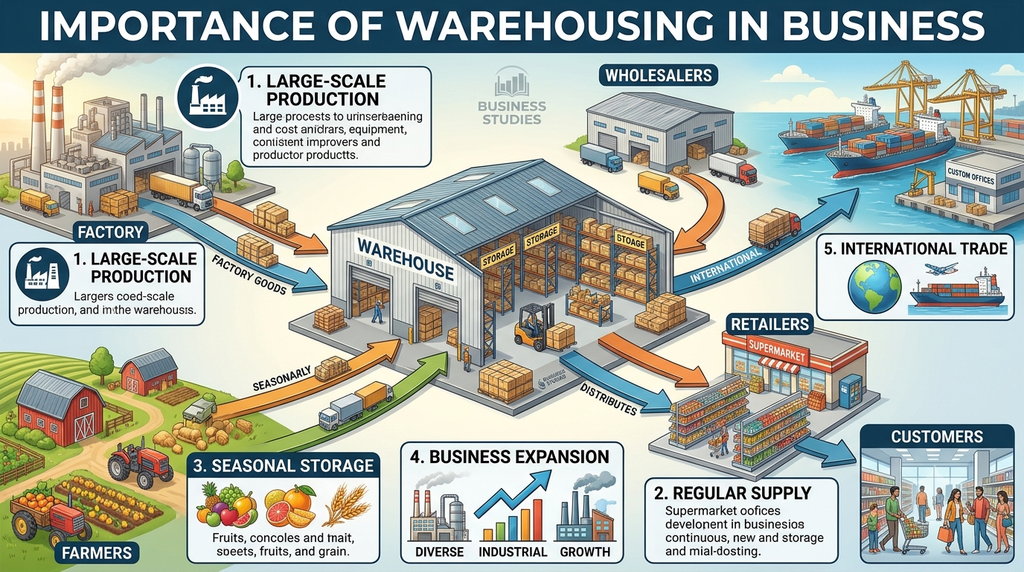
- Supports Large-Scale Production: Manufacturers can produce goods in large quantities and store them until they are needed.
- Maintains Regular Supply: Warehouses help businesses supply goods regularly, even when production is seasonal.
- Handles Seasonal Products: Agricultural products such as wheat, rice, and potatoes can be stored and sold throughout the year.
- Reduces Transportation Problems: Goods can be stored at suitable locations before being transported to different markets.
- Supports Business Expansion: Businesses can serve more customers by storing products in different locations.
- Encourages International Trade: Warehouses help store imported and exported goods before their final distribution.
Practical Example
Fresh Harvest Foods purchases large quantities of potatoes and onions during the harvesting season. Instead of selling all the products immediately, the company stores them in suitable warehouses and cold-storage facilities.
When demand increases, the company releases the stored products into the market. This helps maintain supply throughout the year.
Conclusion
Warehousing is an essential part of modern business. It provides safe storage, protects goods, supports continuous production, and ensures regular availability of products. Without proper warehousing facilities, businesses would face difficulties in managing inventory and supplying goods to customers.